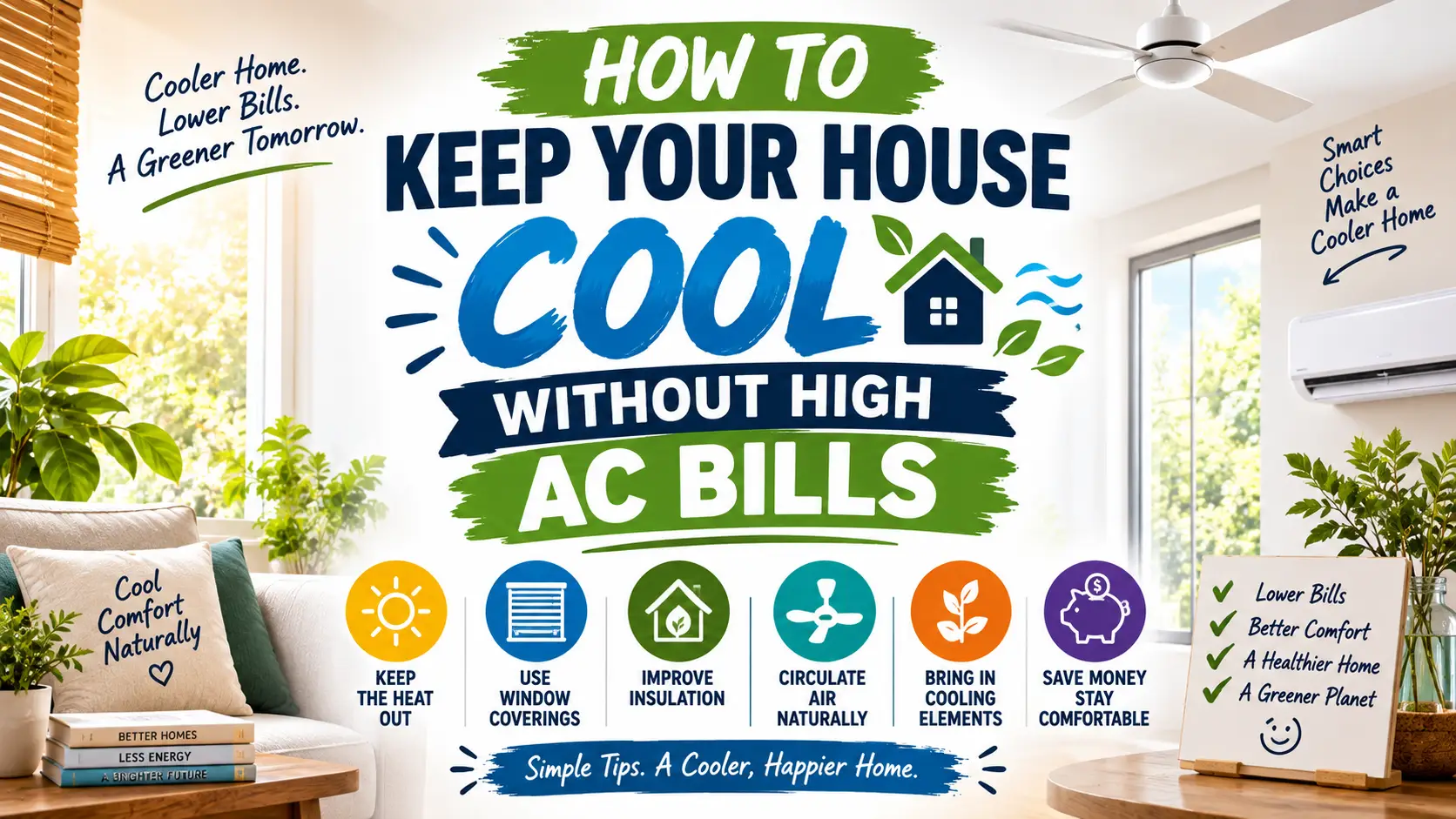
Last summer I finally sat down and looked at our electric bill during the hottest month, and I actually gasped a little. So I went down a rabbit hole of figuring out what actually helps cool a house down without just cranking the AC and hoping for the best. Turns out, most of the heat building up in your house has nothing to do with your thermostat setting — it’s about how much heat gets in, and how well it gets out.
Here’s what’s actually worked for us, roughly in order of “cheapest and easiest” to “bigger project, bigger payoff.”
Block the Sun Before It Gets In
Most of the heat in your house on a hot day comes in through your windows, not the air outside. Stopping it before it gets in matters more than trying to cool it down after it’s already inside.
- Close blinds or curtains on sun-facing windows during the day, especially south and west-facing ones. Light-colored, tightly woven curtains block more heat than dark ones.
- Use blackout curtains in rooms that overheat the most, like a west-facing bedroom that turns into an oven by evening.
- Add a reflective window film if you want a more permanent fix. It’s a weekend project and noticeably cuts down on heat coming through the glass.
- Plant something with shade potential, even a large potted plant near a window, if a tree isn’t practical. Anything that blocks direct sun helps.
Use Fans Strategically (Not Just for Noise)
Fans don’t actually cool the air — they cool you, by moving air across your skin. That means running them in empty rooms does nothing but burn electricity. Used correctly, though, they let you raise your thermostat several degrees and still feel just as comfortable.
- Turn on ceiling fans only in rooms you’re actually in, and make sure they’re spinning counterclockwise in summer to push air down.
- Use a box fan in a window at night to pull in cooler outside air once the temperature drops, and push warm air out on the other side of the house.
- Point a fan toward you, not around the room, for the biggest cooling effect while you’re sitting or sleeping.
Stop Adding Heat From the Inside
Your house generates its own heat all day long, and a lot of it is avoidable.
- Cook outside or use small appliances (slow cooker, air fryer, microwave) instead of the oven or stovetop on hot days. An oven can raise the temperature of a kitchen noticeably within minutes.
- Run the dishwasher and laundry at night instead of during the hottest part of the day.
- Switch to LED bulbs if you haven’t already — incandescent bulbs put off a surprising amount of heat for the light they give.
- Unplug or turn off electronics you’re not using. Anything plugged in generates a small amount of heat, and it adds up over a full house.
Get Smart About Your Thermostat
You don’t need to keep your AC at the same temperature all day to stay comfortable.
- Raise the temperature a few degrees when you’re not home. There’s no reason to cool an empty house to the same level as one with people in it.
- Use a programmable or smart thermostat if you don’t already have one, so you’re not manually adjusting it every time you leave or come home.
- Set it a couple degrees higher at night and use a fan — most people sleep better in a slightly cooler, moving-air environment than a colder, still one.
Help Your AC Actually Work Efficiently
A struggling AC unit uses more electricity to do less cooling. A little upkeep goes a long way.
- Change or clean your air filter regularly, especially during peak summer use. A clogged filter makes your system work much harder than it needs to.
- Keep outdoor units clear of debris, leaves, and overgrown plants so air can flow through it properly.
- Check that vents inside aren’t blocked by furniture, rugs, or curtains — blocked airflow means your system runs longer to reach the same temperature.
- Have your system serviced yearly if it’s more than a few years old. Small issues (low refrigerant, dirty coils) quietly cost you money every month until they’re fixed.
Seal Up the Gaps
Cool air escaping — and hot air sneaking in — around doors, windows, and outlets forces your AC to work overtime just to keep up.
- Add weatherstripping around exterior doors if you can feel air moving around the edges.
- Use a door draft stopper at the bottom of doors leading outside or into unconditioned spaces like a garage.
- Check attic insulation if your home is older. A poorly insulated attic lets a huge amount of heat radiate down into the living space below it.
A Few Habits That Cost Nothing
- Open windows in the early morning and late evening when it’s cooler outside, then close them (and the blinds) once it starts heating up.
- Use bathroom and kitchen exhaust fans while cooking or showering to pull hot, humid air straight outside instead of letting it sit in the house.
- Wear lighter, breathable fabrics at home — it sounds obvious, but it genuinely changes how warm you feel at a given thermostat setting.
The Bottom Line
Keeping a house cool without a painful electric bill isn’t really about fighting the heat harder — it’s about keeping it out in the first place, and not making your AC do more work than it has to. Start with the free stuff (blinds, fans, thermostat habits), then work your way up to the small projects (window film, weatherstripping, filter changes) as you have time. You’ll likely notice the difference in comfort before you even see it on the bill.