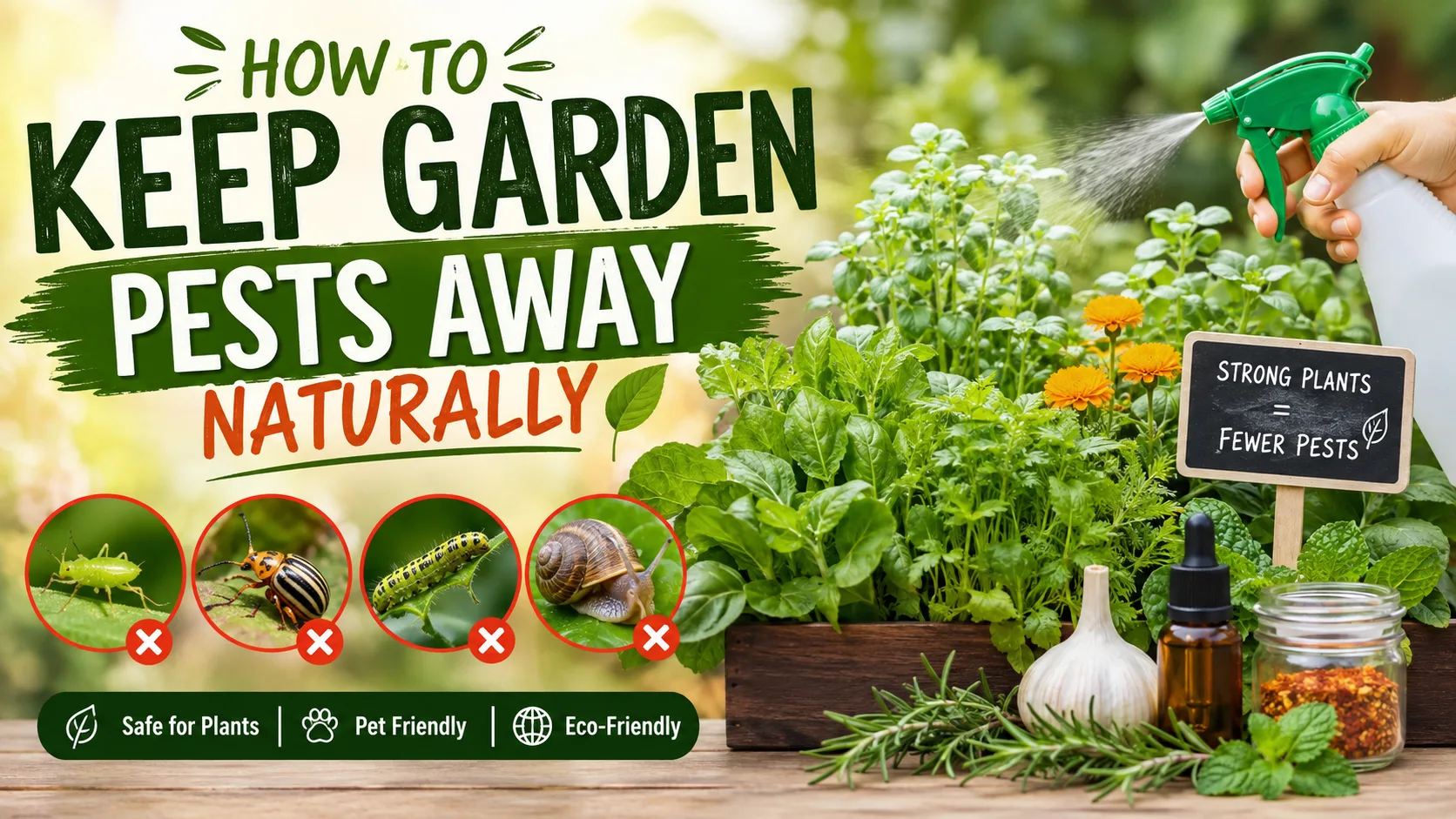
The first year I grew tomatoes, I found aphids all over my plants and did what felt obvious: grabbed a chemical spray from the hardware store. It worked, sort of. The aphids came back within a week, worse than before, and I didn’t see a single ladybug in my garden for the rest of the season. That’s when someone finally explained to me that I hadn’t just killed the aphids, I’d wiped out the predators that would’ve kept them in check on their own. I basically reset the battle back to zero and removed my own backup.
Since then I’ve gone almost entirely chemical-free, and honestly, the garden’s healthier for it. Here’s what actually works, without reaching for anything that kills the good bugs along with the bad ones.
Why Chemical Sprays Often Backfire
It seems counterintuitive, but harsh pesticides frequently make a pest problem worse over time, not better. Harsh pesticides may kill pests quickly, but they also affect beneficial insects, bees, butterflies, and earthworms, disrupting the natural balance of the garden. Once that balance is gone, pests tend to rebound faster than their natural predators can, because you’ve cleared out the very insects that were keeping populations in check.
The goal with natural pest control isn’t to eliminate every bug from your garden. A healthy garden needs balance, and the real goal is preventing pests from damaging plants beyond recovery, not removing every insect entirely.
Let Companion Planting Do Some of the Work For You
This was the first natural method I actually tried, mostly because it sounded too easy to be real. It’s not.
Planting basil near tomatoes naturally helps repel flies and mosquitoes, and planting marigolds around garden beds helps deter nematodes and aphids, since marigolds release compounds in the soil that pests find unpleasant. Beyond marigolds and basil, a few other combinations pull their weight:
- Nasturtiums planted near vulnerable crops act as a trap crop, drawing aphids toward themselves and away from what you actually care about
- Mint planted nearby can help deter ants and aphids, though it spreads aggressively, so keep it contained in a pot
- Garlic and chives planted among roses or vegetables help repel a range of soft-bodied pests
The diversity created by companion planting confuses pests, making it harder for them to zero in on a specific target plant, which is honestly a big part of why it works even when no single plant is doing anything dramatic on its own.
Invite the Predators In
Once I stopped spraying everything, I noticed something within a couple of weeks: ladybugs showed up on their own. That wasn’t a coincidence.
Ladybugs, lacewings, and predatory beetles feed on common garden pests like aphids, caterpillars, and mites, and planting diverse flowering plants such as marigolds and daisies helps attract them and creates a more balanced ecosystem. If you want to actively encourage this rather than waiting for it to happen naturally:
- Plant nectar-rich flowers near your vegetable beds, not just around the border
- Avoid broad-spectrum sprays, even “natural” ones, right before beneficial insects are active
- Leave a small undisturbed area of the garden, beneficial insects often need somewhere to overwinter
Neem Oil: The Most Versatile Natural Spray
If you only add one thing to your routine, this is probably it. Derived from the seeds of the neem tree, neem oil is a powerful natural insecticide that disrupts the life cycle of insects, reducing populations without harming beneficial creatures like bees or butterflies. It works by disrupting insect hormones rather than acting as a direct poison, which is part of why it’s gentler on the garden’s overall ecosystem.
A basic homemade neem spray:
- Combine two tablespoons of neem oil with one tablespoon of organic dish soap in a gallon of water
- Spray in the early morning or late evening to avoid leaf burn from direct sunlight and to minimize impact on pollinators, who are less active during those windows
- Use it as a targeted treatment on confirmed infestations rather than a blanket weekly spray on everything
It’s particularly effective against soft-bodied pests, it works well against aphids and whiteflies specifically. Before spraying your whole garden, it’s worth testing on one leaf first and waiting a day or two to make sure nothing reacts badly to it.
Diatomaceous Earth for Crawling Pests
This one looks like flour and works nothing like flour. Diatomaceous earth is a fine powder that dehydrates pests on contact, and it’s an effective way to control slugs, snails, beetles, and other crawling bugs around the base of plants. It’s particularly effective against slugs, snails, ants, earwigs, silverfish, and cucumber beetles, and since it’s not a poison, it’s safe for the soil, plants, and earthworms when applied correctly.
The application matters more than people expect:
- It must be applied when both the plants and soil are dry, since moisture makes it ineffective
- A light, even dusting works far better than a thick, clumpy layer
- Focus it around the base of vulnerable plants rather than dusting the whole garden bed
- Reapply after rain, since it washes away and loses effectiveness once wet
Physical Barriers Are Underrated
Sometimes the simplest fix is just not letting the pest reach the plant in the first place. Floating row covers protect plants from insects, birds, rabbits, and other pests, and are especially useful for protecting young seedlings before they’ve had a chance to establish.
A couple of things to keep in mind if you go this route:
- Install covers before pest flight season begins in late spring, rather than reacting after damage has already started
- Remove covers once plants need pollination, or hand-pollinate if the crop requires it and covers stay on longer
- Netting works well for protecting fruit and berries specifically, just make sure it’s secured so nothing gets tangled in it
Essential Oil Sprays for Ants and Beetles
Essential oils like peppermint and rosemary are known to repel insects such as ants and beetles, and a simple spray can be made by diluting them with water and applying it directly to plants. This tends to work best as a deterrent around entry points and plant perimeters rather than as a primary treatment for an active infestation, it’s more of a “keep them from showing up” tool than a “get rid of them once they’re here” one.
Build the Habit, Not Just the Spray
The gardeners who deal with the fewest pest problems generally aren’t the ones with the best spray, they’re the ones doing a few small things consistently:
- Inspect weekly. Check the undersides of leaves regularly for eggs and early-stage larvae, since catching an infestation early makes it far easier to manage with a targeted spray rather than a garden-wide treatment.
- Keep the soil healthy. Healthy, well-composted soil produces stronger plants that are naturally more resistant to pest damage in the first place.
- Rotate your approach. Don’t rely on just one method. Combining a spray with a physical barrier like diatomaceous earth or companion planting, and rotating between different treatments, helps prevent pests from adapting to any single one.
- Remove heavily infested plants promptly rather than trying to save every single one, sometimes cutting your losses on one plant protects everything around it.
Frequently Asked Questions
What’s the most effective all-around natural pest control method?
Neem oil is generally considered the most versatile option since it works on a wide range of soft-bodied pests like aphids and whiteflies while remaining safe for bees and other beneficial insects when used as directed.
Does companion planting actually work, or is it just a myth?
It has real effects, though it’s not a complete replacement for other methods. Certain plants like marigolds and basil release compounds that many pests find unpleasant, and diverse plantings make it harder for pests to locate and concentrate on a single target crop.
Is diatomaceous earth safe for pets and beneficial insects like earthworms?
Food-grade diatomaceous earth is generally considered safe for pets, children, and earthworms, though it should be avoided directly on flowers where bees are actively foraging, since it can affect any insect it contacts on the surface.
How often should I spray neem oil?
Neem oil is best used as a targeted treatment on confirmed pest activity rather than a routine weekly spray on healthy plants, since overuse can still stress beneficial insect populations over time.
Can I use multiple natural pest control methods together?
Yes, and it’s generally more effective than relying on just one. Combining companion planting, physical barriers, and targeted sprays like neem oil creates layered protection that’s harder for pests to adapt around.
Final Thoughts
That first aphid disaster taught me more than any gardening book could have: the goal isn’t to declare war on every bug in the yard, it’s to build a garden that mostly handles itself. Companion planting, a healthy population of beneficial insects, and a couple of targeted, natural treatments for when things do get out of hand will get you most of the way there, without the rebound effect that comes from wiping the slate clean with something harsh.