Watching your lawn turn brown practically overnight is one of those things that makes you want to rip it all out and start over. But before you panic and reach for a bag of grass seed, it’s worth figuring out what’s actually going on underneath those brown blades. Brown grass isn’t always dead grass, and treating the wrong problem can waste an entire season.
Here’s how to figure out what’s happening, why it’s happening, and exactly what to do about it.
Is Your Grass Dead, or Just Dormant?
This is the first question to answer, because the fix is completely different depending on the answer.
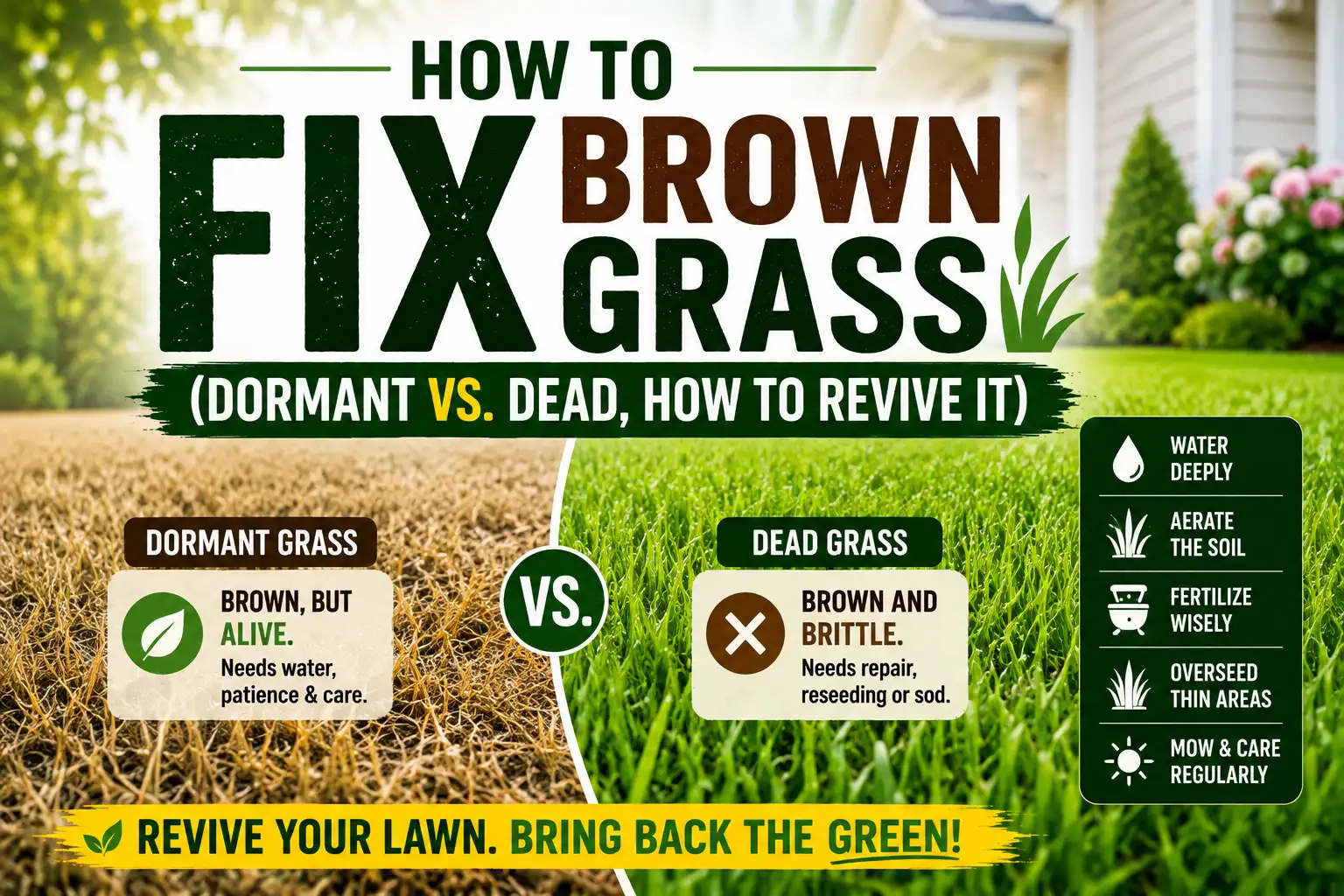
Dormant grass is grass that’s essentially gone to sleep to conserve energy, usually because of heat, cold, or drought stress. Dead grass means the plant itself, roots included, has stopped functioning.
Two quick tests tell you which one you’re dealing with:
- The green check. Kneel down and gently part the brown blades near the base of the plant. If you spot any green near the crown (the point where the roots meet the stem), the grass is still alive and just conserving energy.
- The tug test. Grab a small handful of grass and pull gently. Dormant grass resists and stays rooted. Dead grass pulls up easily with little to no resistance, because the roots have already given up.
One more clue: dormant grass tends to be uniformly tan or straw-colored across the whole lawn. If your brown patches are uneven, mushy, discolored in rings, or have a bad smell, you’re probably not looking at simple dormancy.
What’s Actually Causing the Brown Grass?
Once you know you’re dealing with a real problem (not just dormancy), the next step is figuring out the cause. Brown grass usually comes from one of these:
Watering issues. Both too little and too much water cause browning. Underwatered grass gets stressed and the roots shrink back. Overwatered grass suffocates the roots, which invites root rot and fungus. Uneven sprinkler coverage can also leave dry patches even when the rest of the lawn looks fine.
Compacted soil. Heavy foot traffic, clay-heavy soil, or years without aeration packs the soil down so tightly that water, air, and nutrients can’t reach the roots. The grass slowly weakens even if you’re watering and fertilizing correctly.
Thatch buildup. That layer of dead grass, roots, and stems sitting between the soil and the living grass can block water and nutrients if it gets thicker than about half an inch.
Lawn disease or fungus. Certain fungal issues create distinct patterns, large dead circles, small round dead spots, or a pinkish tint before the grass browns. If your discoloration has a specific shape rather than being random, disease is worth ruling out.
Pet urine spots. A concentrated burst of nitrogen from dog urine burns the center of a spot while sometimes greening up the ring around it. It’s a very specific and recognizable pattern.
Insect damage. Grubs feed on grass roots from below, so the lawn can look fine on the surface until it suddenly isn’t. Other pests like chinch bugs or billbugs cause similar root-level damage depending on your region.
Soil pH imbalance. Grass struggles to absorb nutrients when soil pH drifts too far outside the 6.0–7.0 range, leaving it weaker and more prone to browning even with regular care.
Mowing too short. Cutting the grass too low limits its ability to photosynthesize and pushes roots to grow shallow, which leaves the whole lawn more vulnerable to heat and drought stress.
How to Fix Brown Grass, Step by Step
1. Diagnose Before You Treat
Dig up a small section of grass and look at the roots. Healthy roots are white or light-colored and firm. Brown, mushy, or very shallow roots point to a soil or watering problem rather than something surface-level. If you’re unsure, a basic soil test can tell you pH and major nutrient levels.
2. Clear the Area
Remove any dead thatch, debris, or weeds from the affected patches. Mow the area a bit shorter than usual (but not scalped) so that light and water can actually reach the soil instead of getting caught in old grass.
3. Break Up Compacted Soil
If your soil feels hard-packed, aerate it. This opens up channels for water, air, and nutrients to reach the roots, and it’s especially important if you haven’t aerated in the last year or two.
4. Reseed or Overseed Bare Patches
For spots that are actually dead, reseeding is the fix. Choose a grass seed that matches what’s already growing in your yard, mixing types can lead to uneven color and texture. Lightly rake the seed into the soil so it makes good contact, since seed sitting on top of hard or dead grass rarely germinates well.
5. Water Consistently While It Establishes
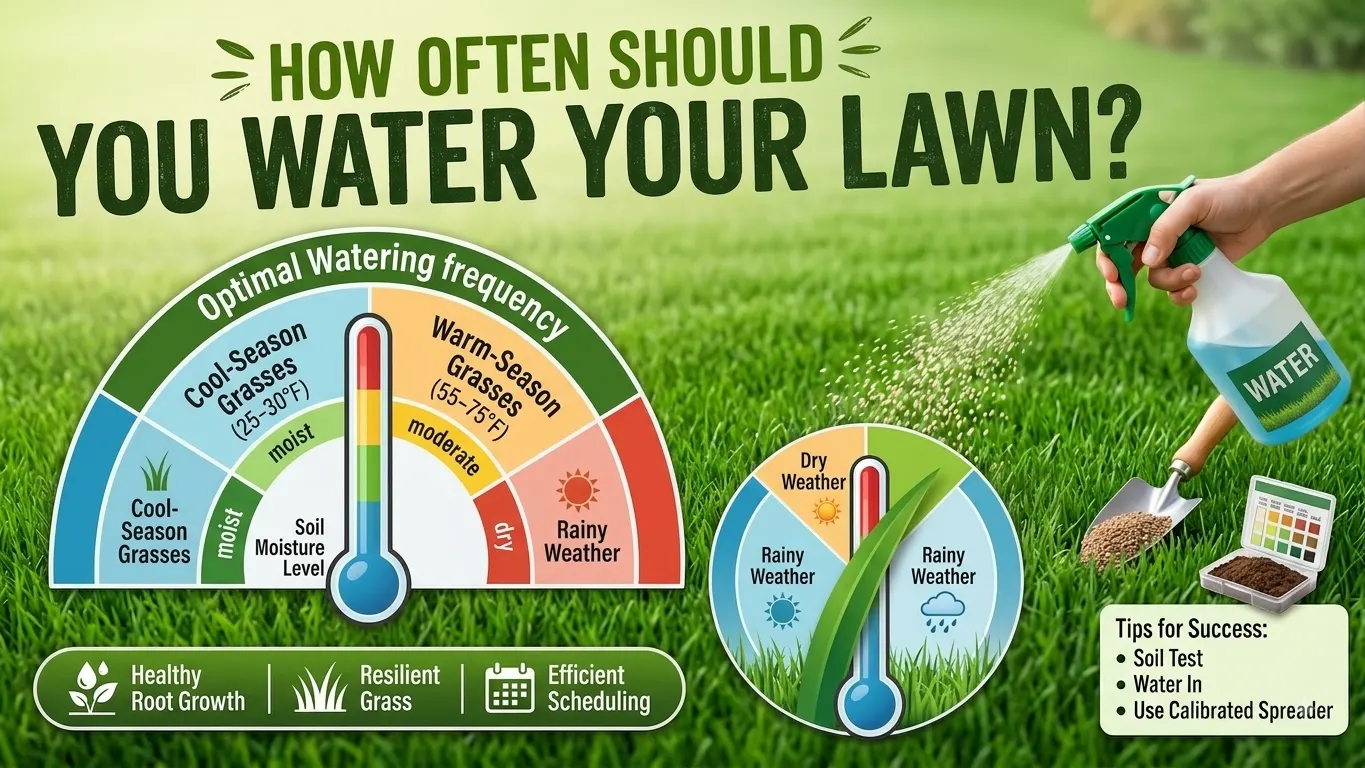
New grass needs consistent moisture, not a heavy soak. Keep the top inch of soil lightly moist for the first couple of weeks, watering daily or even twice a day in hot weather. Once you see new growth reach about an inch or two tall, shift to deeper, less frequent watering to encourage the roots to grow downward.
6. Feed the Lawn
A starter fertilizer at planting time helps new grass establish, and a regular feeding schedule afterward supports the whole lawn’s recovery, not just the patched areas.
7. Stick With It
Recovery isn’t instant. Mow regularly once the new grass is established, never removing more than about a third of the blade height at once, and keep watering even after things start looking green again. Backing off too early is one of the most common ways a recovering lawn slides right back into brown.
Timing Matters More Than People Think
When you attempt a fix matters almost as much as how you do it.
- Cool-season grasses (like fescue or bluegrass) recover best when reseeded in early fall, with spring as a secondary option.
- Warm-season grasses (like Bermuda, Zoysia, or St. Augustine) recover best when treated in late spring to early summer, once the soil has warmed up.
Trying to reseed or heavily treat a lawn at the wrong time of year, right before a frost, for example, usually wastes the effort entirely.
Frequently Asked Questions
Will brown grass turn green on its own?
If it’s dormant rather than dead, yes, it typically comes back once conditions improve (rain returns, temperatures shift). Use the green check or tug test to confirm which one you’re dealing with before deciding whether to intervene.
Can I just reseed over brown grass without doing anything else?
It’s not the most effective approach. Dead grass sitting on the surface blocks new seed from reaching the soil and can trap moisture in ways that encourage disease. Clearing the area first gives new seed a much better chance of taking root.
Does fertilizing alone fix brown grass?
No. Fertilizer feeds grass that’s already alive, it won’t revive a truly dead patch. It can help stressed but living grass recover faster, and support new growth once seed has been planted.
How long can grass survive without enough water before it dies?
It varies by grass type. Cool-season grasses can generally handle a few weeks without water before real damage sets in. Warm-season varieties tend to tolerate drought longer, sometimes over a month, before the risk of permanent loss increases.
Do I need to fix my whole lawn if only part of it is brown?
Not necessarily. If the rest of your lawn looks healthy, you can usually treat just the affected patches, identify the cause, prep the soil, and reseed with matching grass, rather than redoing the entire yard.
Final Thoughts
Brown grass looks alarming, but it’s rarely a lost cause. Most of the time it comes down to identifying whether you’re dealing with dormancy or actual damage, figuring out the underlying cause, and giving the lawn what it needs to recover, at the right time of year. A little patience and the right timing usually beats ripping everything out and starting from scratch.