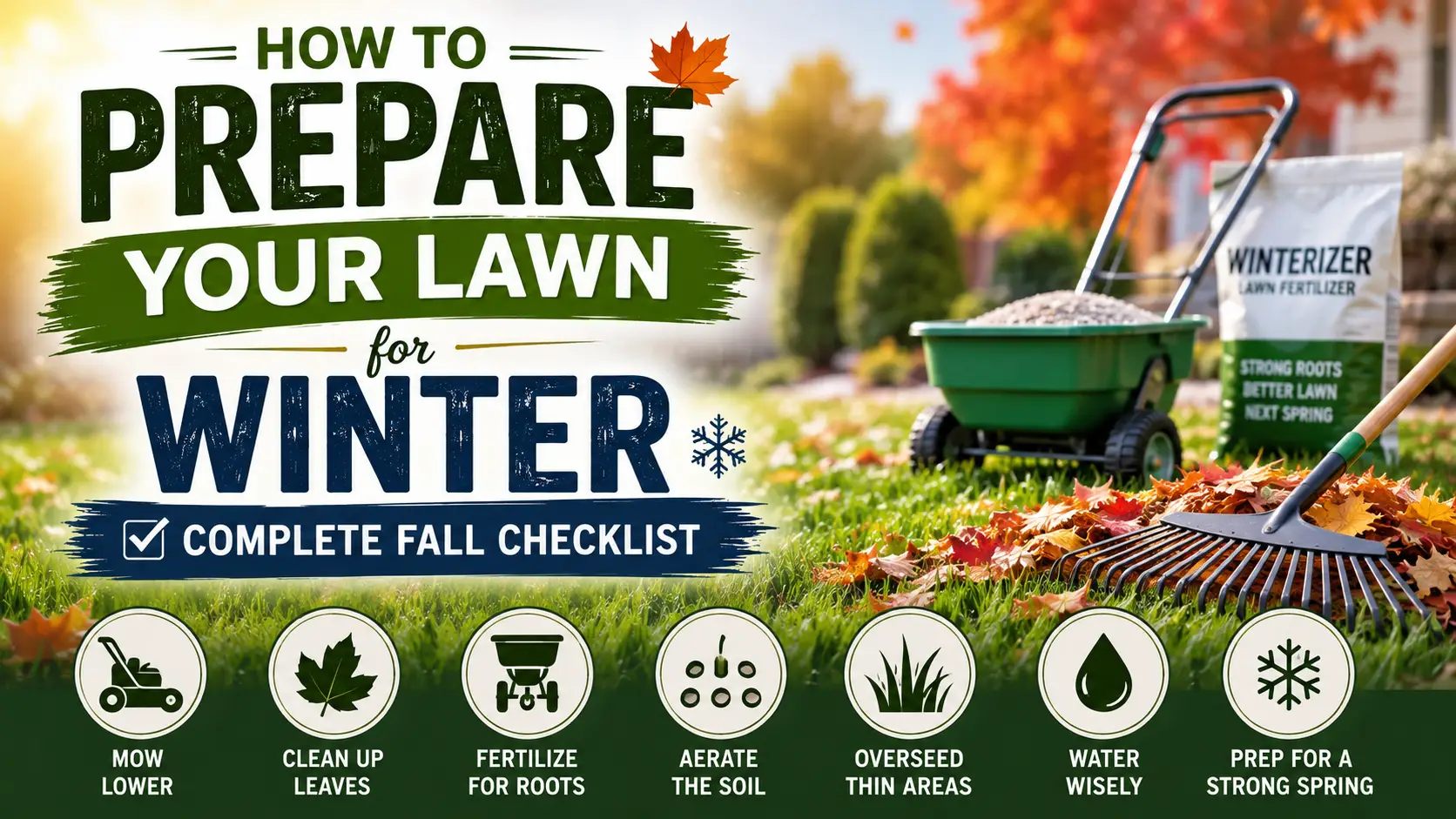
I used to water my lawn every single evening for about twenty minutes, because that’s just what I thought you were supposed to do. It felt responsible. It felt like I was taking care of things. Then one July my grass started looking worse, not better, patchy, a little yellow in spots, with this weird spongy feel underfoot. Turns out I wasn’t underwatering at all. I was drowning the roots and training my lawn to be lazy and shallow-rooted, which is almost worse than not watering at all.
If you’re standing in your yard right now wondering whether you’re overdoing it, underdoing it, or just guessing, you’re not alone. Here’s the actual answer, and the reasoning behind it, so you’re not just following a schedule blindly like I was.
The Short Answer
Most established lawns need about 1 to 1.5 inches of water per week, whether that comes from rain, your sprinkler, or a combination of both. That amount can be applied in a single watering session or split across two sessions during the week. The exact number shifts depending on your grass type, your soil, and the season, but if you remember one number from this whole article, that’s the one.
Why “A Little Every Day” Is Actually the Wrong Approach
This was my mistake, and it’s an incredibly common one. Watering lightly every day feels thorough, but it does the opposite of what you want. Light, frequent watering only wets the very top layer of soil, so the roots never have a reason to grow deep. They just stay near the surface where the water is, which makes the whole lawn more fragile the moment a hot, dry week actually hits.
Deeper, less frequent watering trains the roots to grow further down into the soil, which is exactly what you want going into a stretch of summer heat. Watering deeply once or twice a week encourages that deeper root growth, and a deeper root system is simply a more drought-resistant one.
How Do I Know If My Watering Is Actually Reaching the Roots?
Here’s a trick I picked up after my overwatering phase, and it’s stupidly simple: the screwdriver test. Push a screwdriver into the lawn after watering. If it doesn’t slide in easily to about six inches, the water isn’t reaching deep enough and the lawn needs more. I do this a few times through the season now instead of just trusting the sprinkler timer, and it’s caught more than one instance of me under-watering without realizing it.
You can also do a simple catch test to figure out how long your sprinkler actually takes to deliver real water, instead of guessing based on how long it “feels” like it’s been running:
- Set a few empty, shallow containers (a tuna can works well) around your watering zone
- Run your sprinkler for a fixed amount of time, say 20 or 30 minutes
- Measure how much water collected
- Use that number to calculate how long it actually takes to reach your weekly total
I did this the first time and was genuinely surprised how far off my assumption was. My “twenty minutes a day” habit was delivering way less actual water than I thought.
When Is the Best Time of Day to Water?
Early morning, and it’s not particularly close. Watering between roughly 4 and 9 a.m. minimizes evaporation and reduces the risk of fungal disease, because the soil is cool, wind is typically low, and the grass has the rest of the morning to dry off before evening humidity sets in. If evening watering is your only option, watering between 4 and 6 p.m. at least gives the grass blades time to dry before nightfall, since the later you water, the greater the risk of disease taking hold.
Midday watering, the thing I see so many sprinklers doing on a timer, mostly just evaporates before it ever reaches the roots. It’s not harmful exactly, it’s just wasted water and wasted money.
Does Grass Type Change the Answer?
Yes, and this trips a lot of people up because they follow generic advice that doesn’t actually apply to their yard.
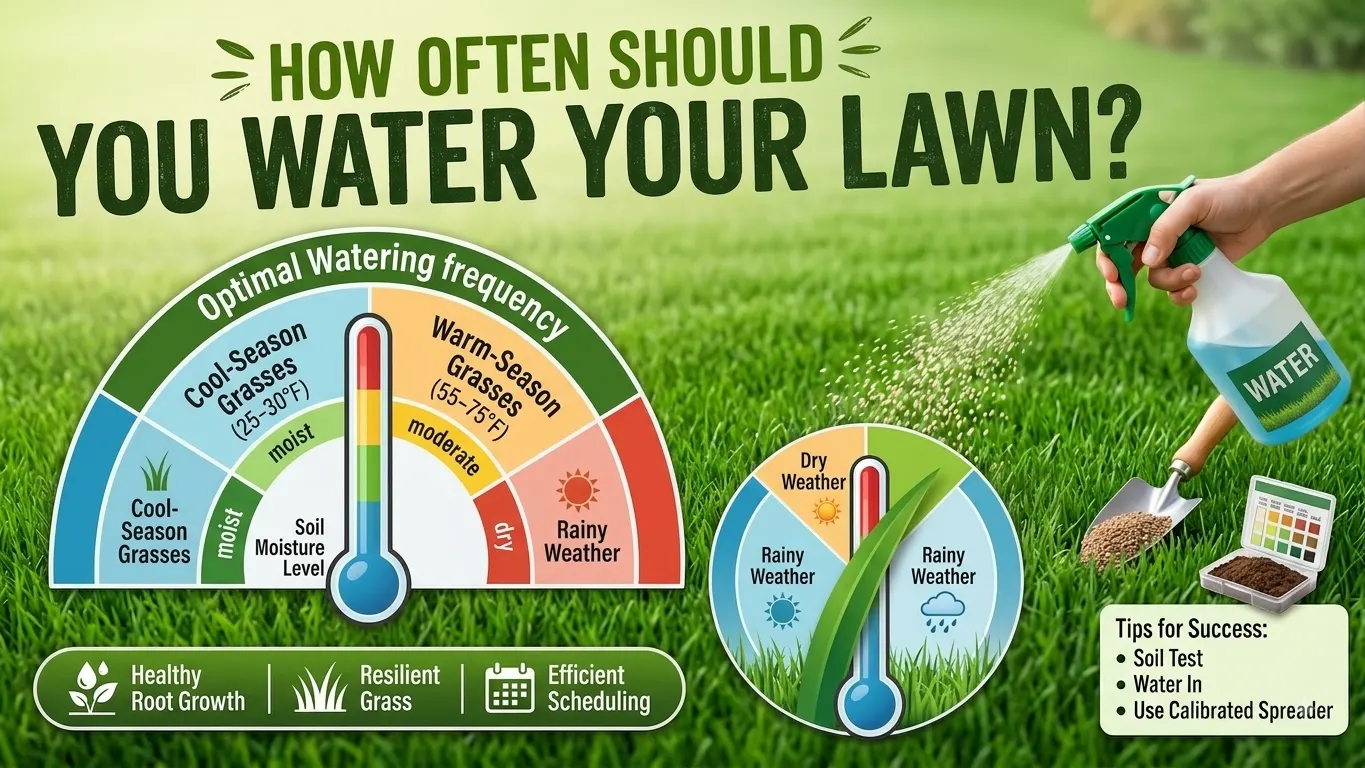
Cool-season grasses (Kentucky bluegrass, fescue, ryegrass) generally want the higher end of the range. These grasses typically prefer 1 to 1.5 inches of water per week while actively growing.
Warm-season grasses (Bermuda, Zoysia, St. Augustine, Bahia) tend to need somewhat less. Warm-season grasses typically require about 1 inch of water per week when actively growing, and some drought-tolerant types like zoysiagrass may need closer to just half an inch to an inch.
If you don’t know your grass type off the top of your head, it’s worth finding out, since watering a warm-season lawn like it’s a cool-season one is a quiet way to overwater all summer without noticing.
What About Soil Type?
This is the piece nobody warned me about when I first started paying attention to any of this. The same inch of water behaves completely differently depending on what kind of soil it’s landing on.
- Sandy soil drains fast, so it typically needs more frequent, lighter watering to keep up
- Clay soil holds water much longer, so it needs less frequent watering, and overwatering clay is an easy way to invite root rot
- Loam (the ideal middle ground) holds moisture well without staying soggy, and generally does well on the standard twice-a-week schedule
If you’ve ever wondered why your neighbor’s identical sprinkler schedule seems to work fine while yours leaves either soggy or bone-dry patches, soil type is very often the answer.
Should I Water Less in Spring and Fall?
Almost always, yes. Your lawn isn’t working nearly as hard in cooler weather, so it doesn’t need the full summer amount. Early spring typically needs half an inch of water per week or less, since natural rainfall is often enough on its own, before most lawns ramp up to the full amount by mid-spring. Overwatering in cooler months is one of the more common ways people accidentally invite fungal problems, since the grass isn’t using the water fast enough and it just sits in the soil.
What If I Just… Don’t Water?
You might not need to, depending on your priorities and your climate. Established, properly cared-for lawns are resilient enough to survive weeks without water by simply going dormant and turning brown, then recovering once rain returns. If you live somewhere with reliable rainfall, supplemental watering may not be necessary at all.
The one rule that actually matters here: don’t go back and forth between watering and letting the lawn go dormant. Decide at the start of the season whether you’re going to water consistently or let the lawn go dormant through dry stretches, and stick with that choice rather than switching between the two. Grass that keeps getting shocked out of dormancy and back into it repeatedly struggles far more than grass that’s allowed to do one or the other consistently.
Frequently Asked Questions
How often should I water my lawn per week?
Most established lawns do best with one to two deep watering sessions per week rather than daily light watering, adding up to roughly 1 to 1.5 inches total, adjusted for grass type, soil, and season.
Is it better to water a little every day or deeply a couple times a week?
Deeply, a couple of times a week. Frequent light watering keeps roots shallow and makes your lawn more vulnerable to drought and heat stress, while deep, infrequent watering encourages roots to grow down and makes the lawn more resilient overall.
What time of day should I water my lawn?
Early morning, ideally between about 4 and 9 a.m. This timing minimizes evaporation and gives the grass time to dry before evening, which lowers the risk of fungal disease.
How do I know if I’m watering enough?
Push a screwdriver into the soil after watering. If it doesn’t go in easily to about six inches, the water isn’t reaching deep enough into the root zone and you likely need to water more or for longer.
Do I need to water my lawn if it rains?
Not necessarily. If your area gets close to an inch of rainfall in a week, that may cover your lawn’s needs entirely. A simple rain gauge or even a shallow container left outside can tell you exactly how much rain fell so you’re not guessing.
Final Thoughts
I wish someone had told me the screwdriver test years before I figured it out on my own. Watering your lawn isn’t really about how often you turn the sprinkler on, it’s about how deep that water actually gets and whether your roots are being encouraged to grow down or stay lazy near the surface. Get the depth and timing right, match it to your grass type and soil, and you’ll likely find you’re watering less often than you thought while getting a noticeably healthier lawn out of it.