
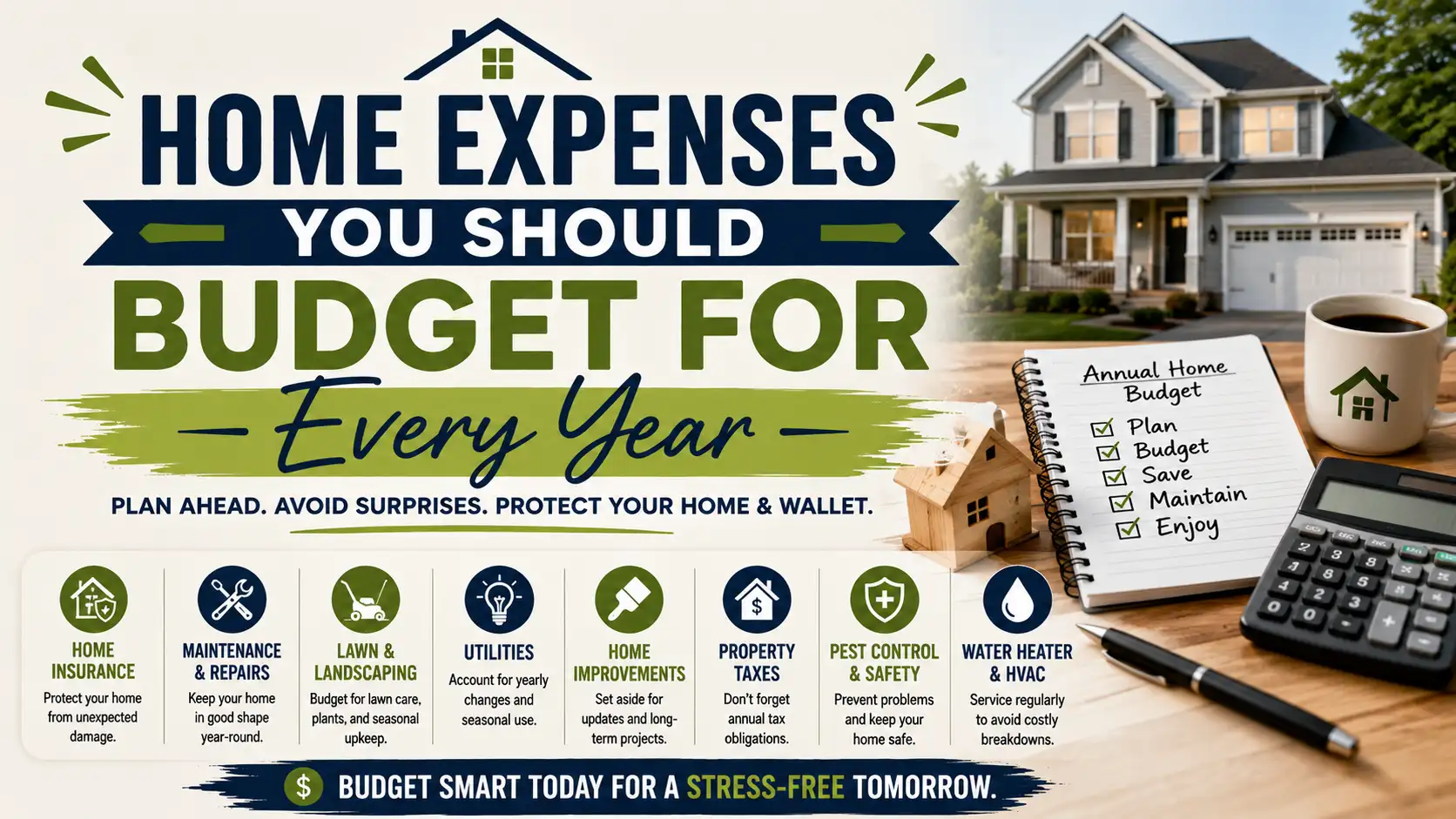
Most people budget for their mortgage or rent and call it done. But owning or maintaining a home comes with a second layer of costs that rarely show up in a monthly budget spreadsheet, the annual and semi-annual expenses that quietly catch people off guard because they don’t happen every month. These are the bills that feel like emergencies even though they’re completely predictable if you plan for them.
Here’s a full breakdown of what to actually budget for every year, so nothing catches you off guard.
Home Maintenance and Repairs
This is the big one most people underestimate. A widely used rule of thumb is to set aside roughly 1% of your home’s value every year for maintenance and repairs. On a $350,000 home, that’s about $3,500 annually, spread across twelve months, it’s a manageable $290 or so a month rather than one gut-punch bill.
This fund covers things like:
- Roof repairs or replacement
- Water heater replacement
- HVAC repairs or full system replacement
- Appliance breakdowns
- Plumbing issues
- Foundation or structural repairs
Older homes and homes with aging systems (roof, HVAC, water heater all over 10-15 years old) should budget closer to the higher end of that range, since multiple big-ticket items becoming due around the same time is common.
HVAC Servicing and Filters
Beyond emergency repairs, your heating and cooling system needs regular maintenance to avoid becoming an emergency repair in the first place. Budget for:
- An annual (or twice-yearly) HVAC tune-up
- Replacement filters every 1-3 months
- Occasional duct cleaning
Skipping this maintenance is one of the most common ways people end up with a full system replacement years earlier than necessary.
Pest Control
Even homes without a visible pest problem benefit from preventative pest control, and homes in humid or wooded areas often need it. Annual or quarterly treatments are far cheaper than dealing with an infestation (particularly termites) after the fact, since structural damage from termites alone can run into the thousands.
Lawn and Landscaping
If you have a yard, this is a recurring cost that’s easy to underestimate:
- Seasonal lawn treatments (fertilizer, weed control)
- Tree trimming or removal
- Mulch and landscaping refresh
- Irrigation system maintenance
- Snow removal, if you’re in a climate that requires it
Even a modest yard adds up to several hundred dollars a year once you account for all of these.
Gutter Cleaning
Clogged gutters lead to water damage, foundation issues, and roof problems, all of which cost far more than the cleaning itself. Most homes need this done once or twice a year, more often if you’re surrounded by trees.
Home and Property Insurance
Your premium likely increases at least somewhat each renewal period, and it’s worth budgeting for that increase rather than being surprised by it. This is also a good annual checkpoint to:
- Shop your policy against other providers
- Reassess your coverage amount against your home’s current value
- Check whether you need additional coverage (flood, earthquake, etc.) depending on your area
Property Taxes
Property taxes often increase gradually as home values in your area rise, and if your taxes aren’t escrowed into your mortgage payment, this is an easy one to forget until the bill arrives. Even if they are escrowed, an increase can raise your monthly mortgage payment when your lender recalculates.
Chimney and Fireplace Maintenance
If you have a fireplace, an annual chimney inspection and cleaning isn’t optional from a safety standpoint, creosote buildup is a genuine fire hazard. Budget for this yearly if the fireplace gets regular use.
Appliance Lifespan Planning
Rather than being surprised when an appliance dies, it helps to know roughly how long each one is expected to last and budget accordingly as they approach that age:
- Refrigerator: 10-15 years
- Washer/dryer: 10-13 years
- Dishwasher: 9-10 years
- Water heater: 8-12 years
- HVAC system: 15-20 years
If any of your appliances are approaching the end of their expected lifespan, it’s worth setting aside money specifically for that replacement rather than lumping it into the general maintenance fund.
Exterior Maintenance
- Pressure washing siding, driveways, and walkways
- Repainting or staining exterior surfaces (decks, fences, trim)
- Sealing driveways or walkways
- Window washing
These are easy to skip, but neglecting them leads to faster deterioration and more expensive repairs down the line.
Seasonal Prep Costs
Depending on your climate, certain seasonal transitions come with their own costs:
- Winterizing pipes and outdoor faucets
- Snow removal equipment or services
- AC tune-ups before summer
- Storm shutters or hurricane prep, if applicable
HOA Fees and Assessments
If you’re in a homeowners association, remember that HOA fees can increase annually, and special assessments for larger community projects (roof replacement on a shared building, repaving, etc.) can show up with little warning. It’s worth keeping a small buffer for this if you’re in an HOA with older shared infrastructure.
How to Actually Budget for All of This
Trying to track each of these individually gets overwhelming fast. A simpler approach:
- Total up your estimated annual costs using the categories above (your specific mix will vary based on climate, home age, and whether you have a yard, pool, or HOA).
- Divide by 12 to get a monthly savings target.
- Move that amount into a dedicated home expense fund each month, separate from your regular checking account, so it’s there when you need it and you’re not tempted to spend it elsewhere.
- Revisit the total once a year, since costs shift as your home ages and local prices change.
Final Thoughts
None of these expenses are surprises, they’re predictable costs that just don’t happen on a monthly schedule, which is exactly why they catch so many homeowners off guard. Building them into an actual annual budget, rather than reacting to each one as an emergency, turns a stressful surprise bill into a line item you already planned for.