
For years I fertilized my lawn on Memorial Day weekend. Not because I’d researched it, but because that’s when the garden center had the big display set up out front, bags stacked into a pyramid with a “Feed Your Lawn Now!” sign. I’d grab a bag, spread it that afternoon, and figure I’d done my part for the year. Looking back, I was fertilizing on a marketing schedule, not a biological one, and it showed. My lawn never looked as good as my neighbor’s, who I later found out was watching soil temperature, not the calendar.
That distinction turned out to be the whole game. Here’s what actually determines the right time to fertilize, and why the date on the calendar matters a lot less than what’s happening under the surface.
The Short Answer
The best time to fertilize your lawn is whenever it’s actively growing, not on a fixed date. For cool-season grass, that’s early spring and again in fall. For warm-season grass, that’s late spring through summer. The single biggest mistake people make is fertilizing based on the calendar instead of what their specific grass type and local soil temperature are actually doing.
Why Timing Matters More Than People Realize
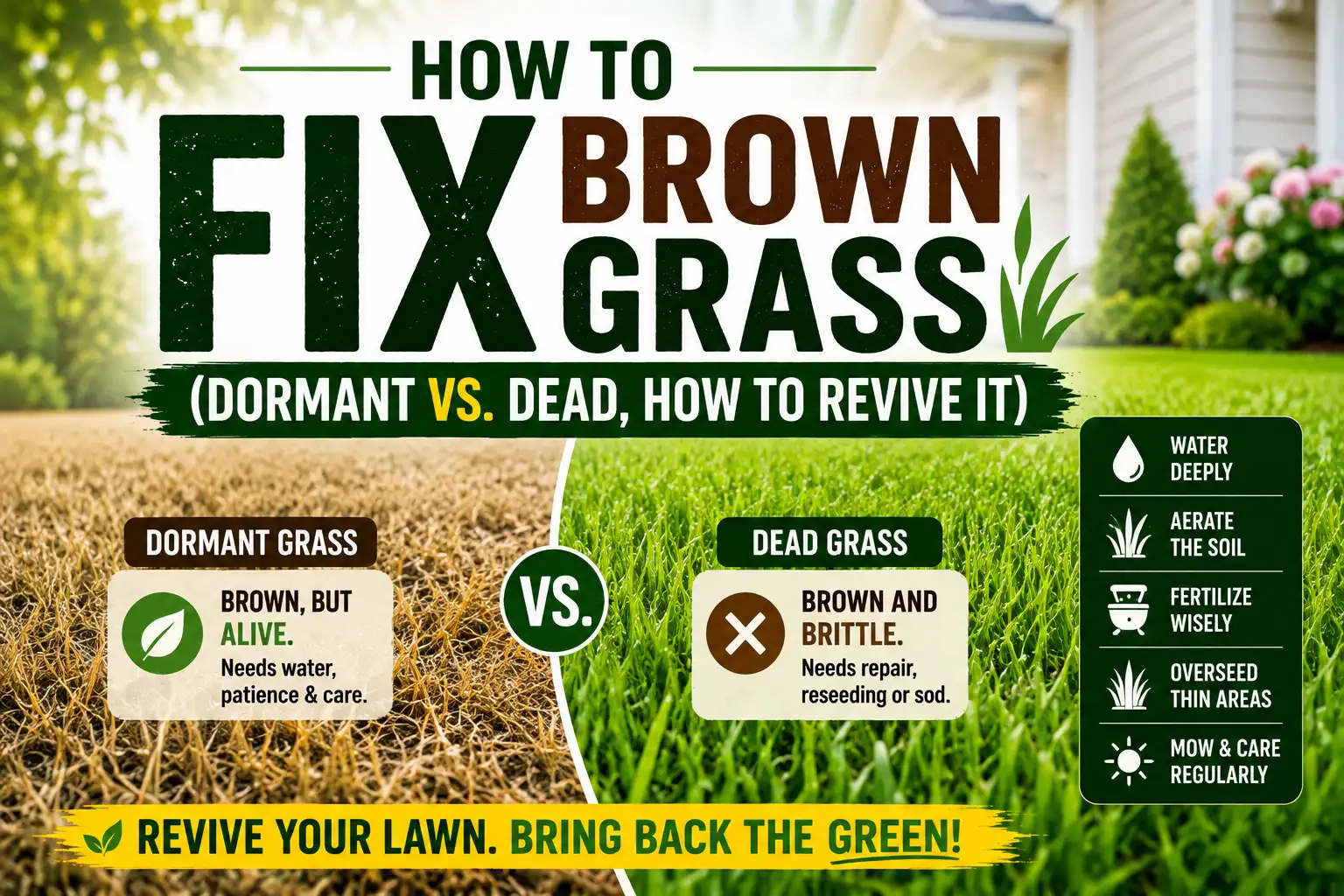
Fertilizer isn’t something a lawn can store up and use later. If you feed grass while it’s dormant, that fertilizer either washes away unused or, worse, forces growth the root system isn’t ready to support. Applying nitrogen when the grass is dormant can push growth the roots can’t sustain, and tends to encourage weeds more than it helps your actual lawn. Basically, you’re paying for a bag of fertilizer that does nothing useful, or actively works against you.
This was the part that reframed things for me. I’d always assumed “more fertilizer, more often” was just generally good for the lawn. It’s not. It’s good only when the grass is in a growth phase that can actually use it.
Cool-Season Grass: Spring and Fall Are Your Windows
If your lawn is Kentucky bluegrass, tall fescue, or perennial ryegrass, you’re working with a cool-season grass, and it does its most important growing in the cooler parts of the year.
- Early spring, once soil temperatures consistently reach around 50 to 55°F at a few inches deep
- Early fall, which many turf specialists consider the single most important application of the year
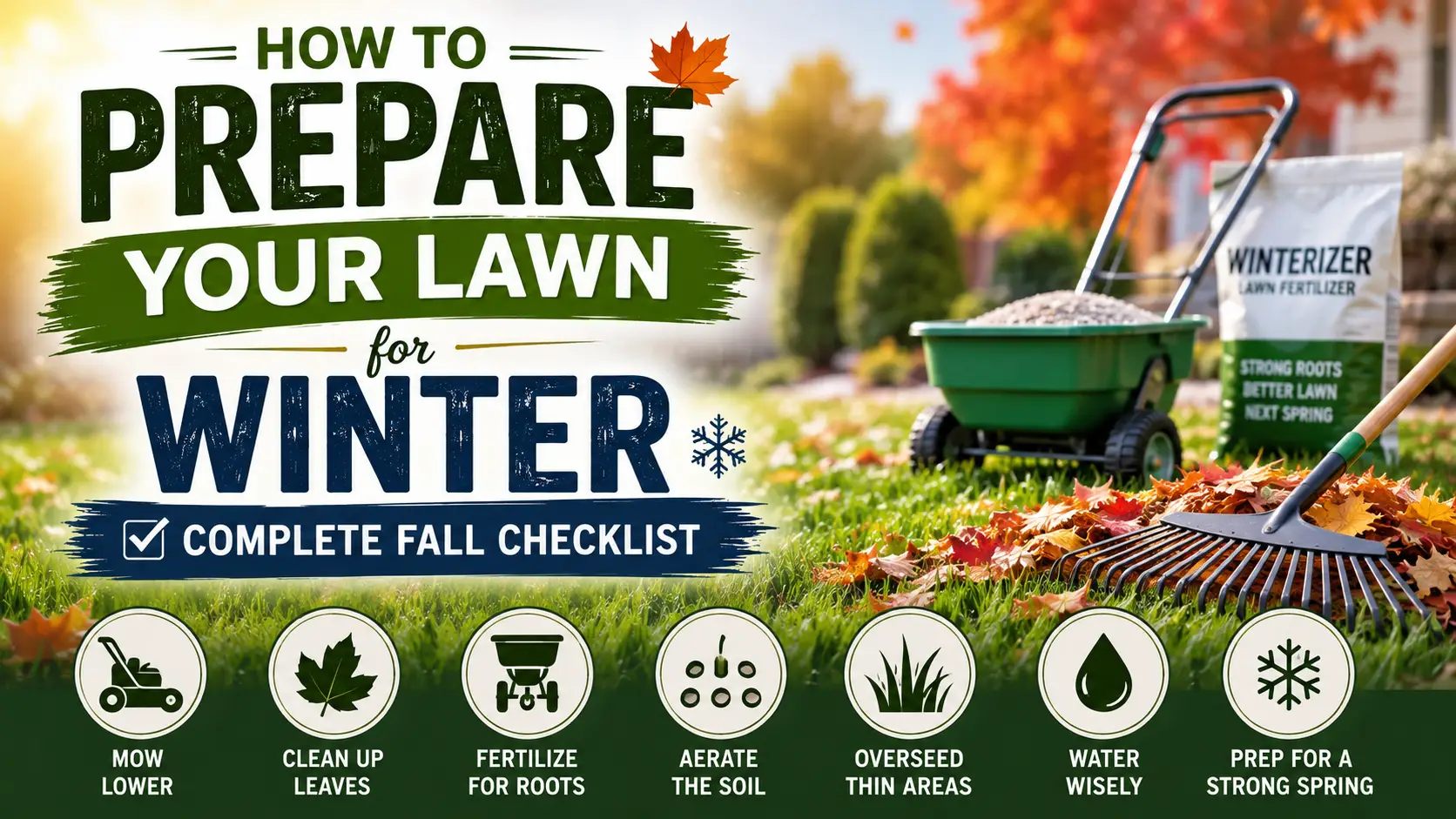
That fall window deserves more attention than it usually gets. Early to mid-September is considered the most important time to fertilize cool-season turfgrasses, since fertilizing then encourages new growth and root development that helps the plant survive winter and come back strong the following year. If you only fertilize your cool-season lawn once a year, this is the application that matters most, more than the spring one most people default to.
One thing worth avoiding: skip fertilizing cool-season grass in the heat of August, since the roots are essentially just waiting out the heat at that point, and the fertilizer tends to wash away before it does any good.
Warm-Season Grass: Wait for the Heat
If you’re growing Bermuda, Zoysia, St. Augustine, or Bahia, your timing flips almost entirely. These grasses do their growing in the warm months and go dormant, not dead, through winter.
Warm-season grass needs to wait until late spring or early summer, once soil temperatures are consistently above 65°F. Fertilizing too early, while the grass is still technically dormant or just waking up, wastes the application entirely since the plant isn’t in a state to use it.
Warm-season grasses generally do best fertilized from early spring through early summer, just before temperatures climb above 80°F and the peak growing season kicks in, typically late May through early July.
Forget the Calendar, Check the Soil
This was the actual lightbulb moment for me. Two homes ten miles apart, even in the same city, can hit the right soil temperature weeks apart depending on sun exposure, elevation, or just an unusually cool spring. A fixed date on a bag of fertilizer can’t account for any of that.
One lawn care professional put it simply: when people ask when to fertilize, the answer should start with temperature, not the calendar. A basic soil thermometer, pushed a few inches into the ground, tells you far more than a date circled on a calendar ever will.
Quick reference for soil temperature triggers:
| Grass Type | Trigger Soil Temp | Typical Season |
|---|---|---|
| Cool-season (spring) | ~50–55°F | Early spring |
| Cool-season (fall) | Consistent cooling | Early September |
| Warm-season | ~65°F+ | Late spring/early summer |
How Often Should You Actually Fertilize?
This depends on your grass type and how hands-on you want to be:
- Cool-season lawns generally do well with two to three applications a year, split between spring and fall
- Warm-season lawns, particularly Bermudagrass, tend to benefit from three to four applications during the growing season, spaced roughly six to eight weeks apart
More isn’t automatically better here. Over-fertilizing stresses your lawn and your wallet in roughly equal measure, so following label rates matters just as much as timing the season correctly.
A Few Practical Tips I Wish I’d Known Earlier
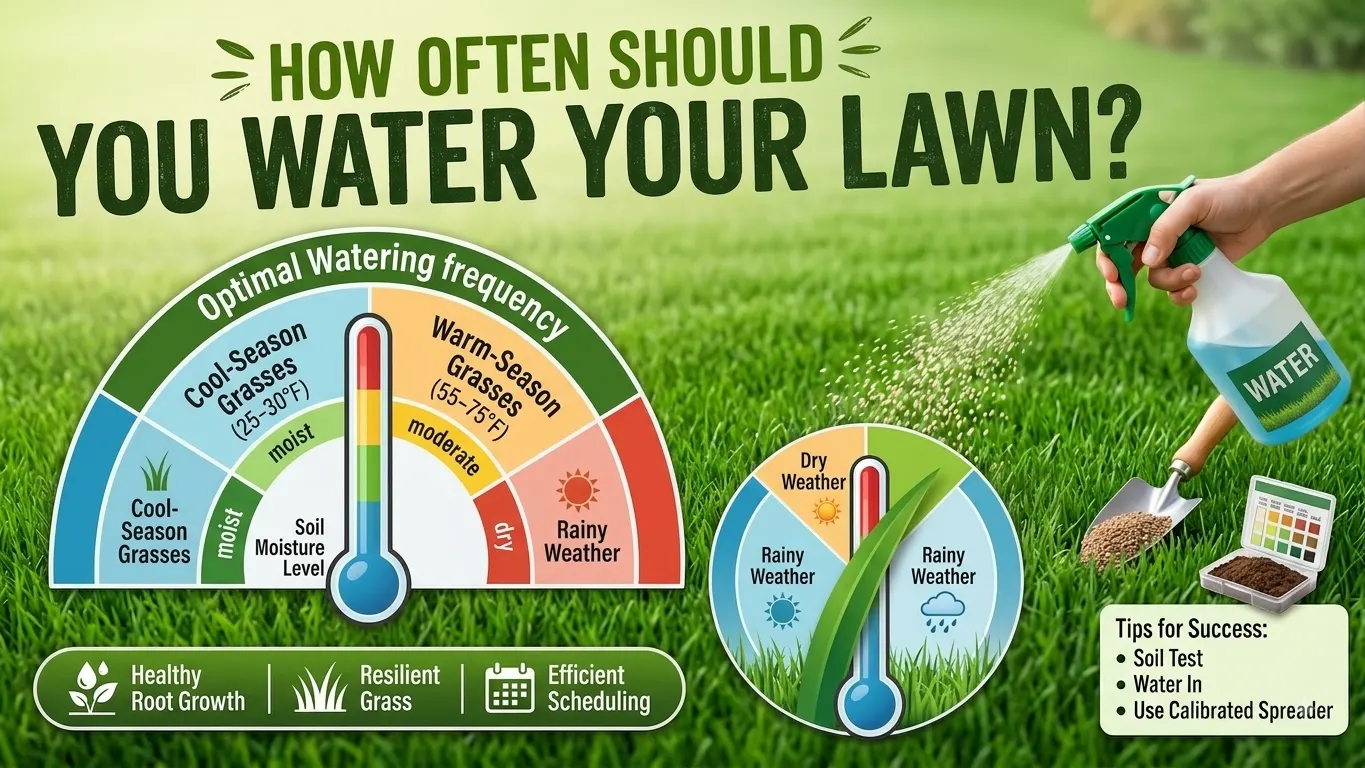
- Water a few days before fertilizing. A slightly moist lawn absorbs fertilizer more evenly than a bone-dry one.
- Mow first, fertilize after. Applying to freshly cut grass helps the fertilizer reach the soil instead of getting caught in overgrown blades.
- Skip it during drought stress. Fertilizing a lawn that’s already struggling with heat or lack of water adds stress rather than relief.
- Use a spreader, not a scoop-and-toss approach. Uneven application is one of the most common reasons for those stripey, patchy green-and-yellow lawns.
Frequently Asked Questions
What month should I fertilize my lawn?
It depends on grass type more than month. Cool-season grasses generally do best fertilized in April and again in September, while warm-season grasses do best from May through July, once soil temperatures are consistently warm.
Is it better to fertilize in spring or fall?
For cool-season grass, fall is typically considered the more important application, since it supports root development and winter survival. For warm-season grass, spring and summer matter most, since that’s when the grass is actively growing.
Can fertilizing at the wrong time hurt my lawn?
Yes. Fertilizing dormant grass wastes the product and can push weak, unsupported growth or feed weeds more than the actual lawn. It’s more effective to wait for active growth than to fertilize on a fixed schedule regardless of conditions.
How do I know if my soil is warm enough to fertilize?
A basic soil thermometer pushed a few inches into the ground gives a reliable reading. Cool-season grass generally needs about 50 to 55°F, while warm-season grass needs closer to 65°F or higher.
How often should I fertilize my lawn each year?
Cool-season lawns typically do well with two to three applications a year. Warm-season lawns, especially Bermudagrass, often benefit from three to four applications spaced six to eight weeks apart during the growing season.
Final Thoughts
I still think about that pyramid of fertilizer bags at the garden center sometimes, mostly as a reminder that convenience marketing and what your lawn actually needs are two very different things. Once I started paying attention to soil temperature and grass type instead of a date on the calendar, the difference in how my lawn looked by midsummer wasn’t subtle. Get the timing right for your specific grass, and the fertilizer you’re already buying will actually do its job instead of washing away or feeding the wrong thing.