The first winter I owned a home, I did basically nothing to my lawn once October hit. I put the mower away, figured grass takes care of itself, and moved on to worrying about gutters and the furnace instead. Come spring, I had bare patches, a weird gray moldy-looking film in a few spots, and grass that took until June to really green up. My neighbor’s lawn, meanwhile, looked like it had barely noticed winter happened.
Turns out the difference wasn’t luck. It was about six weeks of fall prep I hadn’t bothered with. Here’s what actually needs to happen before the cold sets in, and why skipping it costs you the following spring, not the current season.
The Short Answer
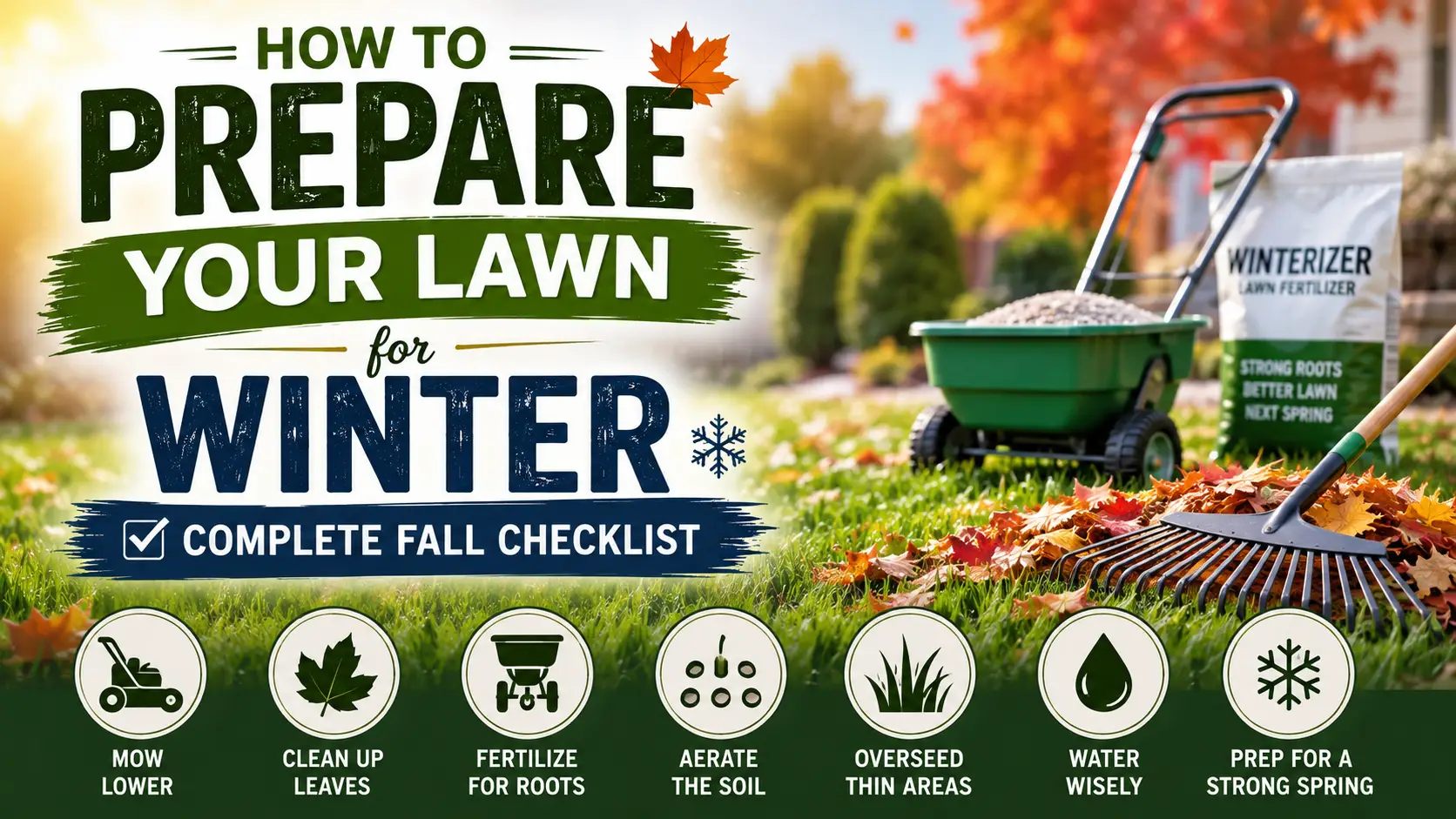
Preparing your lawn for winter means adjusting your final mowing height, clearing leaves and debris, aerating compacted soil, applying the right fall fertilizer, overseeding thin spots if you have cool-season grass, and watering deeply before the ground freezes. The full process involves mowing, raking, adjusting watering, aerating, dethatching, overseeding, and applying fertilizer and soil amendments. None of it is complicated on its own, it’s just easy to skip because winter feels like the lawn’s off-season.
Keep Mowing Until the Grass Actually Stops Growing
This one surprised me. I assumed you just stop mowing whenever it starts feeling like fall. Grass should keep being mowed throughout fall as long as it’s still actively growing, and growth typically slows once daytime temperatures consistently drop below 50°F.
The Final Mow Matters More Than the Rest of the Season
Your last cut of the year isn’t just “one more mow”, it’s a specific height that sets your lawn up for winter.
Most cool-season grasses should be cut down to about 2 to 2.5 inches for the final mow, and this shorter trim reduces the risk of matting and snow mold developing under snow cover through winter. That said, don’t overcorrect. Cutting too short in a single pass risks scalping the lawn, which can actually cause winter injury, so avoid removing more than about a third of the blade height at once.
Warm-season lawns work a bit differently. Warm-season grass is typically cut a bit shorter for winter, generally around 1.5 to 2 inches, while cool-season grass tends to stay closer to 2.5 inches.
Clear Leaves and Debris Before They Cause Problems
This is the step I skipped that first year, and it’s probably the single biggest reason my lawn looked rough by spring. Leaves and debris left sitting on the lawn through winter block sunlight and trap moisture, which invites mold and fungal disease underneath.
If you’re dealing with a light layer of leaves rather than a thick blanket, you don’t necessarily need to bag everything. A mulching mower can shred leaves finely enough that they decompose and actually return nutrients to the soil, which is a nice bit of free fertilizer if the layer isn’t too heavy.
Aerate to Break Up Compacted Soil
If your lawn gets regular foot traffic, or you haven’t aerated in a year or two, fall is the ideal window to fix it. Aerating loosens compacted soil and improves how air, water, and nutrients reach the grass roots, which matters even more once winter’s freeze-thaw cycles start adding extra stress to compacted areas.
There’s also a nice compounding effect here: aerating before applying fall fertilizer helps that fertilizer actually reach deeper into the soil, which supports stronger root development. Doing these two steps in the wrong order, or skipping aeration entirely, means some of your fertilizer just sits on the surface instead of getting where it’s needed.
Overseed Thin or Bare Spots (Cool-Season Lawns Only)
If you’ve got a cool-season lawn with some patchy or thin areas, fall is genuinely the best window to fix them, not spring like most people assume. The best time for overseeding cool-season lawns is late summer to early fall, often right around the same time as aeration, since this timing gives new grass enough time to establish roots before winter sets in.
Prep the area the same way you would for any reseeding job: mow a bit shorter than usual, clear away debris, spread seed evenly with a broadcast spreader focused on the thin spots, then water consistently to keep the top layer of soil moist until it establishes.
Apply the Right Fall Fertilizer
Not just any fertilizer works here, timing and formula both matter. A slow-release, high-potassium fertilizer with relatively low nitrogen, something close to a 10-0-20 ratio, is generally recommended for fall application, since potassium strengthens cell walls and improves cold tolerance. These are usually labeled specifically as “winterizer” fertilizers, so you don’t have to guess at the ratio yourself.
Timing wise, the best window to apply winter fertilizer is in late fall, roughly one to two weeks after your last mowing and aeration, and before the ground actually freezes.
Water Deeply Before the Ground Freezes, Then Stop
This is a step that’s easy to get backwards. Watering deeply a week or two before the first freeze helps the lawn retain moisture through winter, especially in areas that don’t get much snowfall. But once freezing temperatures actually arrive, watering should stop, since it can create ice on the lawn that damages the grass.
Think of it as one last deep drink before the lawn goes quiet, not an ongoing winter watering routine.
Take Care of Your Equipment While You’re At It
Since you’re already out there, it’s worth handling mower maintenance before it sits unused for months. Draining the gas tank and running the mower dry, or adding a fuel stabilizer, keeps the gasoline from degrading while the mower is in storage, and checking or replacing air filters now means less to deal with once spring mowing starts back up.
A Quick Fall Winterizing Checklist
- Continue mowing until growth slows, then do a shorter final cut
- Clear leaves and debris, or mulch them finely if the layer is light
- Aerate compacted soil, ideally before fertilizing
- Overseed thin spots (cool-season grass only)
- Apply a low-nitrogen, high-potassium “winterizer” fertilizer
- Water deeply once, a week or two before the first hard freeze
- Stop watering once freezing temperatures hit
- Drain or stabilize mower fuel and check the air filter
Frequently Asked Questions
What height should I cut my grass before winter?
For cool-season grasses, aim for about 2 to 2.5 inches on the final mow of the season. Warm-season grasses generally do better slightly shorter, around 1.5 to 2 inches. Avoid scalping the lawn by cutting more than a third of the blade height in a single pass.
Should I fertilize my lawn before winter?
Yes, for most lawns. A low-nitrogen, high-potassium “winterizer” fertilizer applied in late fall, after your last mowing and about a week or two before the ground freezes, helps strengthen roots and improve cold tolerance.
Is it bad to leave leaves on the lawn over winter?
Yes, if the layer is thick. Leaves left sitting on grass block sunlight and trap moisture, which invites mold and fungal disease. A thin layer can be mulched in place with a mower, but a heavy layer should be cleared.
Should I aerate my lawn in the fall?
Yes, fall is one of the best times to aerate, especially for compacted or high-traffic lawns. It improves how water, air, and nutrients reach the roots and helps fall fertilizer penetrate deeper into the soil.
When should I stop watering my lawn before winter?
Water deeply once, roughly one to two weeks before the first hard freeze, then stop. Watering after freezing temperatures arrive can create ice on the lawn that damages the grass.
Final Thoughts
That first rough spring taught me that winter lawn prep isn’t really about winter at all, it’s about spring. Every step, the final mow height, clearing debris, aerating, the right fertilizer, one last deep watering, is really just setting up the lawn to bounce back fast once temperatures rise again. Skip it, and you’re not really risking the lawn dying, you’re just guaranteeing a slower, patchier spring than you’d otherwise have.