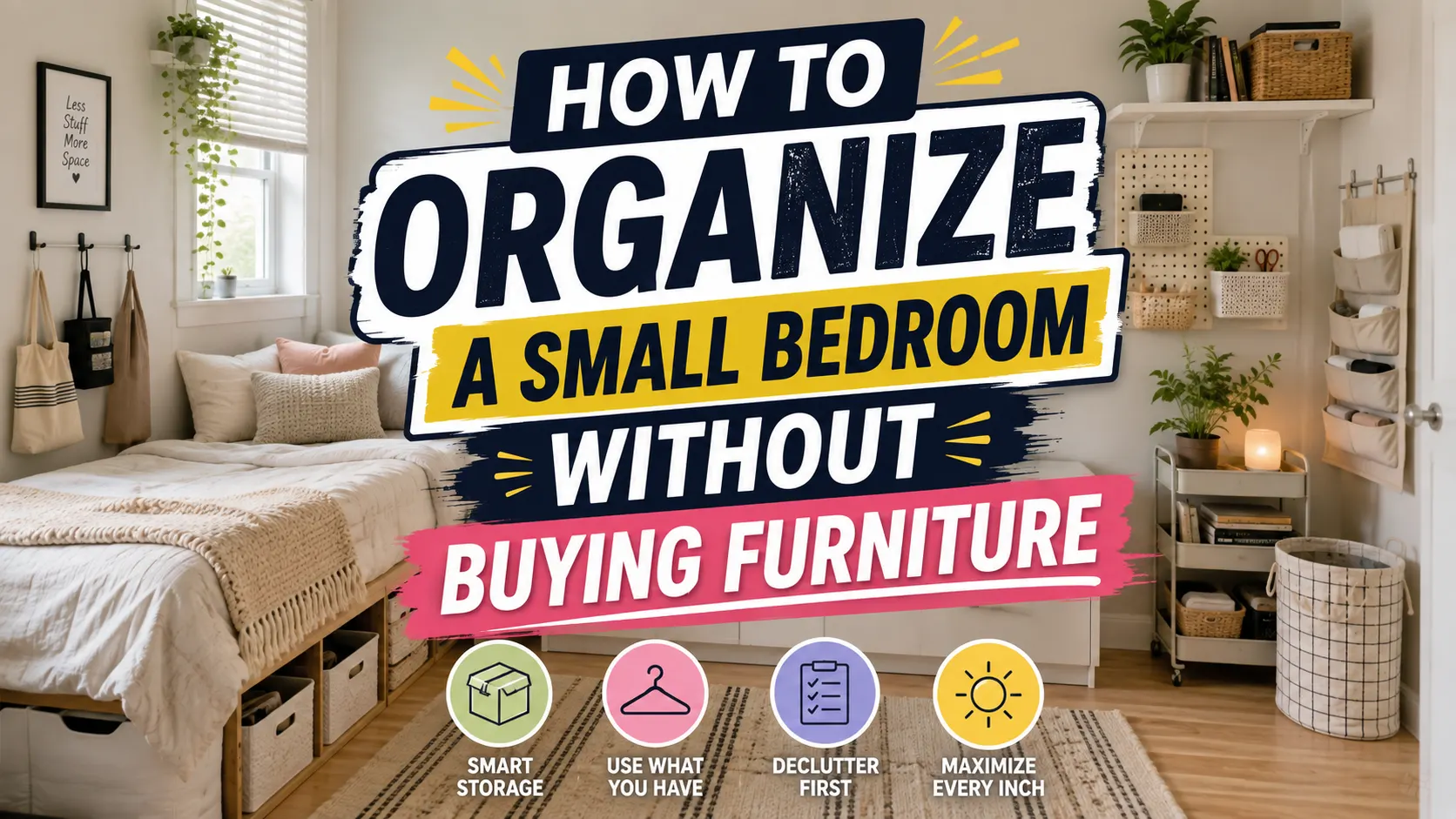
A small bedroom doesn’t have to feel cramped or chaotic. The instinct when a room feels tight is to go shopping, add a storage bench, a shelving unit, maybe a bed with built-in drawers. But furniture takes up floor space, and in a small room, floor space is the one thing you can’t afford to lose. The real fix isn’t buying more, it’s using what you already have more intelligently.
Here’s how to make a small bedroom feel organized and open without spending a dime on new furniture.
Why More Furniture Usually Makes a Small Room Worse
It seems counterintuitive, but adding storage furniture to a small bedroom often backfires. Every new piece eats into your walking space, makes the room feel more crowded visually, and gives you one more surface to collect clutter on. The goal in a small space isn’t more storage, it’s smarter use of the storage and space you already have.
Step 1: Take Everything Off the Floor
Floor space is the most valuable real estate in a small bedroom. Before organizing anything else, get everything possible up and off the ground.
- Shoes go in a closet organizer or under-bed storage, not lined up along a wall
- Laundry baskets get tucked into a closet corner instead of sitting in the open
- Bags, backpacks, and loose items get hung on hooks instead of piled on the floor
A clear floor immediately makes a small room feel bigger, even before anything else changes.
Step 2: Use the Space Under Your Bed
The area under your bed is often the single most underused storage space in a small bedroom. Instead of buying bins, use what you already own:
- Slide flat storage boxes, suitcases, or even large gift boxes under the bed frame
- Store out-of-season clothing, extra bedding, or shoes here
- If your bed doesn’t have clearance, consider risers made from sturdy books or blocks you already have around the house
This single change can free up an entire drawer or shelf’s worth of space elsewhere in the room.
Step 3: Maximize Your Closet Before Looking Anywhere Else
Most closets are poorly organized long before they’re actually full. Before assuming you need more storage, fix what’s already there:
- Double your hanging space by adding a second tension rod below your existing rod for shorter items like shirts and folded pants
- Use the closet door with an over-the-door organizer for shoes, accessories, or small items
- Stack, don’t lay flat. Folded clothes stored vertically (file-folded rather than stacked flat) let you see everything at once and fit more in the same shelf space
- Group by category so everything has an obvious home and stays there
A well-organized closet can absorb clutter that would otherwise end up on your floor or dresser.
Step 4: Use Wall Space Instead of Floor Space
Walls are free real estate that most small bedrooms completely ignore. A few low-cost or no-cost ways to use them:
- Hooks near the door for bags, jackets, or tomorrow’s outfit
- A hanging shoe organizer repurposed for accessories, small electronics, or toiletries
- Command hooks or a small ledge (even a repurposed picture ledge) to hold books or décor that would otherwise clutter a nightstand
Anything you can move from a horizontal surface to a vertical one instantly opens up usable space.
Step 5: Rethink What’s on Your Nightstand and Dresser
Small bedrooms often feel cluttered not because of a lack of storage, but because visible surfaces are overloaded. Do a quick audit:
- Keep only 2–3 items on your nightstand, everything else goes in a drawer or gets removed
- Use dresser drawer dividers (even repurposed shoe boxes) to keep drawers from becoming a jumbled mess
- Store chargers, remotes, and small electronics in a single designated drawer instead of scattered across surfaces
Clear surfaces make a room feel calm and organized even if the closet behind the door is doing all the heavy lifting.
Step 6: Use Your Existing Furniture More Efficiently
Before you conclude you need something new, look at what your current furniture can actually hold:
- Empty out drawers that have become junk drawers and reorganize them with a clear purpose
- Repurpose a decorative basket or bowl you already own as a catch-all for keys, jewelry, or loose items
- If you have a headboard with any depth, use the top as narrow storage for books or small items instead of leaving it empty
Step 7: Create Zones, Even in a Small Room
Even a small bedroom benefits from having defined areas rather than one blended space:
- A sleep zone (the bed and immediate surroundings)
- A dressing zone (closet and dresser)
- A relaxation or work zone if space allows (a corner with a chair or small desk)
Mentally separating these zones, even without physical dividers, makes the room feel more intentional and less like one crowded catch-all space.
Step 8: Do a Weekly 10-Minute Reset
Small rooms show clutter fast because there’s so little buffer space. A short weekly reset keeps things from sliding backward:
- Return anything off its shelf or hook to its spot
- Clear surfaces that have collected stray items
- Do a quick under-the-bed check so it doesn’t become a dumping ground
Final Thoughts
A small bedroom feels chaotic not because it lacks furniture, but because the space it already has isn’t being used well. By clearing the floor, maximizing your closet, using vertical wall space, and creating defined zones, you can make even a tiny room feel calm, functional, and surprisingly spacious, all without spending a single dollar on new furniture.