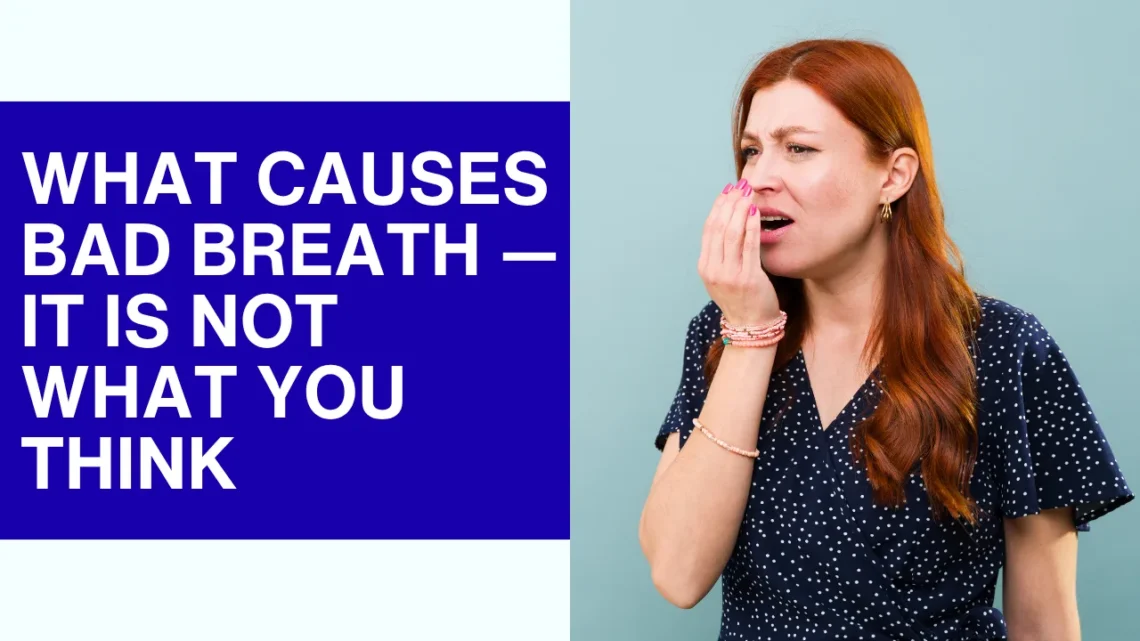
Most people blame bad breath on what they ate for lunch. Garlic bread, onions, a strong cup of coffee. Fair enough — those are real culprits. But if you have bad breath that keeps coming back no matter how many times you brush, the food on your plate is probably the least of your problems.
The truth is, persistent bad breath — the kind that mouthwash cannot fix — is almost always a signal from your body. It could be your gut, your kidneys, your sinuses, or even your blood sugar sending you a message. And if you keep covering it up with mints instead of finding the real cause, you could be missing something important.
This guide breaks down every real cause of bad breath, including the ones that have nothing to do with your mouth.
What Is Bad Breath, Really? (And What the Medical Term Means)
The medical term for bad breath is halitosis. It comes from the Latin word halitus (breath) and the Greek suffix -osis (a condition or disease process). So when a dentist says you have halitosis, they are not just describing what they smell — they are telling you there is an underlying condition driving it.
Halitosis affects an estimated 1 in 4 people worldwide, making it one of the most common reasons people visit a dentist after tooth decay and gum disease. Studies suggest that roughly 80% of bad breath cases originate in the mouth, but the remaining 20% come from somewhere else in the body entirely — and that is where most people get surprised.
The Most Common Causes of Bad Breath (Starting in the Mouth)
1. Bacteria on Your Tongue
Here is the one most people overlook: your tongue is the biggest source of bad breath in your mouth, not your teeth.
The surface of your tongue — especially the back third — is covered in tiny bumps called papillae. These create a rough, uneven surface that traps dead cells, food particles, and bacteria. When those bacteria break down proteins, they release volatile sulfur compounds (VSCs) — sulfur-containing gases that smell like rotten eggs or sewage. No amount of toothbrushing addresses this if you are not also cleaning your tongue.
This is why tongue scrapers exist, and why dentists consider them more effective than brushing alone for reducing mouth odor.
2. Poor Oral Hygiene and Plaque Buildup
When you do not brush and floss properly, food particles sit between your teeth and along your gumline. Bacteria feed on those particles and multiply rapidly, forming a sticky film called plaque. Plaque bacteria produce acids and gases that smell bad and also damage your teeth and gums over time.
Dentures, retainers, and orthodontic appliances can trap food and bacteria just as easily as natural teeth — and many people do not clean them as thoroughly as they should.
3. Gum Disease (Gingivitis and Periodontitis)
Persistent bad breath is one of the classic warning signs of gum disease. When plaque is not removed, it hardens into tartar and irritates the gums, causing gingivitis — the early stage of gum disease. Left untreated, gingivitis progresses to periodontitis, where bacteria get under the gumline and infect the tissue and bone that support your teeth.
The bacteria involved in periodontitis are particularly odor-producing. They thrive in the oxygen-poor pockets that form between the gums and teeth, and the gases they release are distinctly foul.
Key sign to watch for: If your gums bleed when you brush or floss, do not ignore it. That is gingivitis telling you it has already started.
4. Dry Mouth (Xerostomia)
Saliva is your mouth’s natural cleaning system. It washes away food debris, neutralizes acids, and contains antimicrobial proteins that keep bacterial populations in check. When your mouth is dry — a condition called xerostomia — bacteria multiply unchecked and bad breath follows quickly.
This is exactly why your breath smells worse in the morning. Saliva production slows dramatically during sleep, which allows bacteria to thrive overnight. “Morning breath” is essentially accelerated dry-mouth breath.
Chronic dry mouth is caused by:
- Many common medications (antidepressants, antihistamines, blood pressure drugs, diuretics)
- Autoimmune conditions like Sjögren’s syndrome
- Radiation therapy to the head and neck
- Mouth breathing (especially during sleep)
- Dehydration
If you wake up with an extremely dry mouth every morning, or if dry mouth is affecting you throughout the day, talk to your doctor. It is often treatable, and treating it frequently resolves the bad breath with it.
5. Tonsil Stones (Tonsilloliths)
Tonsil stones are one of the most underdiagnosed causes of bad breath — and most people have never heard of them.
Your tonsils have small pockets and folds in their surface. Food particles, dead cells, and mucus can get trapped in these pockets and calcify over time into hard, white or yellowish lumps called tonsilloliths. These deposits are densely packed with odor-producing bacteria and can cause a persistent, sulfur-like smell that brushing and mouthwash cannot touch.
People with chronic bad breath who have excellent oral hygiene should strongly consider tonsil stones as a possible cause. Some people can see or feel them at the back of the throat. Others have no obvious symptoms at all except for the smell.
The Surprising Causes of Bad Breath That Have Nothing to Do With Your Mouth
This is where the article title earns its keep. Most people — and even some basic online guides — stop at oral hygiene. But a significant portion of bad breath cases originate elsewhere in the body.
6. Acid Reflux and GERD
Gastroesophageal reflux disease (GERD) causes stomach acid and partially digested food to flow back up into the esophagus — and sometimes all the way into the throat and mouth. The smell of stomach acid and undigested food on the breath is distinctly unpleasant, and it does not respond to oral hygiene because the source is your digestive tract, not your teeth.
If you have bad breath along with frequent heartburn, a sour taste in your mouth, or the sensation of food coming back up, GERD is a strong candidate. Treating the reflux — through dietary changes, medications, or other interventions — typically resolves the related bad breath.
7. Sinus Infections and Postnasal Drip
Your sinuses and nasal passages are connected to your throat and mouth. When you have a sinus infection or chronic sinusitis, infected mucus drains down the back of your throat — a process called postnasal drip. This mucus is loaded with bacteria, and it produces a foul odor that comes out on your breath.
This explains why bad breath often accompanies a cold or sinus infection, and why it lingers even after other symptoms resolve. If you notice bad breath that coincides with nasal congestion, facial pressure, or a constant sensation of mucus in the throat, your sinuses may be the real culprit.
Allergies can contribute to this too, by triggering chronic mucus overproduction and persistent postnasal drip.
8. Diabetes and Ketoacidosis
Poorly controlled diabetes can cause a very specific and distinctive type of bad breath: a fruity or acetone-like smell. This happens when the body cannot use glucose for energy and begins breaking down fat instead. The byproduct of this fat breakdown is ketones — chemicals that accumulate in the blood and get expelled through the lungs as you breathe.
This is called diabetic ketoacidosis (DKA), and it is a medical emergency in its most severe form. A fruity smell on the breath — especially combined with symptoms like extreme thirst, frequent urination, nausea, or confusion — warrants immediate medical attention.
Even in less extreme cases, elevated blood sugar in diabetics increases the risk of gum disease, which then causes its own bad breath. The two mechanisms can compound each other.
9. Kidney Disease
When the kidneys are not functioning properly, they cannot filter waste products out of the blood as efficiently. Those waste products — particularly urea — build up in the bloodstream and eventually get expelled through the lungs. The result is a breath odor that has been described as fishy, ammonia-like, or reminiscent of urine.
This type of bad breath, sometimes called uremic fetor, is often one of the signs that prompts doctors to investigate kidney function. If you or someone you know has a persistent ammonia-like smell on the breath that cannot be explained by diet or oral hygiene, kidney function should be evaluated.
10. Liver Disease
Similarly, severe liver disease can produce a distinctive breath odor called fetor hepaticus — sometimes described as musty, sweet-musty, or like a freshly opened corpse (an unpleasant but accurate description used in clinical medicine). This occurs because the diseased liver cannot properly metabolize certain compounds, which then accumulate and are expelled through breathing.
Fetor hepaticus is typically associated with advanced liver disease and is considered a clinical sign that physicians look for alongside other symptoms.
11. Respiratory Tract Infections
Infections in the lungs, bronchi, or airways can cause bad breath originating from deep in the chest. Pneumonia, bronchitis, and lung abscesses all involve the presence of bacteria or infected tissue in the respiratory system. As air moves past that infected tissue on the way out, it picks up the odor and exits as bad breath.
People who are sick with a respiratory infection often notice this themselves — their breath smells “sick” in a way that is hard to describe but easy to recognize.
12. Certain Medications
More than 400 medications list dry mouth as a side effect, and dry mouth, as we have already covered, leads directly to bad breath. Common culprits include antihistamines, antidepressants, diuretics, blood pressure medications, and some antipsychotics.
Beyond dry mouth, some medications are broken down by the body into compounds that are expelled through the lungs. Certain chemotherapy drugs, for instance, can produce breath odors as they are metabolized and released. Nitrates used for heart conditions have also been associated with breath changes.
If your bad breath began around the same time you started a new medication, it is worth raising with your prescribing doctor.
13. Crash Dieting and Very Low-Carbohydrate Diets
People on ketogenic diets or anyone fasting for extended periods often develop noticeable bad breath. The mechanism is the same as in diabetic ketoacidosis — without carbohydrates for fuel, the body burns fat and produces ketones, which are exhaled through the lungs.
This type of bad breath is sometimes described as fruity, metallic, or chemical. It is not dangerous in people without diabetes, but it can be persistent and difficult to mask. Staying well hydrated and increasing carbohydrate intake (if medically appropriate) will reduce it.
Oral Microbiome: Why Brushing Alone Isn’t Enough
The Ultimate Guide to a Healthy Mouth and Oral Health (2026)
Foods That Cause Bad Breath (And Why Mouthwash Alone Cannot Fix It)
Garlic and onions get the most attention, and for good reason. Both contain sulfur compounds that, once digested, enter the bloodstream and are carried to the lungs. This means the smell comes out when you breathe — not from your mouth surface. Brushing and mouthwash can reduce the smell temporarily but cannot eliminate it until the compounds have cleared your system, which typically takes several hours.
Other common food-related bad breath triggers:
- Coffee — dries out the mouth and contains sulfur compounds
- Alcohol — causes dehydration and dry mouth; also metabolized partly through the lungs
- High-protein foods — protein breakdown produces ammonia as a byproduct
- Dairy — feeds bacteria in the mouth and throat
- Sugary foods — feed oral bacteria directly
How Bad Breath Is Diagnosed
A dentist can typically identify oral causes of bad breath through examination and by assessing the odor from different areas of the mouth — the tongue, teeth, and the back of the throat. Some dental offices use instruments called halimeters that measure volatile sulfur compound levels in the breath.
If no oral cause is found, the investigation moves to medical causes. A doctor may order blood tests, kidney and liver function panels, or imaging, depending on what the history and examination suggest.
How to Actually Get Rid of Bad Breath (Based on the Cause)
| Cause | What Actually Helps |
| Bacteria on tongue | Daily tongue scraping, antibacterial mouthwash |
| Poor oral hygiene | Brush twice daily, floss once, clean appliances |
| Gum disease | Professional dental cleaning, periodontist treatment |
| Dry mouth | More water, sugar-free gum, saliva substitutes, medication review |
| Tonsil stones | Manual removal, gargling with salt water, tonsillectomy in severe cases |
| GERD | Dietary changes, acid reducers, treating the underlying reflux |
| Sinus infections | Treating the infection, saline nasal rinse, allergy management |
| Diabetes | Blood sugar management, dental care |
| Kidney/liver issues | Medical treatment of the underlying organ disease |
| Keto diet | Hydration, chewing sugar-free gum, increased carb intake if appropriate |
| Medications | Discuss alternatives with prescribing doctor, manage dry mouth |
When Bad Breath Is a Warning Sign — And When to See a Doctor
Most bad breath is benign and correctable. But you should see a doctor — not just a dentist — if:
- Your bad breath has a fruity or acetone-like smell (possible diabetes or ketoacidosis)
- The smell is ammonia-like or fishy (possible kidney dysfunction)
- The smell is musty or sweet-musty and you have other symptoms of liver disease
- Bad breath is accompanied by unexplained weight loss, fatigue, or pain
- You have tried improving oral hygiene consistently and nothing has changed
- Bad breath started after beginning a new medication
In these cases, the smell coming from your mouth is a diagnostic clue, not a hygiene problem.
Frequently Asked Questions About Bad Breath
What is the most common cause of bad breath? Poor oral hygiene and bacteria on the tongue are the most common causes. Most cases originate in the mouth — particularly from the tongue surface, gum disease, or plaque buildup.
Can bad breath come from the stomach? Yes. Conditions like GERD (acid reflux) allow stomach acid and partially digested food to travel back up toward the mouth, producing a sour or foul odor on the breath.
Why does my breath smell bad even though I brush my teeth? If you brush but do not clean your tongue, the bacteria on the tongue’s surface continue producing sulfur compounds. Gum disease, tonsil stones, dry mouth, sinus issues, or a systemic health condition can also cause bad breath that oral hygiene alone cannot fix.
What does it mean if your breath smells like ammonia? An ammonia-like smell on the breath can be a sign of kidney disease. The kidneys normally filter urea out of the blood; when they are not functioning properly, urea accumulates and is expelled through the lungs.
Can bad breath be a sign of cancer? In rare cases, yes. Cancers of the mouth, throat, voice box, and lungs can all produce distinctive breath odors. This is uncommon, and there are usually other symptoms present, but persistent unexplained bad breath warrants a thorough evaluation.
Does mouthwash cure bad breath? Most mouthwashes mask bad breath temporarily. Antibacterial mouthwashes that target volatile sulfur compounds can provide longer-lasting improvement for oral-origin bad breath, but they do not address underlying causes like gum disease, dry mouth, or systemic conditions.
How do I know if my bad breath is from my gut or my mouth? A dentist can often assess the origin. Breath that smells worse after eating and is accompanied by a sour taste, heartburn, or bloating is more likely gut-related. Breath that smells worse in the morning and improves after brushing is more likely mouth-related.
The Bottom Line
Bad breath is rarely just about what you ate. When it is persistent — when it comes back no matter how diligently you brush — something else is going on. It could be bacteria thriving on your tongue, tonsil stones you did not know you had, gum disease silently progressing, a medication drying out your mouth, or your gut, sinuses, kidneys, or blood sugar signaling a problem.
The single most important thing you can do is stop treating bad breath like a cosmetic problem and start treating it like the body signal it actually is. See a dentist first. If they clear you, see your doctor. Persistent halitosis that does not respond to oral hygiene is your body’s way of asking for help with something — and it is worth listening.
Reviewed for accuracy. For persistent bad breath, consult a licensed dentist or physician for proper diagnosis and treatment.