Every year I get the same question from patients.
“Doctor, I brush twice a day, I floss, I use mouthwash — why do I still have problems?”
And every year my answer is the same.
Because brushing, flossing, and mouthwash only clean the surface of your mouth. They do nothing for the bacteria living deep in your gums, on your tongue, and inside the biofilm that your toothbrush cannot reach.
This is where oral health supplements come in.
In 2026, the market for oral health supplements has grown enormously. Walk into any pharmacy or search online and you will find dozens of products all claiming to fix your teeth and gums. Most of them are not worth your money. A few of them are genuinely backed by science and make a real difference.
This article ranks and reviews the best oral health supplements available right now — based on clinical evidence, ingredient quality, and real-world results. I will tell you exactly what each one does, who needs it, and what to look for when buying.
No sponsored opinions. No marketing fluff. Just honest information.
How I Ranked These Supplements
Before the list — here is exactly how each supplement was evaluated.
Clinical evidence — Does the active ingredient have real peer-reviewed studies behind it? How strong is the evidence? How many studies? How large were the trials?
Mechanism of action — Does it address a real root cause of oral health problems? Or does it just mask symptoms temporarily?
Ingredient quality — Are the specific strains, compounds, or nutrients present at doses that match what clinical studies used? Or are they added in token amounts just to appear on the label?
Safety profile — Is it safe for long-term daily use? Are there known side effects or interactions?
Value — Does the price reflect what you are actually getting?
With that framework clear — here is the ranked list.
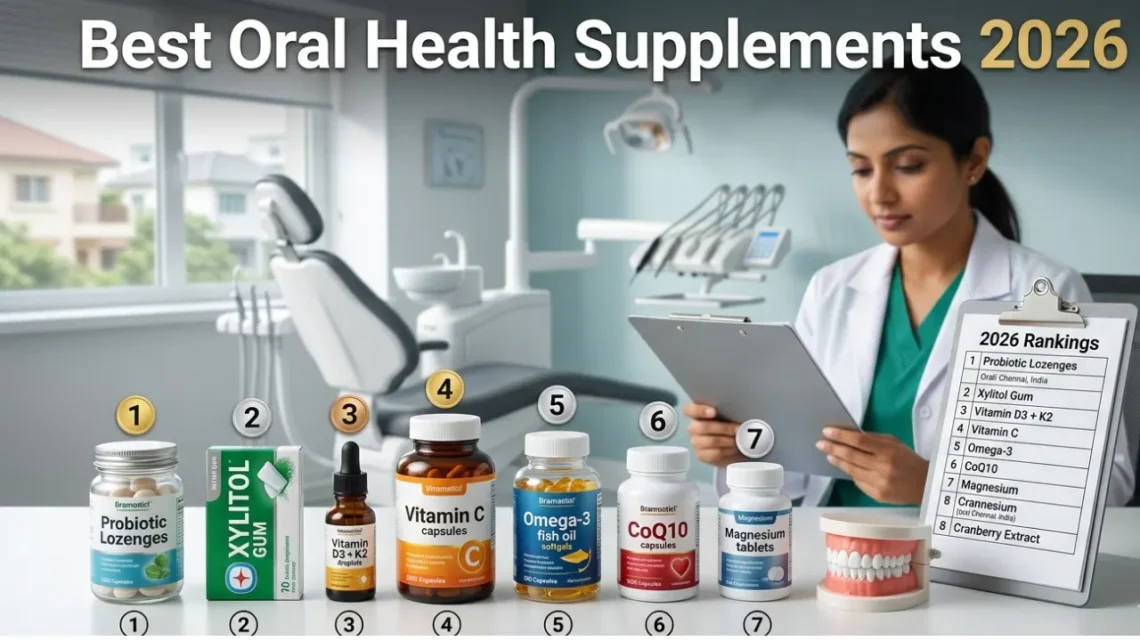
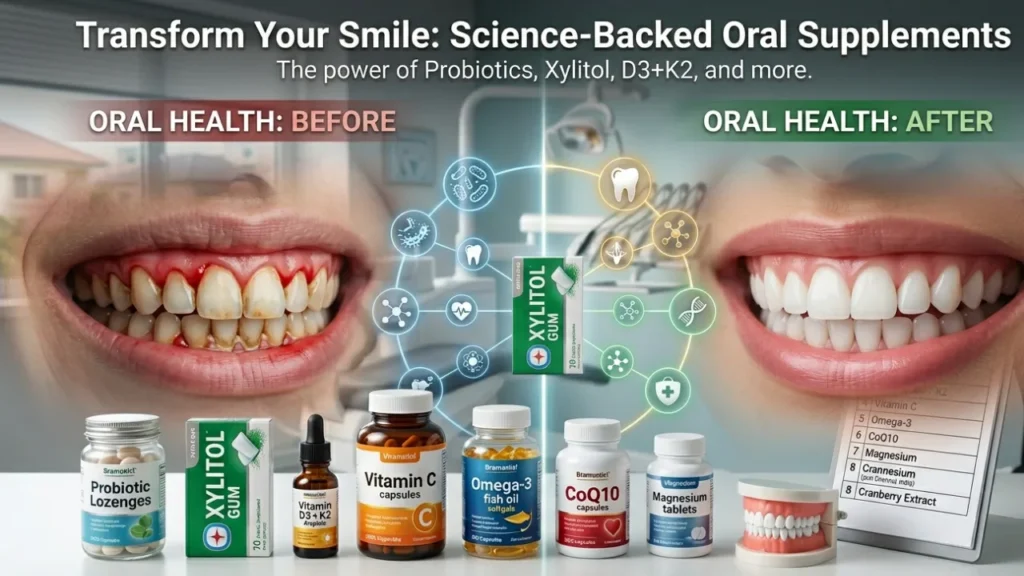
1. Oral Probiotic Supplements — Best Overall
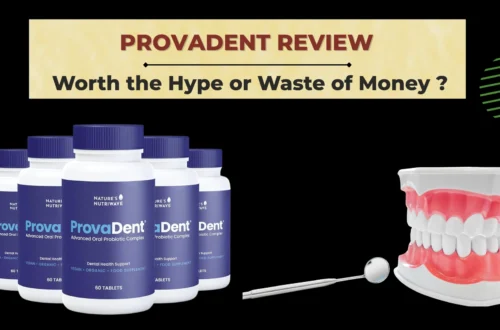
Top pick: Provadent
If I could recommend only one category of oral health supplement to every single patient — it would be oral probiotics.
Here is why.
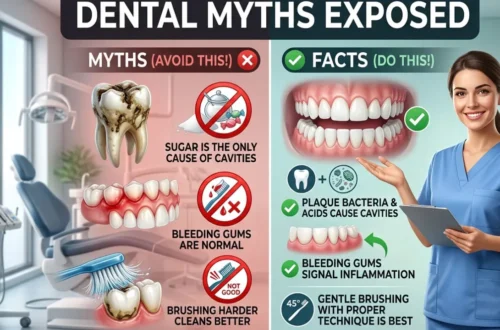
Every oral health problem — cavities, gum disease, bad breath, tooth sensitivity — starts with the same root cause. An imbalanced oral microbiome. Too many harmful bacteria. Not enough beneficial ones.
Brushing and flossing manage the symptoms of this imbalance by mechanically removing plaque. But they do not change the underlying bacterial population driving the problem. The moment you put your toothbrush down, the same harmful bacteria start rebuilding.
Oral probiotics change the population itself. They introduce beneficial bacterial strains that compete against harmful species, crowd them out, produce natural antimicrobial compounds, and gradually shift your oral microbiome toward a healthier balance.
The key strains to look for:
Streptococcus salivarius K12 — The most researched oral probiotic strain available. Produces powerful antimicrobial proteins called BLIS that directly suppress the anaerobic bacteria responsible for bad breath. Multiple clinical trials show up to 85% reduction in bad breath episodes with consistent use. It colonizes the tongue and tonsils — exactly where bad breath bacteria live.
Streptococcus salivarius M18 — Companion strain to K12. Targets Streptococcus mutans — the primary cavity-causing bacteria. Shown in clinical trials to reduce S. mutans populations and plaque formation significantly.
Lactobacillus reuteri — The best-studied strain for gum health. A 2020 meta-analysis confirmed that L. reuteri supplementation significantly reduces gingival bleeding, pocket depth measurements, and periodontal pathogen counts — beyond what professional cleaning alone achieves.
Lactobacillus salivarius — Produces bacteriocins that specifically target Porphyromonas gingivalis — the primary bacteria behind advanced gum disease.
What makes Provadent stand out:
Provadent combines all of these key strains in a dissolvable lozenge format — meaning the bacteria are delivered directly to oral tissue where they need to colonize, not swallowed into the stomach where they do nothing for your mouth.
It also includes cranberry extract — which blocks the ability of S. mutans to stick to tooth surfaces — creating a two-mechanism approach. Probiotics restore beneficial bacteria. Cranberry extract makes it harder for harmful bacteria to colonize. Together they work better than either alone.
Who needs it most:
- People with chronic bad breath
- People with bleeding or inflamed gums
- People who get cavities repeatedly despite good hygiene
- Anyone who wants long-term oral microbiome support
How to use it: One lozenge at night after brushing. Let it dissolve slowly. Do not eat or drink after taking it.
Evidence rating: ★★★★★ Value rating: ★★★★☆
2. Xylitol Supplements — Best for Cavity Prevention
If oral probiotics are the best overall supplement — xylitol is the best specific supplement for cavity prevention.
Xylitol is a natural sugar alcohol found in small amounts in many fruits and vegetables. It has over 50 years of clinical research behind it — one of the longest evidence records of any natural oral health ingredient.
Here is why it works so well against cavities.
Streptococcus mutans — the bacteria that causes cavities — cannot distinguish xylitol from regular sugar when it first encounters it. It picks up xylitol and tries to metabolize it. But it cannot. The five-carbon structure of xylitol gets stuck inside the bacterial cell. The bacteria waste energy processing something useless. They become less active. They reproduce more slowly. Over time — with consistent exposure — S. mutans populations in your mouth decrease significantly.
Beyond that — xylitol stimulates saliva production, raises mouth pH away from the acidic range where enamel dissolves, and interferes with the sticky glucan chains that hold plaque together on tooth surfaces.
The key details that most articles miss:
The therapeutic dose is 6 to 10 grams per day — spread across at least 3 to 5 separate exposures throughout the day. One stick of xylitol gum contains about 1 gram. You need 4 to 6 pieces of 100% xylitol gum daily to reach the therapeutic range.
The gum must be 100% xylitol sweetened — not just “contains xylitol.” Many popular gum brands use sorbitol as the primary sweetener and add a small amount of xylitol for label appeal. These products will not give you the full benefit. Look for Spry, Epic Dental, or Xylichew — brands where xylitol is the only or primary sweetener.
Forms available:
- Chewing gum — most effective delivery method
- Lozenges and mints
- Toothpaste — contributes some xylitol but not enough alone to reach therapeutic dose
- Nasal spray — used for sinus health, different application
Who needs it most:
- People with high cavity rates despite good hygiene
- Children during cavity-prone years
- People with dry mouth — xylitol stimulates saliva which is your mouth’s natural defense
- Pregnant women — reduces transmission of cavity bacteria to newborns
- People wearing braces
Evidence rating: ★★★★★ Value rating: ★★★★★
The Ultimate Guide to a Healthy Mouth and Oral Health (2026)
3. Vitamin D3 + K2 — Best for Teeth and Bone Strength
Most people think of Vitamin D for bones and immunity. Very few people connect it to their teeth and gums. But the connection is strong and well-documented.
What Vitamin D does for your mouth:
Vitamin D is essential for calcium absorption. Without adequate Vitamin D, your body cannot absorb the calcium it needs to maintain tooth enamel density and jawbone strength. Teeth that form or are maintained in low Vitamin D environments are weaker, more porous, and more susceptible to decay.
Beyond enamel strength — Vitamin D has significant anti-inflammatory effects on gum tissue. Multiple studies have found that low Vitamin D levels are independently associated with higher rates of gum disease and gum bleeding. A large population study found that people with sufficient Vitamin D levels had 20% lower rates of gum disease than those who were deficient.
Vitamin D also modulates the immune response in gum tissue — helping your body fight bacterial infection more effectively without causing excessive inflammatory damage to the tissue itself.
Why K2 matters alongside D3:
Vitamin K2 is the transport mechanism that directs calcium to where it belongs — teeth and bones — rather than letting it deposit in soft tissue and arteries. Taking D3 without K2 increases calcium absorption but does not direct it properly. D3 and K2 work as a team.
Recommended form and dose:
D3 (cholecalciferol) at 2,000 to 4,000 IU daily — the most bioavailable form. K2 as MK-7 (menaquinone-7) at 100 to 200 mcg daily — the form with the longest half-life and best tissue distribution. Combined D3+K2 supplements are widely available and more convenient than taking them separately.
Get your Vitamin D level tested — a simple blood test. Optimal range for oral health is 40 to 60 ng/mL. Many people — especially those in less sunny climates or who spend most of their day indoors — are significantly deficient.
Who needs it most:
- People who spend most of their time indoors
- People living in northern climates with limited sunlight
- People with osteoporosis or low bone density
- People with persistent gum disease despite good oral hygiene
- Elderly patients with receding gums and root exposure
Evidence rating: ★★★★☆ Value rating: ★★★★★
4. Vitamin C — Best for Gum Tissue Repair
Vitamin C is not just an immune supplement. For your gums specifically — it is structural.
Your gum tissue is made primarily of collagen. Collagen synthesis requires Vitamin C as an essential cofactor — without it, your body literally cannot build or maintain healthy gum tissue. When Vitamin C is low — even at borderline deficiency levels that would not be considered a clinical problem — gum tissue becomes fragile, poorly maintained, and bleeds very easily.
This is not a new discovery. Sailors who developed scurvy — severe Vitamin C deficiency — universally developed severe bleeding gums as one of the first symptoms. The gum tissue fell apart because it had no Vitamin C to maintain its collagen structure.
You do not need to be severely deficient for this to affect you. A large study published in Nutrients found that people with Vitamin C intake in the lowest quarter had significantly higher rates of gum bleeding even after adjusting for all other oral hygiene factors.
Beyond collagen — Vitamin C also:
- Acts as a powerful antioxidant in gum tissue — reducing oxidative damage from bacterial toxins
- Supports immune cell function in fighting gum infections
- Promotes wound healing in damaged gum tissue
- Reduces inflammatory cytokines that drive tissue destruction in periodontitis
Important note for smokers:
Smoking destroys Vitamin C at an accelerated rate. Smokers need up to twice the normal intake — at least 125 mg daily — just to maintain adequate tissue levels. This is one of the reasons smokers have dramatically higher rates of gum disease.
Recommended form and dose:
500 mg of Vitamin C daily is a safe, effective dose for gum health support. Liposomal Vitamin C has better absorption than standard ascorbic acid — worth considering if you have significant gum issues. Food sources — bell peppers, citrus fruits, strawberries, broccoli, kiwi — are excellent but most people do not consume enough consistently.
Who needs it most:
- People with bleeding or receding gums
- Smokers
- People with diets low in fruits and vegetables
- Elderly patients — absorption efficiency decreases with age
- People recovering from gum surgery or dental procedures
Evidence rating: ★★★★☆ Value rating: ★★★★★
5. CoQ10 (Coenzyme Q10) — Best for Advanced Gum Disease
CoQ10 is a compound your body produces naturally. It plays a critical role in cellular energy production and is one of the most potent antioxidants found in human tissue.
Here is the oral health connection that most people have never heard.
Studies measuring CoQ10 levels in gum tissue have found that patients with gum disease consistently have significantly depleted CoQ10 in affected gum tissue compared to healthy tissue. The more severe the gum disease — the lower the CoQ10 levels.
This depletion matters because CoQ10 is essential for the energy metabolism of gum tissue cells and for protecting those cells from the oxidative damage caused by bacterial toxins. Without sufficient CoQ10, gum tissue cells cannot repair themselves effectively, cannot fight inflammation efficiently, and deteriorate faster under bacterial attack.
A randomized controlled trial found that topical CoQ10 application to periodontal pockets — the spaces between teeth and gums — significantly reduced bleeding and inflammation. Other studies using oral CoQ10 supplementation found measurable improvements in gum health markers over 3 to 6 months.
CoQ10 levels in the body also decline naturally with age — which partly explains why gum disease tends to worsen as people get older.
Recommended form and dose:
Ubiquinol form of CoQ10 — not ubiquinone — has significantly better absorption, especially in people over 40 whose bodies convert ubiquinone to ubiquinol less efficiently. 100 to 200 mg daily. Take with food that contains some fat — CoQ10 is fat-soluble and absorption increases dramatically with a meal.
Who needs it most:
- People with moderate to advanced gum disease
- People over 40 — natural CoQ10 production declines with age
- People taking statin medications — statins significantly deplete CoQ10 levels
- People who have had gum surgery — CoQ10 supports post-surgical healing
Evidence rating: ★★★★☆ Value rating: ★★★☆☆
6. Omega-3 Fatty Acids — Best for Gum Inflammation
Omega-3 fatty acids — specifically EPA and DHA found in fish oil — are among the most studied anti-inflammatory compounds in all of nutrition research.
For gum health specifically, the evidence is increasingly compelling.
Gum disease is fundamentally an inflammatory condition. Your immune system detects harmful bacteria in gum tissue and launches an inflammatory response. In a healthy immune system, this response is proportionate and resolves. In many people — particularly those with chronic gum disease — the inflammatory response becomes dysregulated and causes more damage to the gum and bone tissue than the bacteria themselves do.
Omega-3 fatty acids work through several mechanisms to modulate this inflammatory response. EPA and DHA are precursors to special compounds called resolvins and protectins — molecules that actively signal the immune system to resolve inflammation rather than continuing it. They literally tell your body to stop fighting.
A clinical study published in the Journal of Dentistry found that Omega-3 supplementation combined with low-dose aspirin significantly reduced gum inflammation markers over a 12-week period. Another study found measurable reductions in pocket depth and bleeding scores in gum disease patients given Omega-3 supplements versus placebo.
Population studies also consistently show that people with higher Omega-3 intake have lower rates of gum disease — even after controlling for other dietary and lifestyle factors.
Recommended form and dose:
High-quality fish oil providing at least 1,000 mg of combined EPA+DHA daily. Look for products that are molecularly distilled to remove heavy metals and environmental toxins. Algae-based Omega-3 is the plant-based alternative with equivalent EPA and DHA content — suitable for vegetarians and people who dislike fish oil.
Store in the refrigerator after opening — Omega-3 oils oxidize quickly at room temperature and oxidized fish oil does more harm than good.
Who needs it most:
- People with persistent gum inflammation despite professional treatment
- People with systemic inflammatory conditions — arthritis, cardiovascular disease — alongside gum disease
- People with diets low in fatty fish
- Vegetarians and vegans — use algae-based Omega-3
Evidence rating: ★★★★☆ Value rating: ★★★★☆
7. Magnesium — The Forgotten Mineral for Teeth
Magnesium does not get the attention calcium and Vitamin D get in oral health conversations. But it deserves more recognition.
Here is why.
Magnesium is essential for the proper crystallization of tooth enamel. Enamel is not just calcium — it is a complex crystalline structure called hydroxyapatite where magnesium plays a critical role in the lattice formation. Magnesium-deficient enamel is structurally weaker and more susceptible to acid erosion.
Magnesium also regulates how calcium is deposited in teeth and bones. Without sufficient magnesium — even with adequate calcium and Vitamin D — calcium metabolism is disrupted.
A large population study found that people with higher dietary magnesium had significantly better periodontal health scores and lower rates of tooth loss from gum disease compared to those with low magnesium intake.
Additionally — magnesium deficiency is extremely common. Estimates suggest that up to 50% of people in developed countries do not meet recommended magnesium intake through diet alone. Modern farming practices have depleted magnesium from soil, meaning even people who eat plenty of vegetables may be getting less than they think.
Recommended form and dose:
Magnesium glycinate or magnesium malate — both have excellent absorption and are gentle on digestion. Avoid magnesium oxide — very poor absorption despite being the most common form in cheap supplements. 200 to 400 mg daily. Take at night — magnesium also supports sleep quality.
Who needs it most:
- People with weak or brittle enamel
- People with high sugar or processed food diets — these deplete magnesium
- People with type 2 diabetes — diabetes increases urinary magnesium loss
- People with chronic stress — stress rapidly depletes magnesium stores
- People taking proton pump inhibitors (acid reflux medication) — these reduce magnesium absorption
Evidence rating: ★★★☆☆ Value rating: ★★★★★
8. Cranberry Extract — Best for Anti-Adhesion Protection
Cranberry extract is the most underrated supplement on this list.
Most people know cranberry for urinary tract infections. Almost nobody knows about its remarkable effects on oral bacteria — specifically its ability to prevent harmful bacteria from sticking to tooth surfaces.
The active compounds in cranberry — called proanthocyanidins (PACs) — have a unique molecular structure that interferes with the adhesion mechanisms bacteria use to colonize surfaces. Specifically, PACs inhibit an enzyme called glucosyltransferase that Streptococcus mutans uses to produce the sticky glucan chains that anchor plaque to tooth enamel.
No attachment — no biofilm. No biofilm — dramatically less cavity risk.
This is a completely different mechanism from any other supplement on this list. While probiotics work by replacing bad bacteria with good ones, cranberry extract works by making it physically harder for harmful bacteria to stick in the first place. The two approaches are complementary and work well together — which is why combining cranberry extract with oral probiotics (as Provadent does) makes strong scientific sense.
Research from Laval University in Canada has also demonstrated that cranberry PACs inhibit key periodontal pathogens — reducing their ability to invade gum tissue and trigger inflammation.
What to look for:
Standardized cranberry extract with specified PAC content — not cranberry juice powder or vague “cranberry fruit” listings. Concentration matters enormously. A tiny amount of cranberry in a formulation will not produce meaningful results.
Who needs it most:
- People with high cavity rates
- People who want to reduce plaque formation naturally
- People looking for a complement to oral probiotics
- People who want to avoid harsh antibacterial mouthwashes
Evidence rating: ★★★★☆ Value rating: ★★★★☆
The Ultimate Guide to a Healthy Mouth and Oral Health
Quick Comparison Table
| Supplement | Best For | Evidence | Time to See Results |
|---|---|---|---|
| Oral Probiotics (Provadent) | Overall oral health, bad breath, gum disease | ★★★★★ | 4 to 8 weeks |
| Xylitol | Cavity prevention | ★★★★★ | 4 to 6 weeks |
| Vitamin D3 + K2 | Tooth and bone strength | ★★★★☆ | 8 to 12 weeks |
| Vitamin C | Gum tissue repair | ★★★★☆ | 2 to 4 weeks |
| CoQ10 | Advanced gum disease | ★★★★☆ | 4 to 8 weeks |
| Omega-3 | Gum inflammation | ★★★★☆ | 6 to 12 weeks |
| Magnesium | Enamel strength | ★★★☆☆ | 8 to 12 weeks |
| Cranberry Extract | Anti-adhesion, cavity prevention | ★★★★☆ | 4 to 6 weeks |
What You Do NOT Need to Buy
The supplement market is full of products that sound impressive but have weak or no evidence behind them. Here are the ones to skip.
Activated charcoal supplements for oral health — Charcoal toothpastes and supplements are heavily marketed for whitening and detoxification. The evidence for oral health benefit is essentially nonexistent. Charcoal is highly abrasive and can damage enamel with repeated use.
Colloidal silver — Promoted as a natural antimicrobial for oral health. No clinical evidence for meaningful oral health benefit. Can cause argyria — permanent bluish-gray skin discoloration — with regular use. Not worth it.
Most whitening supplements — Internal whitening supplements claiming to whiten teeth from the inside out have no credible clinical evidence. Teeth whitening is a surface process. No supplement changes tooth color from the inside.
Generic multivitamins marketed for teeth — Most contain the relevant nutrients — Vitamin D, C, calcium — in doses too low to produce meaningful oral health effects. Better to take targeted supplements at therapeutic doses.
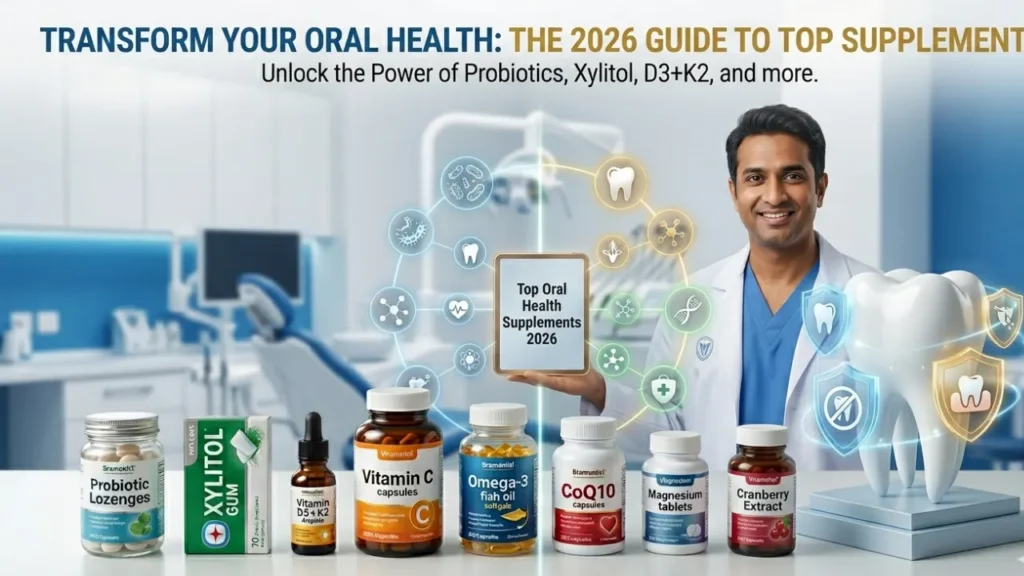
The Best Combination Stack for Oral Health in 2026
If you want to build a complete, evidence-based oral health supplement routine — here is what the science supports.
Foundation stack — for everyone:
- Oral probiotics (Provadent or equivalent with K12, M18, L. reuteri) — nightly
- Xylitol gum — 4 to 6 pieces daily after meals
- Vitamin D3 2,000 IU + K2 100 mcg — daily with food
Add for gum problems:
- Vitamin C 500 mg — daily
- CoQ10 100 mg (ubiquinol) — daily with food
- Omega-3 1,000 mg EPA+DHA — daily with food
Add for cavity prevention:
- Cranberry extract (standardized PAC content) — daily
Add for enamel strength:
- Magnesium glycinate 200 mg — nightly
You do not need all of these at once. Start with the foundation stack. Add others based on your specific issues.
Frequently Asked Questions
Do oral health supplements replace brushing and flossing? No. Nothing replaces mechanical cleaning. Supplements work alongside brushing, flossing, and professional cleanings — not instead of them. Think of supplements as the layer that addresses what mechanical cleaning cannot reach.
How long before oral health supplements show results? It depends on the supplement. Vitamin C can improve gum tissue integrity within 2 to 4 weeks. Oral probiotics show measurable changes in bacterial populations within 4 to 8 weeks. Vitamin D and CoQ10 effects on gum health become apparent over 8 to 12 weeks of consistent use.
Are oral health supplements safe to take together? Generally yes — the supplements on this list have no significant known interactions with each other. The main consideration is timing — take oral probiotic lozenges after all other oral care is done at night so they are not washed away immediately.
Can children take oral health supplements? Xylitol is safe and beneficial for children. Vitamin C and Vitamin D are appropriate for children at age-appropriate doses. Oral probiotics with L. rhamnosus and S. salivarius strains have good safety evidence in children. Always check with your pediatric dentist or doctor for specific dosing in children.
Should I tell my dentist I am taking oral health supplements? Yes — always inform your healthcare providers about all supplements you take. Some supplements can interact with medications or affect bleeding time. Your dentist can also help you track whether your supplements are producing measurable improvements in your gum health metrics over time.
Is Provadent better than other oral probiotic brands? Provadent stands out because it combines the most clinically studied oral probiotic strains — K12, M18, L. reuteri — with cranberry extract in an oral delivery format. Most competing products either use gut-focused probiotic strains (wrong strains for the mouth), swallowed capsule delivery (wrong delivery for oral tissue), or single-strain formulations (limited coverage). The multi-mechanism, oral-delivery approach of Provadent aligns well with the current evidence base.
The Bottom Line
The best oral health supplement routine in 2026 is not about finding one magic product. It is about understanding what each supplement does — and stacking the right ones for your specific situation.
For most people — oral probiotics and xylitol are the two highest-impact additions to any oral care routine. They address the root cause (bacterial imbalance) and the primary driver of cavities (S. mutans activity) in ways that mechanical cleaning simply cannot.
Add Vitamin D, Vitamin C, and CoQ10 if you have gum issues. Add Omega-3 for inflammation. Add cranberry extract for cavity protection. Add magnesium for enamel strength.
Build your routine on evidence. Not marketing. Not trends.
Your mouth will tell the difference.
This article is written for informational purposes only and does not constitute personalized dental or medical advice. Please consult a licensed dentist or healthcare provider before starting any new supplement regimen.