Wait — before you brush your teeth tonight, ask yourself this. Are you doing it because it actually works? Or just because someone told you to do it that way when you were a kid?
Most of us follow dental advice we heard years ago. From our parents. From old TV commercials. From a dentist visit in the third grade.
The problem is — a lot of that advice is just wrong.
In this article, I am going to break down the most common dental myths people still believe today. Some of these might surprise you.
Myth 1: Brushing harder makes your teeth cleaner
This is probably the most common mistake people make.
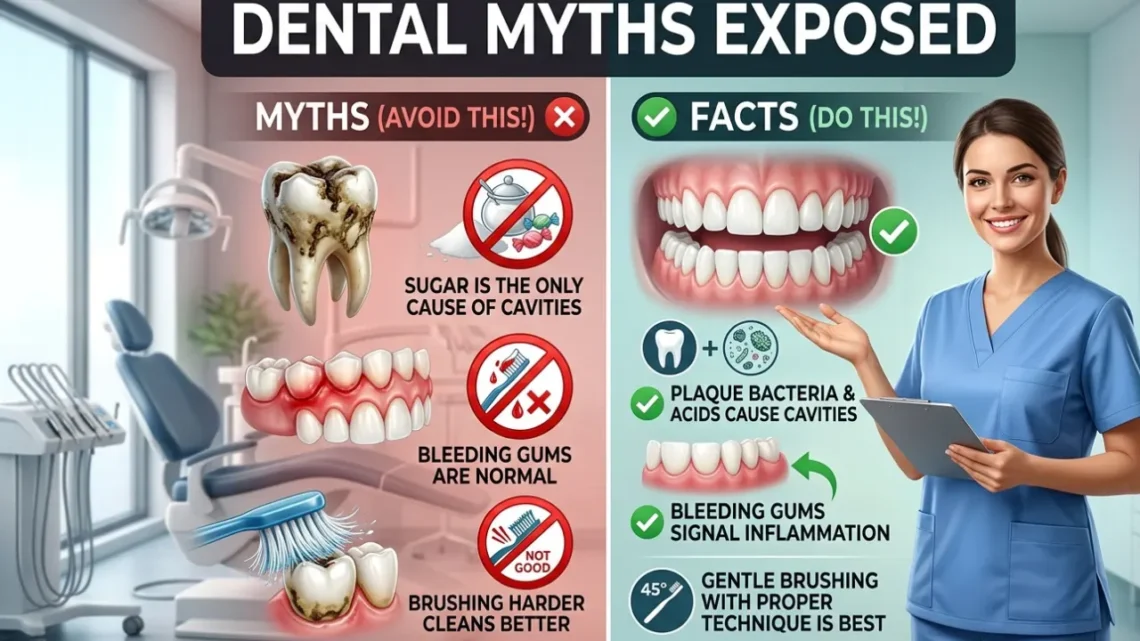
Many people think that if they brush really hard, they will remove more plaque and get cleaner teeth. It sounds like it makes sense. But it does not work that way.
Brushing too hard actually damages your teeth. It wears down the enamel — that is the hard outer layer that protects your teeth. Once enamel is gone, it does not come back. Ever.
Hard brushing also hurts your gums. Over time it can push the gums back, which exposes the roots of your teeth. That leads to sensitivity and even tooth decay near the root.
The truth: Use a soft-bristle toothbrush and brush gently in small circular motions. Two minutes is enough. You are not trying to scrub a dirty pan — you are cleaning a soft layer of bacteria off your teeth.
Myth 2: If your teeth look white, they are healthy
White teeth look great. But white does not mean healthy.
You can have perfectly white teeth and still have gum disease. You can have white teeth and still have cavities forming between your teeth where you cannot see them. You can have white teeth and still have a mouth full of harmful bacteria.
On the other hand, slightly yellow teeth are not always a sign of a problem. Teeth naturally get a little yellow as you get older. That is normal.
The truth: The color of your teeth tells you almost nothing about your oral health. What matters more is your gum health, the bacteria levels in your mouth, and whether you have any hidden decay.
Myth 3: Sugar is the only thing that causes cavities
You have probably heard this a hundred times. “Stop eating sugar or you will get cavities.”
Sugar does play a role. But sugar by itself is not the real problem.
Here is what actually happens. When you eat sugar, the bacteria in your mouth feed on it. Those bacteria then produce acid. That acid is what attacks your teeth and causes cavities.
So the bacteria are doing the damage — not the sugar directly.
This also means that other foods can cause the same problem. Starchy foods like bread, crackers, and chips break down into sugars in your mouth. Acidic drinks like soda and fruit juice lower the pH in your mouth and help bacteria grow.
The truth: Sugar feeds the bad bacteria in your mouth. But the real cause of cavities is an imbalance of bacteria — too many harmful ones and not enough good ones. Taking care of your oral microbiome matters just as much as cutting back on sugar.
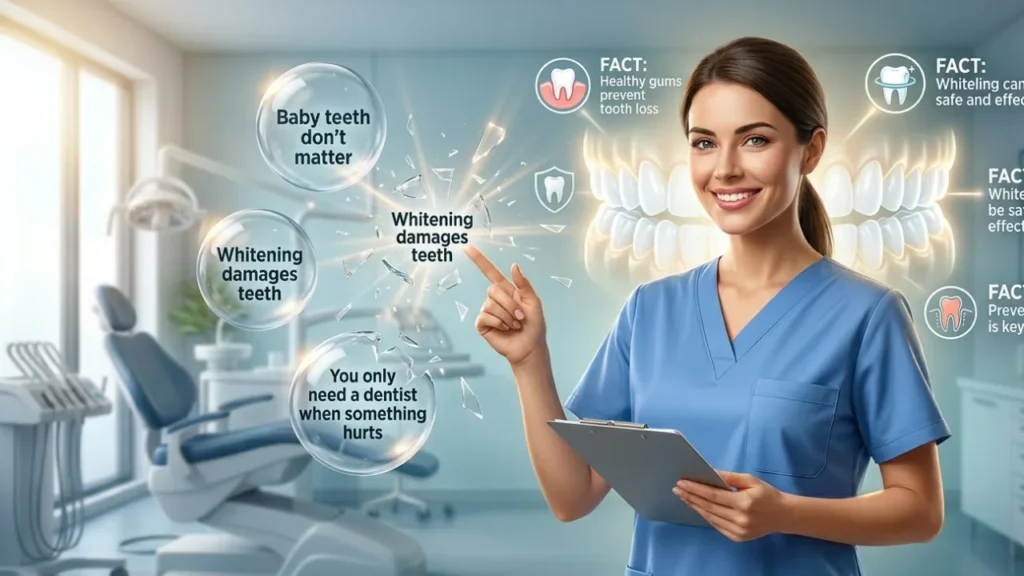
Myth 4: You only need to go to the dentist when something hurts
This one is dangerous.
Most dental problems do not hurt — at least not at first. Cavities can form for months without any pain. Gum disease in its early stages is almost completely painless. Even infections can develop slowly without obvious symptoms.
By the time you feel pain, the problem is usually already serious. A small cavity that could have been fixed with a simple filling has now become a root canal. Early gum disease that could have been reversed has now become a permanent condition.
The truth: Pain is not a good signal for dental health. Go to the dentist at least once a year even if everything feels fine. Early problems are always cheaper and easier to fix.
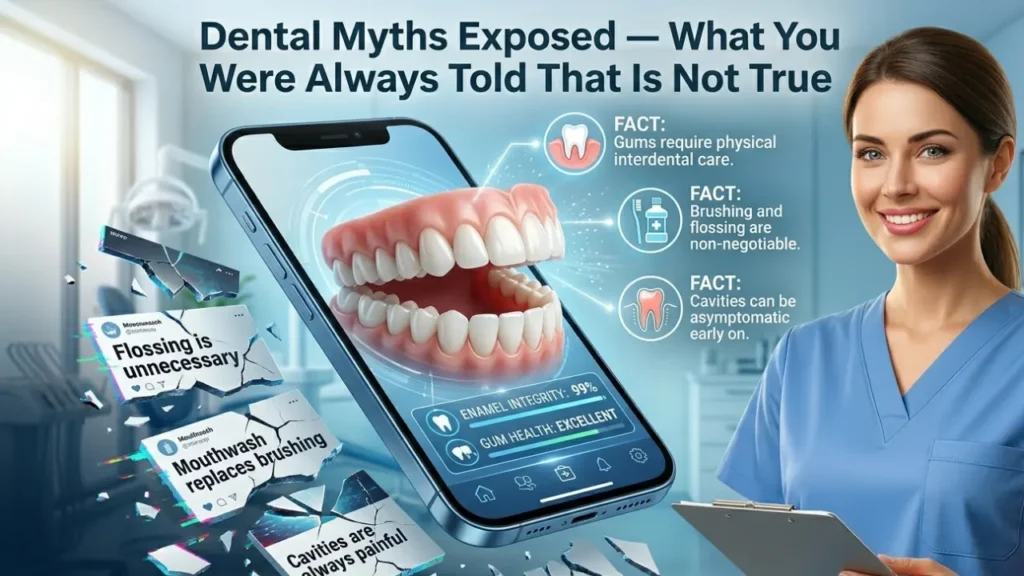
Myth 5: Baby teeth do not matter because they fall out anyway
Many parents think this. It seems logical — if the teeth are going to fall out, why does it matter if they get cavities?
It matters a lot.
Baby teeth hold space in the jaw for permanent teeth. If a baby tooth is lost too early because of decay, the other teeth can shift into that space. This can cause crowding problems and misalignment when the permanent teeth come in.
Also, infected baby teeth can affect the development of the permanent teeth growing underneath them.
And there is another reason people forget — children with dental pain eat less, sleep poorly, and have trouble concentrating in school.
The truth: Baby teeth are important. Teach children to brush from an early age and take their dental health seriously.
Myth 6: Mouthwash can replace brushing and flossing
Mouthwash feels powerful. It burns, it foams, it leaves your mouth feeling fresh. So it must be doing a serious job, right?
Not exactly.
Mouthwash can kill some bacteria and freshen your breath for a short time. But it cannot remove plaque. Plaque is a sticky film that builds up on your teeth, and the only way to remove it is by physically scrubbing it off — with a toothbrush and floss.
Some mouthwashes actually do more harm than good. Many alcohol-based mouthwashes kill both good and bad bacteria in your mouth. Your mouth needs a balance of bacteria to stay healthy. Wiping out everything can actually make the problem worse over time.
The truth: Mouthwash is a supplement, not a replacement. Brush, floss, then use mouthwash if you want. Not the other way around.
Myth 7: Flossing is not that important
A lot of people skip flossing. It feels like extra work, and some people argue it does not make much difference.
But here is the thing — your toothbrush only cleans about 60% of your tooth surface. The spaces between your teeth are completely missed. That is where food gets stuck, bacteria multiply, and plaque builds up.
If you never floss, you are basically leaving 40% of your teeth uncleaned every single day.
Gum disease almost always starts between the teeth, not on the surface. Flossing is the only way to reach those areas at home.
The truth: Flossing is not optional if you want healthy gums. Once a day is enough. It only takes about 90 seconds.
Myth 8: The harder your toothbrush bristles, the better
This connects to myth number one, but it is a little different.
Some people think a hard-bristle toothbrush is more effective because it feels like it is doing more work. Hardware stores sell them. They seem tough and serious.
But dentists almost never recommend them. Hard bristles damage enamel, irritate gums, and cause the same problems as brushing too hard.
The truth: Soft bristles are better for almost everyone. Medium at most. Hard bristles are not necessary and can cause long-term damage.
The Ultimate Guide to a Healthy Mouth and Oral Health
The bigger picture — your mouth is connected to your whole body
Here is something most people do not hear enough.
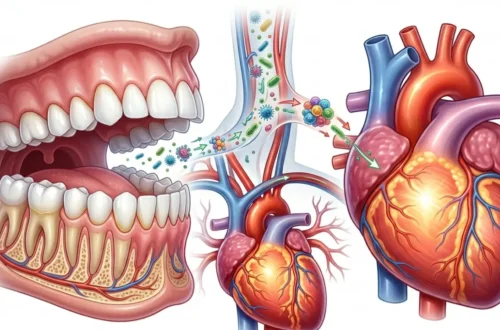
Your mouth is not separate from the rest of your body. The bacteria in your mouth can enter your bloodstream. Research has linked poor oral health to heart disease, diabetes, and even problems during pregnancy.
This means that taking care of your teeth and gums is not just about your smile. It is about your overall health.
One of the reasons oral health researchers are so interested in the oral microbiome right now is because keeping the right balance of bacteria in your mouth seems to have effects far beyond just preventing cavities.
Quick summary
| Myth | The truth |
|---|---|
| Brush harder for cleaner teeth | Soft brush, gentle circles |
| White teeth = healthy teeth | Color tells you almost nothing |
| Only sugar causes cavities | Bacteria imbalance is the real cause |
| Only go to the dentist when it hurts | Go yearly even with no pain |
| Baby teeth do not matter | They do — a lot |
| Mouthwash replaces brushing | It is a supplement, not a replacement |
| Flossing is not important | It cleans 40% of your tooth surface |
| Hard bristles are better | Soft bristles every time |
Final thought
Most of us were not taught properly about dental health. We were given a toothbrush, told to brush twice a day, and that was it.
But good oral health is more than that. It is about understanding what is actually happening inside your mouth — the bacteria, the balance, the connection to the rest of your body.
Now that you know what is true and what is not, you can actually start making better choices.
And that is the whole point.
Want to learn more? Read our article on why oral health affects your whole body and oral probiotics vs mouthwash — which one actually works?