Most people know cranberry juice for one thing — urinary tract infections. Your grandmother probably told you about it. Maybe your doctor mentioned it once.
But there is a completely different area where cranberry is showing real promise — and almost nobody is talking about it yet.
Your mouth.
Specifically, the bacteria living in your mouth that cause cavities, gum disease, and bad breath.
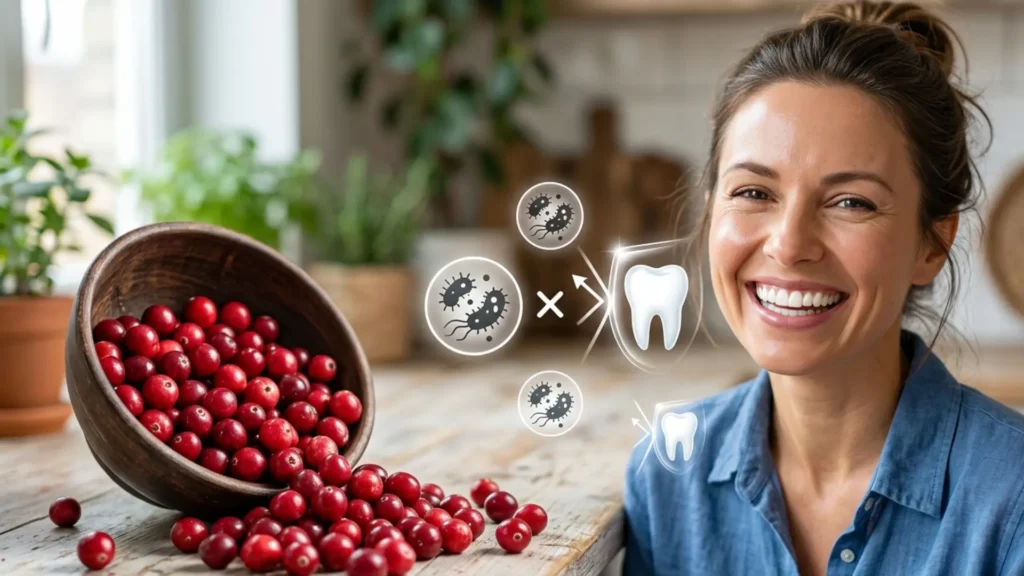
In the last 15 years, researchers have been quietly studying cranberry extract and its effects on oral bacteria. What they found is genuinely surprising. And if you care about your teeth and gums, it is worth understanding.
This article covers everything — what cranberry extract actually is, how it works in the mouth, what the research says, what it cannot do, and how to use it practically.
What Is Cranberry Extract?
Fresh cranberries are not the same as cranberry juice from a bottle. And cranberry juice is not the same as cranberry extract.
Let me explain the difference because it matters a lot.
Fresh cranberries contain a group of plant compounds called proanthocyanidins — often shortened to PACs. These are the active compounds responsible for most of cranberry’s health benefits. They belong to the larger family of polyphenols — plant-based antioxidants found in berries, tea, red wine, and many vegetables.
Commercial cranberry juice is mostly water, sugar, and a small amount of actual cranberry. The processing and dilution removes or destroys most of the PACs. Drinking Ocean Spray cranberry cocktail will not give you the benefits discussed in this article.
Cranberry extract is a concentrated form where the beneficial PACs are preserved and standardized. Researchers use this concentrated extract in studies — not juice — because the dose of active compounds can be measured and controlled precisely.
When you see clinical studies on cranberry and oral health, they are almost always using this standardized extract. Keep that in mind when evaluating any product claiming cranberry benefits.
The Bacteria Problem in Your Mouth
Before we get into how cranberry works, you need a quick picture of what it is working against.
Your mouth contains over 700 species of bacteria. Most are harmless. Some are actually beneficial — they help maintain a healthy pH and compete against dangerous species.
But two groups cause most of the damage:
Streptococcus mutans — The primary cavity-causing bacteria. It feeds on sugar, produces lactic acid, and dissolves tooth enamel. It also produces sticky compounds called glucans that help it glue itself to tooth surfaces and form thick plaque colonies.
Porphyromonas gingivalis, Fusobacterium nucleatum, and other periodontal pathogens — The bacteria responsible for gum disease. They colonize deep in gum pockets, trigger chronic inflammation, and over time destroy the bone holding your teeth in place.
Both groups share one important characteristic — they rely heavily on their ability to stick to surfaces. To your teeth. To each other. To gum tissue.
This stickiness is the foundation of biofilm — what we commonly call plaque. And biofilm is what protects bacteria from your immune system, from mouthwash, and from toothbrush bristles.
Cranberry’s most important effect in the mouth attacks exactly this — the ability of harmful bacteria to stick.
How Cranberry Extract Works Against Oral Bacteria
Here is the science — explained simply.
It Blocks Bacterial Stickiness
The PACs in cranberry extract have a unique molecular structure that interferes with the adhesion mechanisms bacteria use to attach to surfaces.
Streptococcus mutans produces an enzyme called glucosyltransferase (GTF). This enzyme takes sugar from your diet and converts it into long, sticky glucan chains — essentially the glue that holds plaque together on your tooth surface.
Cranberry PACs inhibit this enzyme directly. When GTF is blocked, S. mutans cannot produce its sticky coating. Without that coating, it cannot form thick biofilms. Without biofilm, it cannot survive the normal flushing action of saliva and is cleared from the mouth much more easily.
Multiple laboratory studies have confirmed this mechanism clearly. A study published in the journal Caries Research found that cranberry extract significantly reduced the activity of all three forms of glucosyltransferase produced by S. mutans — essentially disarming the bacteria’s main colonization tool.
It Disrupts Existing Plaque Biofilm
Beyond preventing new biofilm formation, research has shown cranberry PACs can actually penetrate and disrupt existing biofilm structures — making mature plaque colonies more fragile and easier to remove mechanically.
This is significant because mature biofilm is notoriously resistant to antimicrobial agents. Most mouthwashes cannot penetrate it effectively. The fact that cranberry compounds can destabilize existing biofilm — not just prevent new formation — makes it more clinically interesting than many other natural compounds.
It Reduces Acid Production
Even when S. mutans is present in the mouth, cranberry extract appears to reduce its acid output. Studies have shown that bacteria exposed to cranberry PACs produce less lactic acid even when sugar is available — meaning less enamel erosion even if you cannot completely eliminate the bacteria.
It Suppresses Periodontal Pathogens
This is where cranberry’s oral health story gets broader than just cavities.
Research from Laval University in Canada — one of the most active research groups studying cranberry and oral health — has demonstrated that cranberry extract inhibits the growth and virulence of several key periodontal bacteria including P. gingivalis and F. nucleatum.
More specifically, the extract appears to interfere with the ability of these bacteria to produce the enzymes they use to invade gum tissue and evade the immune system. In laboratory conditions, cranberry PACs reduced the inflammatory response triggered by these bacteria in gum tissue cells.
This suggests cranberry extract may have a role not just in cavity prevention but in gum disease prevention and management as well — though the human clinical evidence here is still developing.
What Does Human Research Actually Show?
Laboratory studies are promising. But what happens in actual human mouths?
The honest answer is — the human clinical evidence is promising but still early. There are fewer large randomized clinical trials than we have for xylitol or fluoride. Most human studies are small and short-term. But the results are consistently positive.
Key human studies worth knowing:
A study published in the Journal of Dentistry tested a cranberry-containing mouthwash against a placebo in adults over four weeks. The cranberry group showed significantly lower S. mutans counts in saliva and measurably reduced plaque scores compared to baseline.
A Canadian clinical study examined cranberry extract’s effect on S. mutans levels in children at high cavity risk. After regular cranberry extract supplementation, the children showed significant reductions in salivary S. mutans — the bacteria most directly responsible for their elevated cavity risk.
A study in the Journal of Applied Microbiology showed that cranberry juice compounds (at concentrations achievable in the mouth) significantly reduced bacterial adhesion to tooth surfaces in an oral biofilm model that closely mimics real oral conditions.
Research from the University of Rochester found that cranberry polyphenols reduced both the formation of plaque biofilm and the production of acid from bacteria incubated with fermentable sugars — simultaneously attacking two of the three main drivers of tooth decay.
None of these studies are large enough on their own to make definitive clinical recommendations. But the consistency of results across different research groups, different methodologies, and different populations is encouraging.
What Cranberry Extract Cannot Do
I want to be fair here. Because the internet has a way of turning early promising research into miracle cure claims. Cranberry extract is not that.
It cannot replace brushing. Mechanical removal of plaque through brushing and flossing is essential and irreplaceable. No supplement or rinse replaces the physical disruption of biofilm that a toothbrush provides.
It cannot reverse existing cavities. Like xylitol, cranberry extract can help prevent new cavity formation. It cannot remineralize a cavity that has already formed. That requires a filling.
It cannot treat advanced gum disease. If you have significant bone loss and deep periodontal pockets, cranberry extract is not a treatment. Professional scaling and root planing, and in some cases surgery, are required. Cranberry may help as a supportive measure alongside proper treatment — not instead of it.
Regular cranberry juice does not count. This point is worth repeating. The sugar content in commercial cranberry juice drinks actually feeds S. mutans — potentially making things worse. Only concentrated cranberry extract with standardized PAC content has the evidence behind it.
Dose and delivery matter enormously. A tiny amount of cranberry extract buried in a product formulation will not produce meaningful results. The research uses specific concentrations of PACs — not trace amounts added for marketing purposes.
How to Use Cranberry Extract for Oral Health
Right now, cranberry extract for oral health is primarily in the research and early product development phase. It is not yet as mainstream as xylitol or fluoride. But here is how you can practically use it.
Cranberry extract mouthwash or rinse — Some specialty oral health brands have developed mouthwashes with standardized cranberry extract. These are the most direct delivery method — the extract contacts tooth surfaces and gum tissue directly. Look for products that specify PAC content rather than just listing “cranberry extract” vaguely.
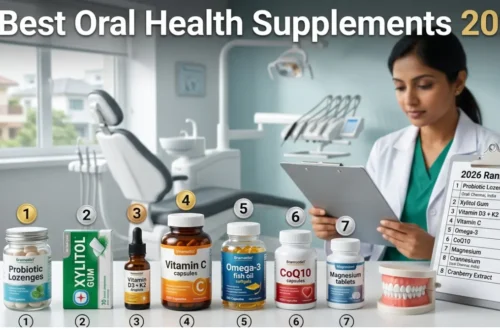
Oral health supplements — Some comprehensive oral health supplements combine cranberry extract with other evidence-backed ingredients — like certain probiotic strains, xylitol, or CoQ10 for gum health. This combination approach makes sense scientifically because each ingredient works through a different mechanism.
Timing matters — Because cranberry PACs work by blocking bacterial adhesion, the most logical time to use cranberry-containing products is after eating — when bacteria are most actively trying to colonize tooth surfaces with the sugar you just consumed.
What to look for on labels — Standardized cranberry extract should ideally specify PAC content (measured in milligrams). Products that just say “cranberry fruit” or list an unclear amount are less reliable.
Cranberry Extract and Provadent
One oral health product that has incorporated cranberry extract into its formula is Provadent — which combines cranberry extract with a targeted probiotic blend specifically formulated for oral health.
This combination is scientifically logical. Here is why.
Cranberry PACs work by preventing bacteria from sticking to tooth surfaces. Oral probiotics like Lactobacillus reuteri and Streptococcus salivarius K12 work by repopulating the mouth with beneficial bacteria that compete against harmful species.
These are two completely different mechanisms — and they are complementary. Cranberry makes it harder for bad bacteria to colonize. Probiotics introduce good bacteria that take up the available space. Together they address the oral microbiome from two directions simultaneously.
This is the kind of multi-mechanism approach that makes scientific sense — not a single magic ingredient, but a formula where each component targets a different part of the same problem.
The Ultimate Guide to a Healthy Mouth and Oral Health
How Cranberry Compares to Other Natural Oral Health Ingredients
There are several natural ingredients with legitimate oral health research behind them. Here is how cranberry fits in.
Xylitol — Well-established. 50+ years of research. The gold standard for natural cavity prevention. Works by making S. mutans unable to metabolize it efficiently. Cranberry and xylitol are complementary — different mechanisms, both targeting cavity bacteria.
Green tea extract (EGCG) — Strong laboratory evidence against S. mutans and periodontal bacteria. Less human clinical data than xylitol but promising. Like cranberry, it works partly through anti-adhesion mechanisms.
Neem — Used in traditional medicine for centuries. Some evidence for antibacterial effects in the mouth. Less standardized research than cranberry or xylitol.
Coenzyme Q10 (CoQ10) — Specific evidence for gum tissue health. Gum tissue levels of CoQ10 are depleted in gum disease patients. Supplementation has shown benefit for gum inflammation in some trials.
Oil pulling (coconut oil) — Popular but weak evidence. Some reduction in bacteria counts in small studies. No evidence it outperforms regular brushing.
Cranberry extract sits in a solid middle position — more human evidence than neem or oil pulling, less established than xylitol, and particularly interesting for its unique anti-adhesion mechanism that most other ingredients do not share.
Who Should Consider Cranberry Extract for Oral Health?
People with high cavity rates — If you get cavities regularly despite brushing, your mouth likely has high S. mutans populations. Cranberry extract directly targets this bacteria’s ability to colonize your teeth.
People with early gum disease — The anti-inflammatory and anti-adhesion effects on periodontal bacteria make cranberry extract a reasonable supportive measure for people managing early gingivitis.
People wanting to avoid harsh antibacterial mouthwashes — Chlorhexidine mouthwash is effective but kills both harmful and beneficial bacteria. Cranberry extract works more selectively — interfering with bacterial adhesion rather than killing everything indiscriminately.
People building a complete oral health routine — If you already brush, floss, use xylitol, and see your dentist regularly, adding cranberry extract is a logical next layer — particularly if you want to support your oral microbiome rather than just clean your teeth mechanically.
Parents of young children — Given the evidence that cavity bacteria transmit from parents to children, adults reducing their own S. mutans levels — through xylitol, probiotics, and cranberry extract — may indirectly protect their children.
Frequently Asked Questions
Can I just drink cranberry juice for my teeth? No. Commercial cranberry juice — even unsweetened — does not contain the concentration of PACs found in standardized extract. And sweetened cranberry drinks actually feed cavity-causing bacteria. Use standardized cranberry extract products specifically, not juice.
Is cranberry extract safe for daily use? Yes. Cranberry extract has an excellent safety profile in research studies. It is a food-derived compound with no significant known side effects at normal doses. People on blood thinners should check with their doctor as cranberry can mildly affect warfarin metabolism.
How long before I see results from cranberry extract? Most studies showing measurable reductions in S. mutans levels ran for 4 to 8 weeks. Consistent daily use is needed — occasional use will not produce significant benefits.
Does cranberry extract help with bad breath? Indirectly, yes. Bad breath is primarily caused by anaerobic bacteria producing volatile sulfur compounds. By reducing overall harmful bacterial load and disrupting biofilm where odor-causing bacteria shelter, cranberry extract may contribute to fresher breath — though for bad breath specifically, tongue scraping and S. salivarius K12 probiotics have stronger direct evidence.
Can children use cranberry extract for oral health? The general safety profile of cranberry extract is good. However, most clinical studies have been conducted in adults. Consult your pediatric dentist before using specific cranberry extract products for young children.
Does cooking or heating destroy cranberry PACs? Yes — heat significantly degrades proanthocyanidins. This is another reason why raw cranberries or standardized cold-processed extracts are preferred over processed cranberry products for therapeutic purposes.
Is cranberry extract the same as cranberry seed oil? No. Cranberry seed oil is extracted from the seeds and is rich in fatty acids and vitamin E — used mainly in skincare. Cranberry extract for oral health comes from the fruit flesh and skin, where the PACs are concentrated.
The Bottom Line
Cranberry extract is not a miracle cure. It is not going to replace your toothbrush or make dental visits unnecessary.
But the science behind it is real, the mechanism is well understood, and the research — while still growing — consistently points in the same direction. Cranberry PACs interfere with bacterial adhesion in a way that most other natural compounds simply do not.
For cavity prevention, it is a genuinely useful add-on — especially for people who seem cavity-prone despite decent oral hygiene.
For gum health, the evidence is earlier but promising — particularly for its effects on reducing the virulence of periodontal pathogens and gum tissue inflammation.
The key is using it correctly — in a standardized extract form, at meaningful concentrations, and as part of a complete oral health routine that includes brushing, flossing, professional cleanings, and ideally xylitol and targeted oral probiotics.
Your mouth is an ecosystem. The most effective approach is not one ingredient — it is multiple complementary strategies working together to keep harmful bacteria from taking over.
Cranberry extract is a smart piece of that strategy.
This article is written for informational purposes only and does not constitute personalized dental advice. Please consult a licensed dentist for diagnosis and treatment of any oral health condition.