Most people only think about their teeth. They want white teeth. They want straight teeth. They want no cavities.
But here is the truth — your gums matter more than your teeth.
You can save a tooth with a crown or a filling. But if your gums fail, you lose the tooth completely. No fix. Just gone.
The scary part? Gum disease is almost always silent in the beginning. No pain. No obvious signs. Just slow damage happening underneath the surface — until one day it is too late to reverse it.
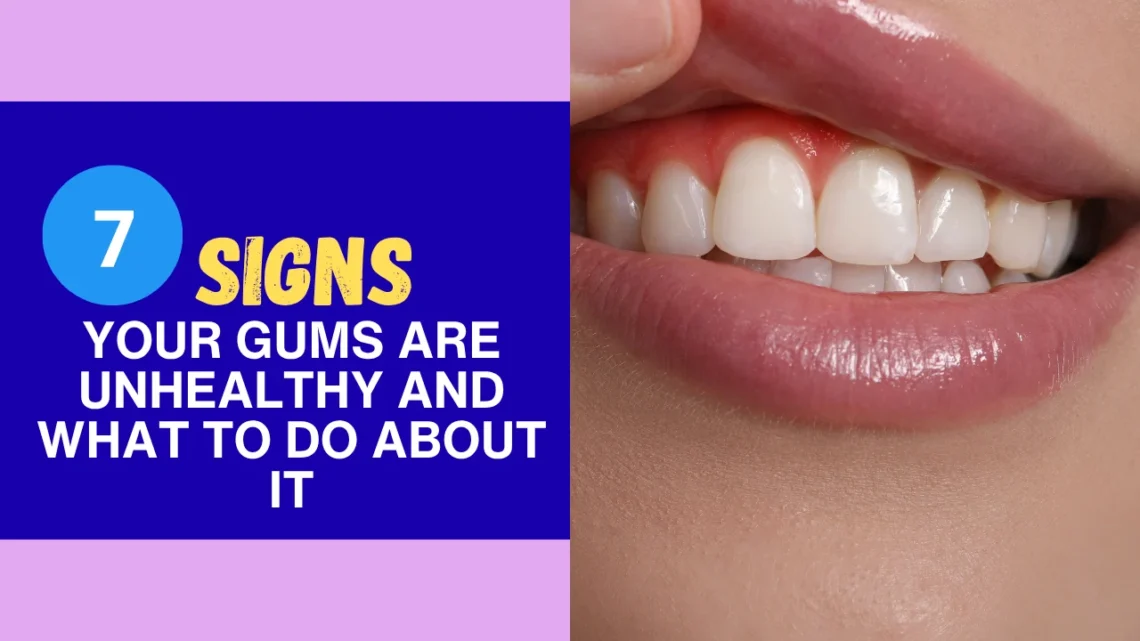
This article will show you the 7 warning signs your gums are sending you right now. And more importantly — exactly what to do about each one.
Sign 1 — Your Gums Bleed When You Brush or Floss
This is the most common sign. And it is also the most ignored.
Most people see a little blood when they brush and think — “I brushed too hard” or “I haven’t flossed in a while.” They rinse, spit, and forget about it.
But healthy gums do not bleed. Ever.
If your gums are bleeding regularly when you brush or floss, it means they are already inflamed. This is the earliest stage of gum disease — called gingivitis. At this stage, the damage is still completely reversible. But if you ignore it, gingivitis progresses into periodontitis — a much more serious infection that destroys the bone holding your teeth in place.
What to do:
Start flossing every single day — even though it hurts and bleeds at first. The bleeding actually gets better within 7 to 14 days of consistent flossing, not worse. Also switch to a soft-bristled toothbrush if you haven’t already. Hard bristles irritate gum tissue. And book a dental cleaning — professional scaling removes the hardened tartar that home care cannot touch.
Sign 2 — Your Gums Look Red or Dark Pink Instead of Light Pink
Healthy gums have one very specific look. They are light pink, firm, and they fit tightly around each tooth like a collar.
If your gums look red, dark pink, purplish, or swollen — that is inflammation. And inflammation means your immune system is actively fighting a bacterial infection in your gum tissue.
This sounds dramatic but it is actually very common. In fact, studies estimate that nearly half of all adults over 30 have some form of gum disease — most of them without knowing it.
The color change happens because inflamed gums have increased blood flow rushing to the area. More blood = redder color. This is your body sending repair cells to fight the infection.
What to do:
Do not wait for pain before acting. Red gums are inflamed gums. Start with a thorough professional cleaning to remove bacterial buildup at and below the gumline. Ask your dentist about prescription antimicrobial rinses if the inflammation is significant. And address any lifestyle factors that worsen gum inflammation — smoking being the biggest one.
Sign 3 — Your Gums Are Swollen or Feel Puffy
Healthy gums are firm. Not squishy. Not puffy. Not tender to the touch.
If your gums look swollen, feel soft when you press them, or seem to bulge out between your teeth — that is a sign of active infection and fluid buildup in the tissue.
Swelling is your body’s classic inflammation response. White blood cells rush to the area to fight bacteria. Fluid builds up. Tissue expands. The result is that puffy, uncomfortable gum tissue that bleeds at the slightest touch.
Swollen gums also create a problem beyond discomfort. When gum tissue is swollen, it lifts slightly away from the tooth — creating tiny spaces called periodontal pockets. These pockets become traps for bacteria, food debris, and tartar. And unlike the visible surface of your teeth, these pockets are completely unreachable by your toothbrush.
What to do:
Warm saltwater rinses (half a teaspoon of salt in a full glass of warm water) can help reduce minor swelling at home. But swollen gums that don’t improve within a week need professional attention. Your dentist may need to measure pocket depths to assess how far the disease has progressed.
Sign 4 — You Have Bad Breath That Comes Back No Matter What
If you brush, use mouthwash, eat a mint, and still feel like your breath is not fresh — your gums are likely the source.
Persistent bad breath (called halitosis) is one of the most reliable signs of active gum disease. Here is why.
The bacteria responsible for gum disease are anaerobic — meaning they live without oxygen. They thrive deep in gum pockets and under the gumline. As they break down proteins in food and dead tissue, they release volatile sulfur compounds — gases that smell like rotten eggs and old garbage.
No amount of mouthwash fixes this. Mouthwash only reaches the surface of your mouth. The bacteria producing these gases are sitting 3, 4, 5 millimeters below your gumline. Completely out of reach.
What to do:
Scrape your tongue every morning — this removes the bacterial coating that covers the tongue and is a major source of bad breath. Then address the root cause. A professional deep cleaning called scaling and root planing cleans below the gumline where bad breath bacteria actually live. Also consider an oral probiotic containing Streptococcus salivarius K12 — this specific strain colonizes the tongue and throat and directly competes with odor-causing bacteria.
Sign 5 — Your Gums Are Pulling Away From Your Teeth
Take a close look in the mirror. Do your teeth look longer than they used to? Can you see more of each tooth than before?
If yes — your gums are receding.
Gum recession means the gum tissue is literally pulling back from the tooth, exposing the root surface below. This is one of the more serious signs because gum tissue does not grow back on its own. Once it is gone, it is gone — unless you have a surgical graft procedure done.
Recession creates three major problems. First — the exposed root surface has no enamel protecting it. This makes teeth extremely sensitive to hot, cold, and sweet foods. Second — the exposed root is softer than enamel and decays much faster. Third — recession is often a sign that bone loss is already happening underneath.
Recession can be caused by aggressive brushing, grinding teeth at night, or advancing gum disease. In many cases it is all three together.
What to do:
If you are brushing hard, stop immediately. Switch to a soft-bristled brush and use gentle circular motions — not horizontal scrubbing. If you grind your teeth at night, ask your dentist about a nightguard. For significant recession, a gum graft procedure can restore lost tissue and protect the exposed root. The earlier you address it, the less complex the treatment.
The Ultimate Guide to a Healthy Mouth and Oral Health
Sign 6 — Your Teeth Feel Loose or Have Shifted Position
This sign means the disease has already progressed to an advanced stage.
Your teeth are held in place by a combination of gum tissue and the underlying bone structure of your jaw. When gum disease reaches the bone — which is called periodontitis — that bone begins to dissolve. Slowly. Silently. Without pain in most cases.
As bone support disappears, teeth begin to feel slightly loose. You might notice a tooth feels different when you bite down. You might notice gaps opening up between teeth that were previously touching. In advanced cases, teeth begin to visibly drift out of their original position.
This is serious. Bone loss from periodontitis is not reversible with regular treatment. You can stop it from progressing, but the bone that is already gone stays gone without regenerative surgery.
What to do:
See a periodontist — a gum disease specialist — immediately. They will take X-rays to measure how much bone has already been lost. Treatment at this stage involves deep scaling under local anesthesia, possible antibiotic therapy, and in some cases surgical intervention. Do not wait. Every month of inaction means more bone lost.
Sign 7 — You Have Sensitivity to Hot, Cold, or Sweet Foods
Yes, sensitivity can be a tooth problem. Cracked enamel, worn cusps, or deep cavities can all cause sensitivity.
But persistent sensitivity — especially along the gumline or on multiple teeth at once — is very often a gum problem.
When gums recede (Sign 5), the root surface of the tooth is exposed. Unlike the crown of your tooth, which is covered in hard enamel, the root surface is covered in cementum — a much softer, more porous material. This material has tiny channels that lead directly to the nerve of the tooth. Hot drinks, cold drinks, ice cream, even cold air can trigger a sharp, brief pain.
Sensitivity from gum recession is different from cavity sensitivity. It tends to be a quick, sharp pain rather than a dull ache, and it occurs right at the gumline rather than on the top of the tooth.
What to do:
Use a toothpaste specifically designed for sensitivity — look for potassium nitrate or stannous fluoride as active ingredients. Your dentist can also apply desensitizing agents or fluoride varnish directly to the affected root surfaces. Most importantly, treat the underlying gum recession before more root surface is exposed.
What Causes Gum Disease in the First Place?
Before we talk about prevention, you need to understand the actual cause.
Gum disease is caused by bacteria. Specifically, harmful bacteria that build up in a sticky film called plaque along and below your gumline. When plaque is not removed regularly, it hardens into tartar (also called calculus) — a rock-hard substance that cannot be removed by brushing at home.
Tartar provides a protected base for bacteria to multiply. The bacteria release toxins that irritate gum tissue. Your immune system responds with inflammation. That inflammation, over time, destroys the gum tissue and the bone underneath.
The factors that make this worse include:
Smoking — Smoking is the single biggest lifestyle risk factor for gum disease. It reduces blood flow to gum tissue (masking the bleeding sign), slows healing, and makes treatment far less effective.
Diabetes — High blood sugar creates an environment where harmful oral bacteria thrive. And gum disease in return makes blood sugar harder to control. It is a two-way relationship.
Stress — Chronic stress suppresses your immune system, making it harder to fight the bacterial infection driving gum disease.
Dry mouth — Saliva contains natural antimicrobial proteins. When saliva production drops — from medication, dehydration, or medical conditions — bacteria populations surge.
Genetics — Some people are simply more genetically susceptible to gum disease even with good hygiene habits.
The Complete Gum Health Recovery Plan
If you recognized yourself in any of those 7 signs, here is a practical plan to follow.
Week 1 — Get a professional cleaning. This is non-negotiable. You cannot reverse active gum disease at home. A dental hygienist removing tartar below the gumline is the essential first step. If your gums are significantly inflamed or pockets are deep, you may need a deep cleaning (scaling and root planing) under local anesthesia rather than a standard cleaning.
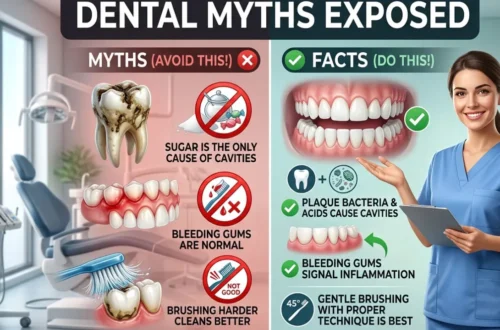
Daily — Fix your brushing technique. Two minutes. Soft-bristled brush. Angled at 45 degrees toward the gumline. Gentle pressure. Most people scrub horizontally — this does not clean below the gumline and actually damages gum tissue over time.
Daily — Floss properly. Slide the floss below the gumline slightly — do not just snap it between teeth. Curve it around each tooth in a C-shape and move it gently up and down against the tooth surface. Yes, it might bleed at first. Do it anyway.
Daily — Scrape your tongue. Use a metal tongue scraper each morning before drinking or eating anything. This removes the bacterial coating that accumulates overnight and is a major source of both bad breath and harmful oral bacteria.
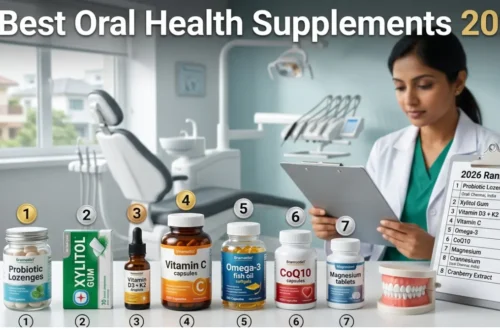
Consider an oral probiotic. Products containing strains like Lactobacillus reuteri, Streptococcus salivarius K12, and Lactobacillus salivarius have shown clinical evidence of improving gum inflammation markers and reducing harmful oral bacteria populations. This is the layer that mechanical cleaning alone cannot provide.
Every 6 months — Professional check-ups. Once your gums are healthy, maintain that health with regular cleanings. If you have a history of gum disease, your dentist may recommend every 3 to 4 months.
Frequently Asked Questions
Can unhealthy gums heal on their own?
Gingivitis — the earliest stage — can fully reverse with improved home care and a professional cleaning. More advanced gum disease (periodontitis) cannot reverse on its own. The damage to bone and tissue is permanent without treatment, but progression can be stopped.
What do healthy gums actually look like?
Healthy gums are light pink (though some people naturally have darker pigmentation), firm to the touch, and fit tightly around each tooth without any puffiness or gaps.
Is gum disease painful?
Usually not in the early stages — which is why it goes undetected for so long. Pain, looseness, or significant sensitivity usually only appear in moderate to advanced stages.
Can gum disease affect my overall health?
Yes, significantly. Gum disease has been linked to heart disease, diabetes complications, respiratory infections, Alzheimer’s disease, and preterm birth. The bacteria in your mouth can enter the bloodstream and travel to other organs.
How quickly can gum disease progress?
In some people slowly — over years. In others, especially smokers, diabetics, or people under high stress, it can progress rapidly. Genetics also plays a role. This is why regular dental check-ups matter even if you have no symptoms.
Do I need to see a specialist for gum disease?
Mild to moderate gum disease is treated by your general dentist or dental hygienist. Severe gum disease with significant bone loss, loose teeth, or complex cases is referred to a periodontist — a specialist in gum disease treatment.
Can children get gum disease?
Severe periodontitis is rare in children. But gingivitis — inflamed, bleeding gums — is common even in kids and teenagers. Good habits established early prevent adult-stage disease.
The Bottom Line
Your gums are not supposed to bleed. They are not supposed to be red or swollen. They are not supposed to pull away from your teeth.
These things feel normal because they are common. But common is not the same as normal.
The seven signs in this article are your gums asking for help. The earlier you listen, the easier — and cheaper — the solution.
Gingivitis caught early costs a cleaning. Periodontitis caught late can cost thousands of dollars in surgery and still result in lost teeth.
Check your gums today. In the mirror. Right now. And if you see any of these signs — book a dental appointment this week, not next month.
Your teeth depend on your gums more than anything else. Give them the attention they deserve.
This article is for informational purposes only and does not constitute professional dental advice. Please consult a licensed dentist for diagnosis and treatment.