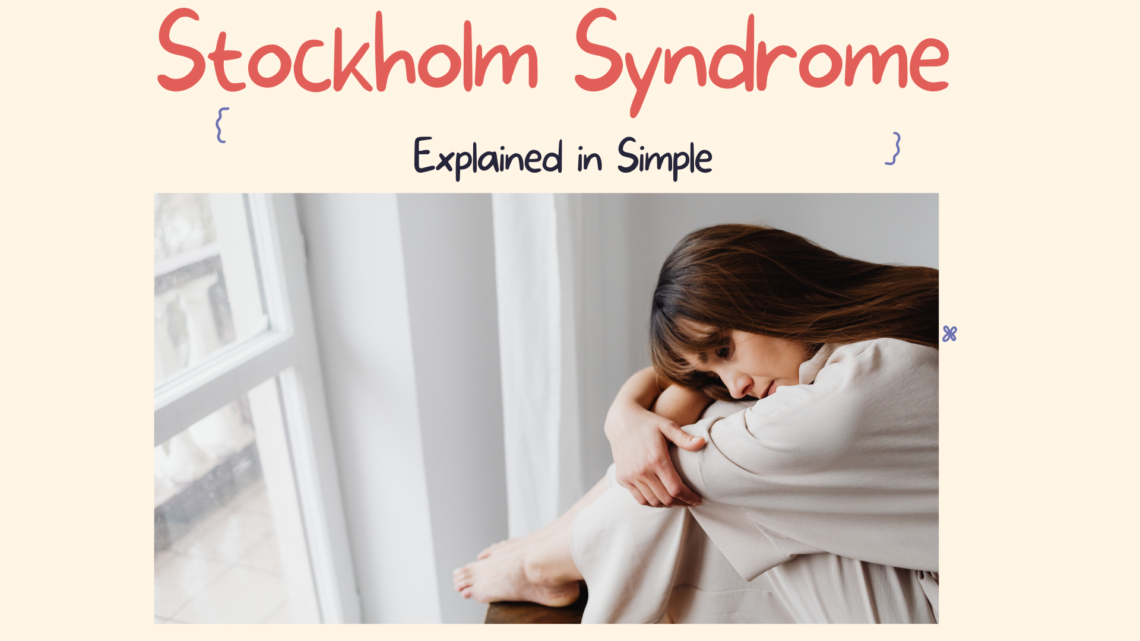
The human brain is very smart. When a person is in danger, the brain tries hard to protect them. Sometimes, the way it protects us can look confusing to other people. One example is Stockholm syndrome.
This happens when a person who is kidnapped, abused, or controlled starts to feel positive emotions toward the person who is hurting them. They may feel sympathy, loyalty, or even care for that person.
This may sound strange. But it is actually the brain’s way of trying to survive a scary situation.
Where Did the Name Come From?
The name comes from a bank robbery in Stockholm in 1973. During the robbery, four bank workers were locked inside a vault for several days.
After they were rescued, something surprising happened. The hostages defended the robbers. They did not want to testify against them. They even showed sympathy for them.
A Swedish doctor used the term “Stockholm syndrome” to explain this strange emotional connection between the victims and the captors. Since then, people around the world have used this term.
What Exactly Is Stockholm Syndrome?
Stockholm syndrome is when a victim forms an emotional bond with the person who is harming or controlling them.
The victim may:
- Defend the abuser
- Refuse help
- Feel loyalty toward the abuser
- Blame themselves instead of the abuser
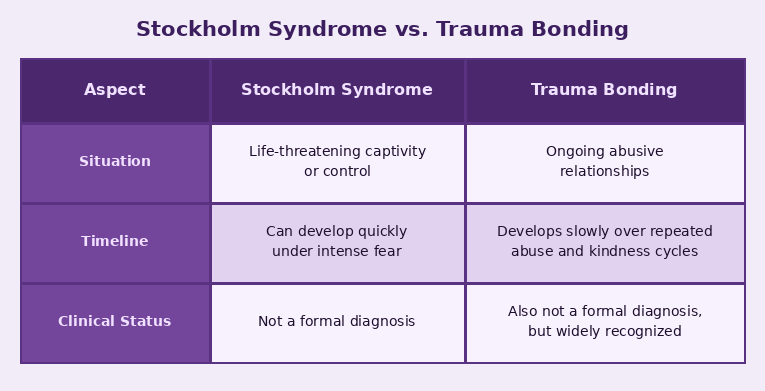
It is important to know this: it is not a mental illness. It is not listed in official medical books like the Diagnostic and Statistical Manual of Mental Disorders.
But mental health experts agree that this reaction is real. It is a survival response to fear and trauma.
It does not mean the person is weak. It means their brain is trying to keep them alive.
Why Does This Happen?
When someone feels trapped and believes they cannot escape, the brain looks for any small sign of safety.
For example:
If the abuser gives food, speaks kindly once in a while, or stops hurting them for a short time, the victim may feel relief. That small kindness can feel very big in a dangerous situation.
Fear and relief get mixed together.
If the victim is also cut off from family and friends, the abuser becomes their only human contact. Slowly, the victim may begin to see things from the abuser’s point of view.
This is sometimes called a “survival attachment.”
Where Can It Happen?
Stockholm syndrome does not only happen in kidnappings.
It can happen in:
- Domestic violence relationships
- Human trafficking cases
- Child abuse situations
- Cult groups
- Prisoner-of-war situations
In normal life, a similar pattern is often called trauma bonding. It happens in relationships where there is repeated abuse followed by small acts of kindness.
Love Bombing: The Red Flags You Shouldn’t Ignore
Four Things That Make It More Likely
Stockholm syndrome is more likely when these four things happen together:
| Condition | What It Means |
|---|---|
| Threat to safety | The person feels their life or safety is in danger |
| Small kindness | The abuser sometimes acts kind |
| Isolation | The victim has no outside support |
| No escape | The person feels trapped |
When all these happen at the same time, emotional bonding can grow.
Common Signs
A person with Stockholm syndrome may:
- Protect the abuser
- Refuse rescue
- Fear police or helpers
- Say the abuse is “not that bad”
- Blame themselves
They may also feel confused, numb, anxious, or depressed. Some may develop symptoms similar to Post-traumatic stress disorder.
Is It Real?
Some experts debate the name. It is not an official diagnosis. There is no special test for it.
But the emotional bond is real. Therapists see it often in trauma cases. Most professionals treat it as part of trauma or PTSD.
Can a Person Recover?
Yes. Recovery is possible.
Healing usually includes:
- Talking to a trained therapist
- Learning that the bond was a survival reaction
- Rebuilding confidence
- Creating safe relationships
Therapies like counseling and trauma-focused treatment can help a lot. Support from friends and family is also very important.
Healing takes time. It is not always fast. But many people recover and build healthy lives again.
Stockholm Syndrome vs Trauma Bonding
These terms are related but not exactly the same.
Common Myths
Some people think victims stay because they are weak or foolish. This is not true.
The brain forms this bond automatically during danger. It is not a choice.
Another myth is that victims can just “snap out of it.” Emotional trauma does not work that way. It takes time and support to heal.
Anyone can develop this response. It does not matter if someone is strong, smart, male, female, young, or old.
How to Help Someone
If you know someone in this situation:
- Do not blame them
- Do not shout or argue
- Stay calm
- Listen without judging
- Encourage professional help
Being patient and kind works better than forcing them to change their mind.
Final Thoughts
Stockholm syndrome shows how powerful the human brain is. When faced with extreme danger, it will do almost anything to survive.
It is not weakness. It is survival.
When we understand this, we stop judging victims. Instead, we offer empathy, care, and support. With the right help and time, survivors can break these emotional bonds and build safer, happier lives.