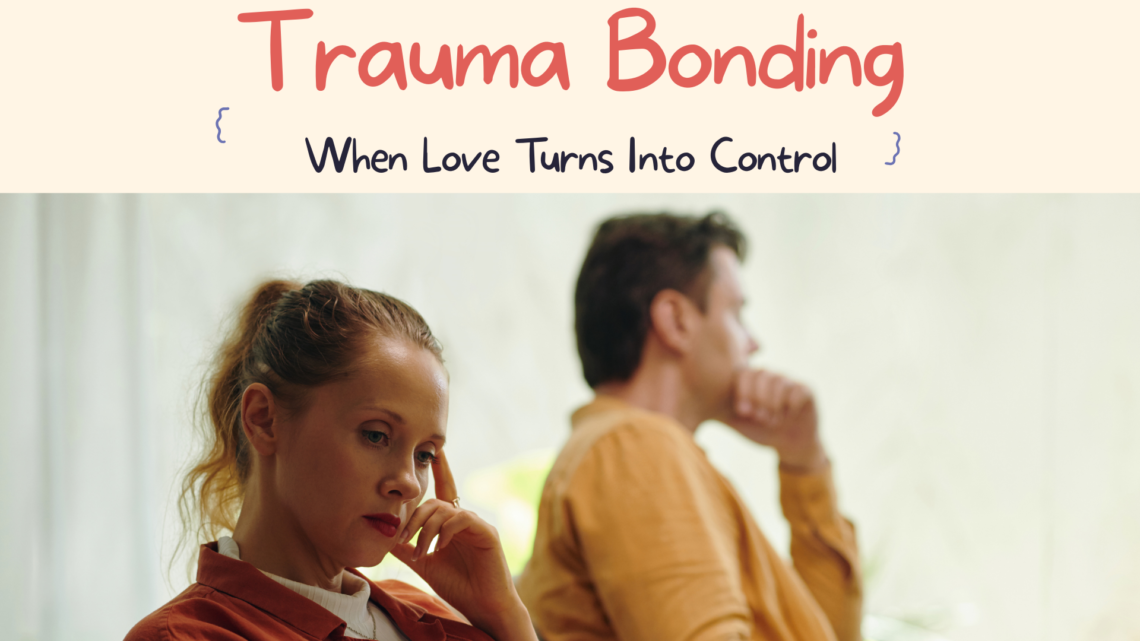
Have you ever looked at a couple and thought, “Why don’t they just break up?” Or perhaps you’ve wondered the same thing to yourself. And the solution is not always so simple, either. What keeps people stuck is something known as trauma bonding.
Trauma bonding is not weakness. It is not stupidity. That’s not a lack of respect for yourself. It’s a deep psychological connection reinforced by the cycle of pain and reward. When you see how it functions, all those confusing relationship patterns begin to make sense.
What Is Trauma Bonding ?
Trauma bonding is a strong emotional tie that develops between an abused person and his or her abuser. This word was coined in the 1990s by psychologist Patrick Carnes. Previous researchers, among them Donald Dutton and Susan Painter, had examined similar patterns in abusive relationships and explained how power imbalances and unpredictable kindness engender create loyalty in victims.
In simple words, trauma bonding happens when abuse is mixed with affection.
The relationship doesn’t always feel bad. That is the key. There’s love, apologies, gifts, promises and tenderness. Those moments create hope.
Those moments create hope. Your brain begins to focus on those good times and ignore the harm.
After a while, the relationship becomes an addiction. The brain releases dopamine during loving or apologetic moments. After pain and fear, that relief feels intense. You begin to crave the “good version” of the person, even if the bad moments are damaging you.
This is a dynamic that can occur in romantic relationships, families, friendships, workplaces and even cult-like atmospheres. Wherever there is control, fear and occasional reward, trauma bonding can grow.
How Trauma Bonds Develop
Trauma bonding usually follows a repeating cycle. It may not look dramatic at first. In fact, many trauma-bonded relationships begin in a way that feels magical.
The Honeymoon or Love Bombing Phase
In the beginning, everything feels intense and perfect. Your partner may give you constant attention, praise, gifts, and big promises about the future. You feel chosen and special.
This stage builds strong emotional attachment quickly. It sets a high emotional baseline. Later, you will compare everything to this early version of them and hope to get it back.
Trust and Dependency
Slowly, dependence increases. You may spend less time with friends. Your partner becomes your main emotional support. Sometimes this happens subtly. They may criticize your friends or say others do not understand your relationship.
You begin relying on them more and more.
Criticism and Devaluation
Over time, small criticisms appear. Comments about your appearance, your choices, your personality. At first, they seem minor. Then they become more frequent.
Because the relationship started so positively, you assume the problem must be you. You try harder. You adjust your behavior. You work to “fix” yourself.
The Abuse and Reconciliation Cycle
Then comes a clear incident. It might be yelling, humiliation, gaslighting, emotional withdrawal, or physical harm. You feel shocked and hurt.
Afterward, the abuser apologizes or becomes loving again. They may cry, promise change, or give gifts. Relief floods your system. You feel hope.
This is the moment the trauma bond strengthens.
The cycle repeats. Tension builds. Incident happens. Apology follows. Calm returns. Each repetition makes it harder to leave.
Why Trauma Bonds Feel So Strong
There are a few simple reasons why trauma bonds feel very hard to break. Even when someone hurts you, the attachment can feel very powerful.
Intermittent Reinforcement
When kindness happens sometimes, but not all the time, it can make people more attached.
Think about a gambling machine. You do not win every time. But because you sometimes win, you keep playing.
In a trauma bond, your partner is not always loving. Sometimes they are kind. Sometimes they are hurtful. Because you never know when the loving version will come back, you keep hoping and waiting. That hope keeps you emotionally connected.
Cognitive Dissonance
Your mind feels confused when it tries to believe two opposite things at once:
“They love me.”
“They hurt me.”
These two thoughts do not fit together. To reduce the mental stress, you may start making excuses. You may tell yourself it was not that bad. You may even blame yourself.
This helps you feel better for a short time, but it keeps the unhealthy relationship going.
Survival Instincts
Human beings are built to attach to people who control their safety.
In dangerous situations, some people fight. Some run away. Others try to please the person who is hurting them. This is called “fawning.” It means trying to stay safe by keeping the other person happy.
Trauma bonds often grow from this survival response. Your brain is trying to protect you.
The Sunk Cost Effect
The longer you stay, the harder it feels to leave.
You may have spent years in the relationship. You may have shared money, memories, or children. Leaving can feel like all that time and effort was wasted.
So you stay, hoping it will get better.
The 7 Common Stages of Trauma Bonding
Every relationship is different. But experts often describe seven stages that roll out, over and over again.
Stage 1: The relationship starts with very intense affection. It’s often known as love bombing. Everything feels intense and magical.
Stage 2: Trust grows. You form an emotional attachment to the person.
Stage 3: Criticism begins. Eventually, you start to lose confidence.
Stage 4: The manipulation of the individual. They might deny things that they said, things that they did. This makes you doubt yourself.
Stage 5: You feel tired of fighting back. You start accepting things you once resisted.
Stage 6: You get addicted to the emotional roller coaster. The highs feel amazing. The lows feel terrible.
Stage 7: The abusive behavior becomes normalized. You stick around because you’ve still got hope that things can change.
Not all of these stages occur in a linear progression. They repeat in cycles. The bond gets stronger every round.
Signs You May Be in a Trauma Bond
It can be incredibly hard to see it when you’re in trauma bonding. But there are common signs.
- You defend your partner, even when they hurt you.
- You tell yourself you will leave but you don’t.
- Your emotions feel extreme. One day you feel very happy. So, you are crushed the next day.
- You feel guilty for their anger.
- You keep parts of the relationship hidden from friends or family.
- You feel scared or anxious at the thought of leaving, even though you are unhappy.
- After a fight, you miss them deeply and forget how painful it felt.
- If your family and friends are concerned about you or worried, and you find yourself wanting to shield your partner from any criticism, that too is a strong sign.
Trauma Bonding in Different Types of Relationships
Trauma bonds do not only happen in romantic relationships.
In families, a child can remain loyal to an abusive parent and blame themselves instead. If the parent shows them rare affection, it feels very special and strengthens the attachment.
Between siblings, one may bully but also act protective. This creates confusion and closeness at the same time.
At work, the boss may belittle workers at the office but occasionally complement or reward them. Workers are left feeling valued and frightened at the same time.
In group settings that control people strongly, leaders may use fear and isolation. They mix punishment with rare approval to control followers.
The pattern is always the same: pain mixed with small rewards.
Trauma Bonding vs. Similar Concepts
It is simple to confuse trauma bonding with other terms.
Stockholm syndrome occurs when hostages establish emotional relationships with their captors during captivity. Trauma bonding is broader, and occurs in long-term abusive relationships.
Codependency means two people rely on each other in unhealthy ways. Trauma bonding usually has a strong power imbalance, where one person controls and harms the other.
Love bombing is often the first stage of trauma bonding. But by itself, it does not describe the full cycle of abuse.
Long-Term Effects on Mental Health
Being in a trauma bond for a long time can affect your mental and physical health.
Many people develop anxiety, depression, and low self-esteem. Some experience symptoms similar to post-traumatic stress. Sleep problems and constant stress are common. Physical health problems, like high blood pressure, can also happen.
After leaving, you may feel deep sadness. You are not only missing the person. You are also grieving the future you imagined.
You may find it hard to trust others. You may question your own judgment.
These reactions are normal. They are responses to long-term emotional stress.
Emotional Fitness: The Life Skill You Missed !
How to Break a Trauma Bond
Breaking a trauma bond is possible. But it takes time and support.
Creating distance is very important. If it is safe, no contact helps your brain slowly calm down. If you must stay in contact because of children or legal reasons, strong boundaries are necessary.
Building support reduces loneliness. Talk to trusted friends, family, or support groups. Outside perspectives help you see things clearly.
Therapy can be very helpful. Trauma-focused therapy helps heal emotional wounds and rebuild self-worth.
Writing down what really happened can also help. When you miss the person, your memory may only remember the good times. Writing facts helps you see the full picture.
Be kind to yourself. Healing is not a straight path. Some days you will feel strong. Some days you will miss them. Both are normal.
Trauma Bonding vs Healthy Love
Trauma bonds often feel intense, dramatic, and emotional. Healthy love feels steady and safe.
| Aspect | Trauma Bond | Healthy Love |
| Foundation | Fear and control | Trust and respect |
| Emotional Pattern | High highs, low lows | Consistent and calm |
| Conflict | Avoidance or explosions | Open communication |
| Independence | Discouraged | Encouraged |
| Power | Imbalanced | Equal |
Love supports growth. Trauma bonds drain energy and identity.
Recovery Tools and How They Help
| Recovery Tool | How It Helps | Example |
| Journaling | Helps you see patterns clearly | Writing down incidents each week |
| Therapy | Heals emotional wounds | Weekly trauma-focused sessions |
| Support Groups | Reduces loneliness and shame | Survivor meetings |
| Safety Plan | Protects your physical safety | Emergency contacts and plan |
| Self-Compassion | Rebuilds confidence | Daily positive reminders and boundaries |
Note: Many people notice that after about 90 days of real distance, emotions start to calm down. Full healing can take months or even years. It depends on how long and how deep the relationship was.
What Healthy Love Actually Looks Like
After trauma bonding, healthy love may feel strange at first. It may even feel boring because your body is used to drama.
Healthy love is steady and consistent. There is respect, even during arguments. You can speak about your needs without fear.
Boundaries are respected, not punished.
There are no cycles of cruelty followed by big apologies. Instead, there is steady care, responsibility, and growth from both people.
Love should never make you shrink yourself, hide who you are, or constantly prove your value.
Frequently Asked Questions
How long does it take to break a trauma bond?
It is different for everyone. Some you feel better after a few months of no contact. Deep healing can take a year or two, after long and severe abuse.
Can trauma bonding happen outside romantic relationships?
Yes. It can happen in families, workplaces, friendships, and controlling groups.
Why do I miss someone who hurt me?
Your brain became attached to the cycle of pain and relief. Missing them does not mean it was healthy. It means your nervous system is adjusting.
Will they change if I give them another chance?
Real change takes sustained effort, accountability and professional assistance. Most abusive patterns don’t stop until someone really is ready to change.
Is trauma bonding the same as love?
No, of course not. Real love is calm and stable. Trauma bonding is dependent on fear, control and unpredictable kindness.
Final Thoughts
Understanding trauma bonding gives you clarity. It removes shame. If you see yourself in these patterns, remember this: you are not weak, and you are not alone.
What feels like love may actually be your survival response.
With distance, support, and time, the bond can become weaker. And in its place, something healthier and more peaceful can grow.