Quick Points:
- Brown rice is just white rice that still has its outer layers — those layers have most of the good stuff in them
- It has almost 6 times more fibre than white rice — fibre helps your stomach, blood sugar, and keeps you full
- Brown rice doesn’t raise your blood sugar as fast as white rice does
- A big study with over 190,000 people found that eating brown rice instead of white rice every day may lower your chance of getting diabetes
- Brown rice has a little more arsenic (a natural substance from the soil) than white rice — it’s not dangerous for most people, but good to know
- It takes 40 to 45 minutes to cook — longer than white rice, but soaking it first or using a rice cooker makes it much easier
In One Sentence Brown rice keeps its outer layers after harvesting — and those layers give it much more fibre, vitamins, and minerals than white rice — which is good for your stomach, blood sugar, heart, and helps you feel full after eating.
Why People Ignore Brown Rice — And Why They Shouldn’t
For a long time, people thought brown rice was boring diet food. Something you eat when you’re trying to be strict with yourself, not something you actually enjoy.
That’s not really fair.
Brown rice isn’t some new health food. It’s just rice the way it grows naturally. White rice is what happens when you remove two important outer layers to make it softer and faster to cook. Brown rice is simply rice before you do all that.
When you understand what gets taken away — and why it matters — you’ll see the two types of rice very differently.
So What Exactly Is Brown Rice?
Brown rice and white rice come from the exact same plant. The only difference is how much they are processed.
A grain of rice has several layers. The outer shell is always removed because you can’t eat it. Under that are two layers called the bran and the germ — this is where most of the fibre, vitamins, minerals, and antioxidants (things that protect your body) live. In the middle is the white starchy part called the endosperm.
Brown rice keeps the bran and germ. That’s why it looks light brown, feels a little chewy, and has a mild nutty taste — something you might need a few meals to get used to, but most people end up liking it.
White rice removes those two layers completely. What’s left is mostly starch. It cooks faster and tastes softer — but it loses a lot of its nutrition.
Some white rice has vitamins added back in after the milling. But this doesn’t bring back everything that was removed — especially not the fibre and antioxidants from the bran layer.
What’s Actually in Brown Rice ?
One cooked cup of brown rice (about 195 grams) gives you roughly:
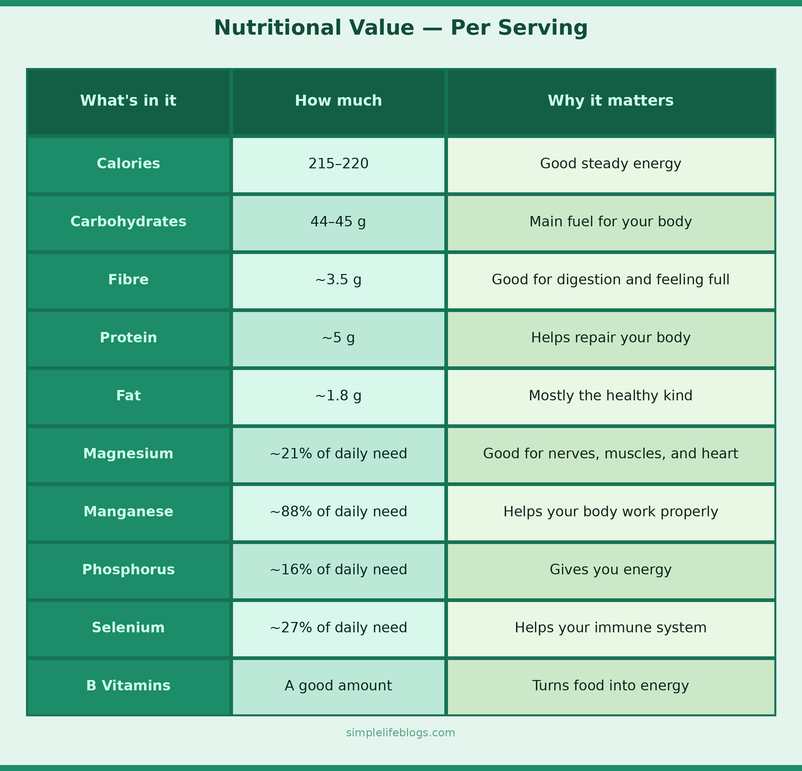
That manganese number — 88% of what you need in just one cup — is really impressive for any food. Manganese helps your body process food, build strong bones, and protect your cells.
Brown rice also has natural plant compounds that act like shields for your cells, protecting them from damage.
Brown Rice vs White Rice — The Real Differences
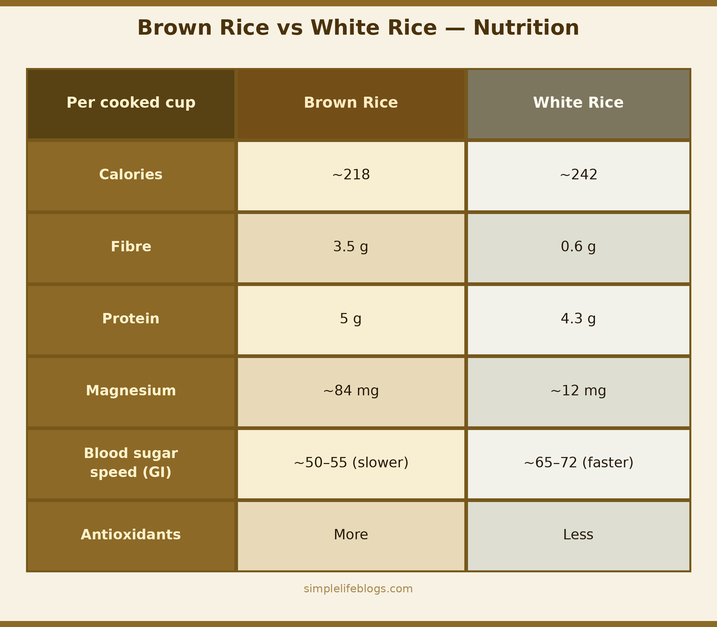
The fibre difference is the biggest thing. Brown rice has nearly 6 times more fibre. That one thing affects your digestion, blood sugar, how full you feel, and the good bacteria in your stomach.
The blood sugar speed difference is also important — especially if you have diabetes or are trying to prevent it. White rice breaks down fast and sends sugar into your blood quickly. Brown rice is slower and steadier.
11 Best Fruits for Weight Loss (And How to Eat Them Right)
My Honest Take on MCT Oil for Weight Loss
What Fibre Does For Your Body
Three and a half grams of fibre per cup might not sound like much. But most people in the US and UK don’t get enough fibre every day — so every bit helps.
The fibre in brown rice is the type that adds bulk to your digestion. It helps you go to the toilet regularly and feeds the good bacteria in your stomach. When those bacteria are healthy, your whole body benefits — better immune system, less inflammation, better digestion.
Fibre also keeps you feeling full longer. A meal with brown rice keeps most people satisfied longer than the same meal with white rice. Over days and weeks, this naturally helps you eat less without really trying.
Brown Rice and Blood Sugar — Why It Matters
The Glycemic Index (GI) measures how fast a food raises your blood sugar after eating. Lower number = slower rise = better for your body.
Brown rice: around 50 to 55 White rice: around 64 to 72
The bran layer in brown rice slows digestion down — so sugar enters your blood slowly and steadily, which is much easier on your body.
Here’s where research gets interesting. A large study with more than 190,000 people found that replacing just one daily serving of white rice with brown rice was linked to a lower risk of getting type 2 diabetes.
If you already have diabetes, prediabetes, or high blood sugar, choosing lower-GI foods like brown rice is one of the best things you can do with your diet.
Brown Rice and Your Heart
Many studies agree — people who eat whole grains regularly have lower rates of heart disease than people who eat mostly refined (processed) grains.
Here’s why:
The fibre in whole grains helps bring down bad cholesterol (LDL). It does this by grabbing onto certain substances in your gut during digestion — your body then uses cholesterol to replace them, slowly lowering your cholesterol levels.
The magnesium in brown rice helps keep your blood pressure healthy.
The antioxidants in the bran help reduce inflammation (swelling inside your body) — which is connected to heart disease.
None of these effects is huge by itself. But eating whole grains regularly over many years makes a real difference to your heart.
Brown Rice and Weight
Brown rice is not some magic weight-loss food. It has about the same calories as white rice.
But here’s the practical difference: the fibre makes you feel full longer. So you end up eating less later in the day without trying.
Brown rice also causes a smaller insulin (a hormone) response because of its lower GI. When insulin stays too high for too long, your body stores more fat. So choosing lower-GI carbs consistently does help your body composition over time.
The honest truth: brown rice is a filling, nutritious carbohydrate that works well as part of a healthy diet. It’s not magic — but it’s a much better base than white rice or other refined carbs.
What About Arsenic? Honest Answer
Rice absorbs small amounts of arsenic (a naturally occurring substance) from soil and water because of how it grows. Brown rice has slightly more arsenic than white rice because arsenic collects in the bran layer — the layer that brown rice keeps.
For most healthy adults who eat rice as part of a varied diet, the levels are not dangerous. But it’s worth knowing about.
Simple steps that actually help:
- Rinse rice well before cooking
- Cook in more water than usual (about 6 cups of water for 1 cup of rice) and drain the extra water instead of letting it all soak in — this reduces arsenic a lot
- Eat different grains sometimes — oats, quinoa, barley, millets — so you’re not eating rice every single day
The answer is balance and variety, not avoiding brown rice completely.
How to Actually Cook Brown Rice
Most people give up on brown rice not because it tastes bad — but because they cooked it wrong once and never tried again.
The method is simple:
- Rinse the rice under cold water first. This removes extra starch and gives you better texture.
- Use 1 cup of rice to 2 – 2¼ cups of water. Bring to a boil, then put the lid on and turn the heat down low. Cook for 40 to 45 minutes.
- Take it off the heat and leave the lid on for 10 more minutes. Don’t open it yet! This lets the rice finish steaming and makes it much better.
- Then open and fluff with a fork.
Soaking the rice for a few hours before cooking makes it softer and shortens cooking time.
A rice cooker is even easier — most have a whole grain setting that does it all for you.
The smartest trick: cook a big pot once and keep it in the fridge. It stays good for 4 to 5 days and reheats quickly. No more worrying about the cooking time every day.
Brown Rice vs Quinoa
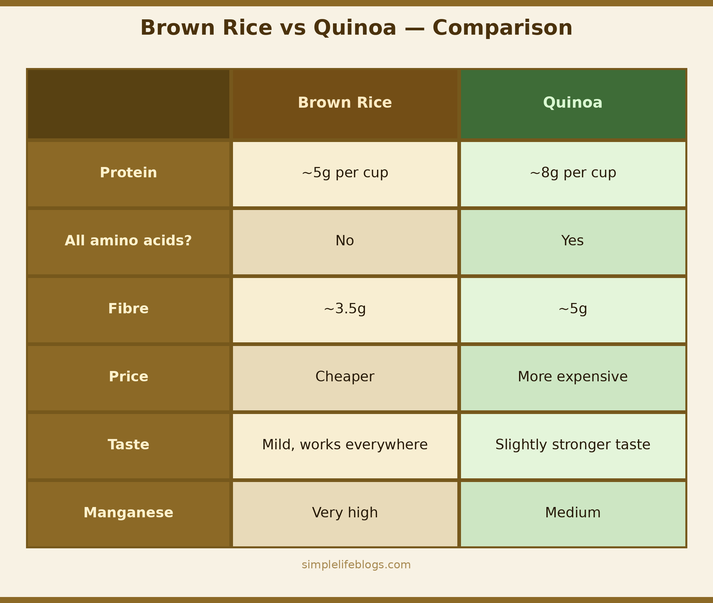
Quinoa has more protein and contains all the essential amino acids your body needs — brown rice doesn’t have all of them. Quinoa also has a bit more fibre.
But brown rice is much cheaper, easier to find, and its mild taste works with almost any kind of cooking.
Honestly? Neither one is better than the other. The best thing to do is eat both — and other whole grains like oats and barley too. More variety = more nutrition.
Easy Ways to Eat More Brown Rice
- Use it as the base for a grain bowl with vegetables, beans, or meat
- Use it in stir-fries, soups, or rice salads (it actually stays firm when cold, better than white rice)
- Make congee — a warm, soft rice porridge popular in Asian cooking, perfect with any toppings
- Use it for fried rice — works exactly the same as white rice
- Put it in stuffed vegetables or rice dishes you already make
If the taste or texture feels too different at first, try mixing half brown rice and half white rice. Most people stop noticing the difference after a few weeks — and many end up preferring brown rice.
A Few Honest Downsides
Brown rice is healthy for most people but it’s not perfect.
- If you’re not used to eating high-fibre foods, you might feel bloated or gassy at first. The fix: switch slowly, don’t go from white rice to 100% brown rice overnight.
- It contains phytic acid — a natural compound that can slightly reduce how well your body absorbs minerals. Soaking before cooking helps reduce this.
- It takes longer to cook than white rice. Real, but easy to manage with a rice cooker or by cooking in batches.
- It goes stale faster than white rice because of the natural oils in the bran. Keep dry brown rice in a sealed container in a cool, dry place. In hot climates, keep it in the fridge.
Common Questions
Is brown rice healthier than white rice? Yes. It has much more fibre, minerals, and antioxidants because it keeps the bran and germ layers that white rice loses during processing.
Can brown rice help with weight? It can help. The fibre keeps you full longer and its lower GI causes a smaller insulin response. It’s a better base than refined carbs, but it’s not a magic weight-loss food.
Is brown rice good for people with diabetes? Yes. It raises blood sugar more slowly and steadily than white rice or most refined grains. Most dietary guides for blood sugar management recommend it.
How long does it take to cook? Stovetop: 40–45 minutes after rinsing. With soaking first: 25–30 minutes. Rice cooker: automatic and hands-free.
Can you eat brown rice every day? Most healthy adults can, as part of a varied diet. Eating other whole grains sometimes adds more nutrition and reduces any arsenic concerns.
Why does brown rice have more arsenic than white rice? Arsenic collects in the bran layer — which brown rice keeps. Rinsing well and cooking in extra water (then draining it) reduces the arsenic significantly.
Does soaking brown rice actually do anything? Yes — it makes cooking faster, the grains softer, and reduces phytic acid, which means your body absorbs minerals from it a little better.
The Bottom Line
Brown rice isn’t a miracle food. It doesn’t need to be.
It’s a healthy, affordable, easy-to-find whole grain that beats white rice in all the ways that matter for long-term health — fibre, minerals, blood sugar, antioxidants.
The things people complain about — longer cooking time, chewier texture, slightly nutty taste — all have simple solutions. None of them are good enough reasons to always eat the more processed option.
You don’t have to change everything at once. Start by swapping white rice for brown rice in just a couple of meals each week. Cook a big pot on the weekend. Or mix both types if the change feels too fast.
The benefits are real. The effort needed is small.
It’s one of the easiest and cheapest improvements you can make to your everyday meals — and the science behind it is solid.