In the weight loss world, fruit has earned a weirdly ambiguous reputation. For example, many convinced these entire fruits are the healthiest foods you can consume, and that you should eat as much of it as you want. In low-carb circles, for example, you hear horror stories about how bananas, grapes, and mangoes are “too sugary” and should be avoided completely.
So somewhere between the two extremes is the actual truth.
Fruits are not the fat loss villain. Actually, it makes weight loss easier if you use it the correct way. However, not all fruit is created equal when it comes to calorie control, appetite suppression, or blood sugar balance.
Some fruits keep you full longer, some hydrate the body, and some contain compounds that help metabolism and digestion. Others are still healthy but easier to overeat.
The guide breaks down which fruits actually help you lose weight, which ones you should eat in moderation and how to eat them in a way that helps you shed fat without restricting your diet.
Why Fruits Can Help With Weight Loss
Before looking at specific fruits, it helps to understand why fruit can support fat loss in the first place.
Most whole fruits share a few key characteristics that work strongly in favor of weight management.
High Fiber That Keeps You Full
Fiber is one of the most important nutrients for weight loss. It slows digestion and keeps food in the stomach longer.
For example, eating a bowl of berries or an apple keeps you satisfied far longer than eating a biscuit with the same calories. Fiber also helps control blood sugar spikes, which prevents sudden hunger.
High Water Content
Many fruits contain 80–90% water. This means you can eat a large portion without consuming many calories.
A bowl of watermelon or strawberries fills your stomach quickly because of its volume. This concept is often called volume eating—foods that are physically large but low in calories.
Natural Sugar vs Added Sugar
Fruit does contain sugar, mainly fructose. But whole fruit is very different from sugary snacks or soda.
In fruit, sugar is combined with fiber, water, vitamins, and plant compounds. These slow down sugar absorption and prevent rapid spikes in blood sugar.
A whole orange behaves very differently in the body compared with a glass of orange juice.
Powerful Plant Compounds
Fruits contain natural plant chemicals called polyphenols and antioxidants. These compounds can influence metabolism, inflammation, gut health, and insulin sensitivity.
Researchers are increasingly finding that these compounds may support healthier body weight over time.
The Best Fruits for Weight Loss
Some fruits stand out because they offer high fiber, low calories, and strong nutritional benefits. These are the fruits most often recommended by nutrition experts for people trying to lose weight.
1. Berries (Strawberries, Blueberries, Raspberries, Blackberries)
If there is one category of fruit that consistently ranks at the top for weight loss, it is berries.
Raspberries contain around 8 grams of fiber per cup, which is extremely high for such a low-calorie food. A full cup has only about 65 calories.
Blueberries are famous for their deep blue color, which comes from compounds called anthocyanins. These antioxidants are being studied for their ability to support metabolism and reduce abdominal fat.
Strawberries are another excellent choice. They are naturally sweet but very low in calories, about 50 calories per cup, and rich in vitamin C.
Blackberries combine strong fiber content with antioxidants, making them one of the most filling fruits available.
Frozen berries work just as well as fresh ones and are often cheaper and easier to store.
2. Apples
Apples are one of the most studied fruits in weight-management research.
A medium apple contains roughly 95 calories and about 4–5 grams of fiber. Much of this fiber comes from pectin, a soluble fiber that slows digestion and helps control hunger.
Eating an apple before meals can naturally reduce how much food you eat afterward.
It is important to eat apples with the skin, because the skin contains a large portion of the fiber and antioxidants.
3. Pears
Pears are often overlooked, but nutritionally they are extremely impressive.
A single pear provides around 5–6 grams of fiber, which is even more than many whole grains.
Like apples, pears contain pectin that helps regulate appetite and digestion. Their natural sweetness makes them a satisfying snack without high calorie intake.
Eating pears with the skin intact provides the most nutritional benefit.
4. Grapefruit
Grapefruit has long been associated with weight-loss diets, and surprisingly, research supports some of those claims.
Studies have shown that people who eat half a grapefruit before meals may lose more weight compared to those who do not.
Grapefruit has a very low glycemic index and helps stabilize blood sugar levels. It is also extremely hydrating and contains around 50–60 calories per half fruit.
However, grapefruit can interact with certain medications, so people taking prescription drugs should check with a doctor before consuming it regularly.
5. Watermelon
Watermelon tastes like a treat, but it is actually one of the lowest calorie fruits available.
It contains about 92% water, which means you can eat a large bowl while consuming very few calories.
Research has shown that people who snack on watermelon report less hunger and lower appetite compared with those eating processed snacks with the same calories.
Watermelon is also rich in lycopene and citrulline, which support circulation and reduce inflammation.
6. Kiwi
Kiwi is small but nutritionally powerful.
Two kiwis contain about 4 grams of fiber and around 90 calories. They are also packed with vitamin C, potassium, and antioxidants.
Kiwi contains a natural enzyme called actinidin, which helps digest protein more efficiently. This can help meals feel more satisfying.
Some studies even suggest kiwi eaten in the evening may improve sleep quality, and better sleep is closely linked with healthier body weight.
7. Guava
Guava is one of the most underrated fruits for weight loss, especially in countries like India where it is widely available.
A single guava provides roughly 5 grams of fiber and about 68 calories. It is also extremely high in vitamin C, even higher than oranges.
Because it is filling, inexpensive, and easy to find in local markets, guava is one of the most practical fruits for daily weight-loss diets.
8. Papaya
Papaya is light, refreshing, and easy to digest.
It contains a natural enzyme called papain, which helps break down protein and supports digestion. This can reduce bloating and improve gut comfort.
Papaya is also low in calories and works well as a breakfast fruit or a mid-day snack.
9. Oranges
Oranges are another excellent fruit for weight loss because they combine fiber, hydration, and vitamin C.
A medium orange contains around 60 calories and about 3 grams of fiber.
The key is eating the whole fruit rather than drinking orange juice. Juice removes the fiber and allows sugar to enter the bloodstream much faster.
10. Avocado
Avocado surprises many people because it is technically a fruit.
Unlike most fruits, avocado is high in healthy fats rather than carbohydrates. These monounsaturated fats slow digestion and keep you full longer.
Avocados are also rich in fiber. A whole avocado contains around 10 grams of fiber, though it also has more calories than most fruits.
Because of this, eating half an avocado per meal is usually enough.
11. Pomegranate
Pomegranate seeds, called arils, contain powerful antioxidants.
These compounds may support heart health, reduce inflammation, and improve metabolic function.
Half a cup of pomegranate seeds provides around 70 calories and several grams of fiber, making them a nutritious addition to salads, yogurt, or smoothies.
What Are MCTs? Complete Guide to Health Benefits
Loroco: This Salvadoran Super-Green Is Suddenly Everywhere
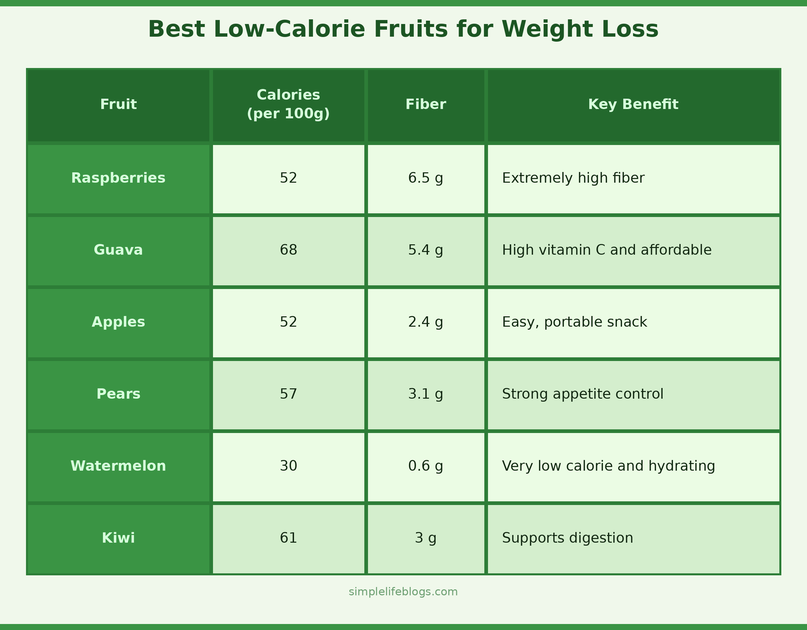
Fruit Nutrition Comparison
Fruits to Eat in Moderation
No fruit is unhealthy, but some are easier to overeat when trying to lose weight.
Bananas are nutritious and rich in potassium, but they contain more calories than most berries. Eating half a banana instead of a whole one can help with portion control.
Grapes are another fruit that people often eat in large quantities. They contain natural sugars but less fiber compared to berries.
Mangoes and pineapples are delicious and rich in vitamins, but they are slightly higher in sugar, so smaller portions work best.
Dried fruits like raisins or dates are much more concentrated. Removing water makes them easy to overeat, which quickly increases calorie intake.
Whole fruit is usually the better option.
How to Include Fruit in a Weight Loss Diet
Eating fruit can help weight loss most when it replaces less healthy snacks.
For example, swapping afternoon biscuits for a bowl of strawberries or a sliced apple immediately reduces calories while increasing fiber.
Eating fruit before meals is another simple strategy. An apple, pear, or small bowl of berries before lunch or dinner can reduce how much you eat afterward.
Pairing fruit with protein or healthy fat can make snacks even more satisfying. Greek yogurt with berries or apple slices with peanut butter are simple examples.
Whole fruit should always be preferred over fruit juice because juice removes fiber and increases sugar absorption speed.
Common Myths About Fruit and Weight Loss
One common myth is that fruit causes weight gain because it contains sugar. In reality, large population studies show that people who eat more whole fruit usually have lower body weight.
Another myth is that fruit should never be eaten at night. The body does not suddenly store fruit as fat at night. What matters most is total daily calories, not the exact time fruit is eaten.
Juicing is also often misunderstood. Juice may contain vitamins, but it removes most fiber, which is one of the main reasons fruit helps control hunger.
Frequently Asked Questions
How much fruit should I eat per day for weight loss?
Most nutrition experts recommend two to three servings of whole fruit per day. This provides fiber and nutrients without adding too many calories.
Which fruit burns belly fat?
No single fruit burns belly fat directly. However, fruits like berries, grapefruit, avocado, and pomegranate are associated with improved metabolic health.
Can eating too much fruit cause weight gain?
It can happen if fruit is eaten in very large quantities, but it is uncommon because fiber and water make fruit filling.
Are frozen fruits healthy?
Yes. Frozen fruit retains most nutrients and is often just as healthy as fresh fruit.
The Bottom Line
Fruit is neither a miracle food nor a problem food. It is simply a group of whole foods that can make weight loss easier when chosen wisely.
Berries, apples, pears, grapefruit, watermelon, kiwi, guava, papaya, oranges, avocado, and pomegranate stand out because they offer strong nutrition, high fiber, and relatively low calories.
The most practical changes are simple ones: replace processed snacks with fruit, eat whole fruit instead of juice, and choose high-fiber options when possible.
Weight loss rarely depends on a single food. But using fruit strategically can make healthy eating more satisfying, more sustainable, and far easier to maintain over time.