
Let me be honest with you — perfect skin does not exist. Not in real life, anyway. What you see on Instagram and in ads is filtered, edited, and heavily lit. Even the models in those photos have pores, uneven patches, and the occasional breakout.
What most people actually want is simple: skin that looks healthy, feels comfortable, and has a natural glow. And here is the good news — that is very achievable. You do not need a cabinet full of expensive products or some complicated 12-step routine to get there.
After going through a lot of trial and error (and spending way too much money on things that did not work), I learned that great skin mostly comes down to a few basic habits done consistently. That is what this guide is about.
First, Let’s Talk About What Healthy Skin Actually Looks Like
Healthy skin is not flawless. It has texture. It has pores. It changes with the weather, your hormones, and what you had for dinner.
What healthy skin does have is balance. It is not too oily, not too dry. It holds moisture well. And its outer layer — called the skin barrier — is strong enough to protect it from bacteria, pollution, and irritation.
When that barrier is in good shape, your skin naturally looks smoother and brighter. When it breaks down, that is when you get dryness, redness, breakouts, and sensitivity.
The other thing worth knowing: genetics play a role in your skin, but they are not the whole story. Your daily habits — what you eat, how you sleep, whether you wear sunscreen — matter just as much, if not more.
Step One: Figure Out Your Skin Type
Using the wrong products is one of the most common skincare mistakes people make. Before buying anything, it helps to know what you are working with.
Here is a simple way to check. Wash your face with a gentle cleanser, then wait 30 minutes without putting anything on. After that, look in the mirror and pay attention to how your skin feels.
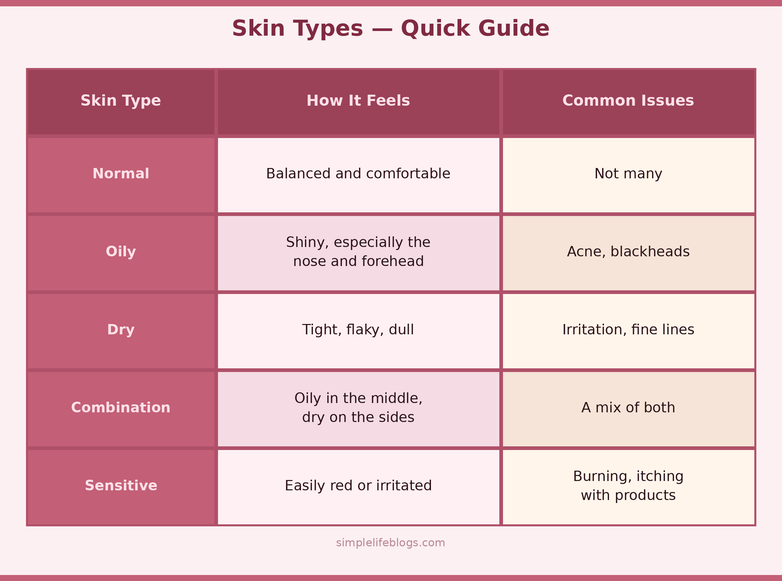
Knowing your skin type saves you from wasting money on products that are not right for you. Someone with oily skin does not need a thick cream — it will just clog their pores. Someone with dry skin, on the other hand, needs real moisture or their skin will keep flaking.
The Big Four: Habits That Actually Move the Needle
Before you even think about which serum to buy, get these four basics right. They do more for your skin than most products ever will.
1. Wear Sunscreen Every Single Day
Sun damage is the number one cause of early aging. It causes dark spots, wrinkles, and uneven skin tone — and it builds up slowly over years without you noticing.
The fix is simple: use a sunscreen with SPF 30 or higher every morning, even when it is cloudy, even when you are mostly inside. UV rays come through windows too.
This one habit alone can make a bigger difference to your skin long-term than almost any product you buy.
2. Get Enough Sleep
Your skin repairs itself while you sleep. It produces collagen, heals damage, and renews cells. When you consistently sleep less than six or seven hours, your skin looks dull, breakouts heal slower, and dark circles get worse.
Most adults need seven to nine hours. It sounds basic, but it works.
3. Stay Hydrated
Dehydrated skin looks flat, tired, and dull. Drinking enough water throughout the day helps your skin stay plump and healthy from the inside.
You do not need to drink gallons of it — just stay consistently hydrated. Your skin (and the rest of your body) will notice.
4. Eat Real Food
Your skin renews itself roughly every 28 days, which means what you eat directly affects how your skin looks. Foods like berries, leafy greens, nuts, fish, and seeds are full of antioxidants and healthy fats that reduce inflammation and support skin health.
On the flip side, a diet heavy in sugar and processed food can trigger breakouts for a lot of people. You do not have to eat perfectly — just try to include more whole foods where you can.
11 Best Fruits for Weight Loss (And How to Eat Them Right)
How Japan Stays Healthy Without Gym Memberships
A Simple Routine That Actually Works
The best skincare routine is one you will actually stick to. Here is what a basic but effective one looks like.
In the Morning
- Gentle cleanser — removes overnight oil without stripping your skin
- Vitamin C serum (optional but great) — brightens skin and protects from environmental damage
- Moisturizer — keeps skin hydrated and supports your skin barrier
- Sunscreen — always the last step, and non-negotiable
In the Evening
- Cleanser — removes sunscreen, dirt, and makeup from the day
- Treatment (optional) — retinol or an exfoliating acid if your skin needs it
- Moisturizer — helps your skin recover and repair overnight
That is it. You do not need more than this to start seeing results.
Ingredients Worth Your Money
The skincare industry is full of hype. But a handful of ingredients actually have strong research behind them.

Start with one or two ingredients, not all of them at once. Always patch test something new on a small area of skin before applying it everywhere.
A Few Home Remedies That Can Actually Help
Not everything natural is a miracle cure, but some traditional remedies do have real benefits when used correctly.
- Aloe vera gel — great for soothing irritated or sunburned skin
- Honey — naturally antibacterial, works well as a quick hydrating mask
- Turmeric mixed with yogurt — has anti-inflammatory properties, can help calm mild redness
- Besan (gram flour) with milk — a gentle exfoliating scrub that removes dead skin cells
These work best as add-ons to a good routine, not replacements for it.
Small Daily Habits That Make a Big Difference
Sometimes it is the small things that quietly improve your skin over time.
- Change your pillowcase every week or two — it collects bacteria and oil faster than you think
- Stop touching your face so much — your hands carry bacteria that can cause breakouts
- Wash your face after sweating — leaving sweat on your skin can clog pores
- Clean your makeup brushes regularly — dirty brushes spread bacteria directly onto your skin
- Exercise regularly — it increases blood flow and helps deliver nutrients to your skin cells
- Find ways to manage stress — high stress raises cortisol, which triggers acne and inflammation
Mistakes That Are Making Your Skin Worse
Sometimes people accidentally damage their skin while trying to help it. Here are the most common ones.
Over-exfoliating
Exfoliating too often — whether with scrubs or acids — strips away the skin barrier. This leads to redness, sensitivity, and ironically more breakouts. Once or twice a week is usually plenty.
Skipping moisturizer because your skin is oily
This one trips a lot of people up. Even oily skin needs hydration. Without it, your skin can actually produce more oil to compensate. Use a lightweight, non-comedogenic moisturizer instead.
Not wearing sunscreen consistently
Wearing sunscreen three days a week will not cut it. Sun damage adds up quietly every day. Make it a morning habit like brushing your teeth.
Switching products too often
Most skincare products take at least four to six weeks to show results. Switching things up every two weeks makes it impossible to know what is working and what is not.
A Simple 7-Day Plan to Get Started
If you are not sure where to begin, keep it very simple in the first week.
Days 1 to 3: Focus only on cleansing, moisturizing, and sunscreen. Nothing else. Let your skin settle.
Days 4 to 5: Add one active ingredient — vitamin C in the morning or niacinamide in the evening are great starting points.
Days 6 to 7: Keep going with the routine and take a photo to track where your skin is now. Skin changes slowly, so photos help you actually see the progress.
When to See a Dermatologist
If you have persistent acne that does not respond to over-the-counter products, severe pigmentation, eczema, or a sudden skin change you cannot explain, it is worth seeing a dermatologist.
Prescription treatments like retinoids, chemical peels, or other professional options can deliver results that no store-bought product can match. There is no shame in getting expert help — it is just the smarter and faster path for some skin concerns.
Quick Answers to Common Questions
How long until I see results?
Most routines take four to eight weeks to show visible changes. Your skin has a natural renewal cycle of about 28 days, so give it time before giving up on something.
Does drinking water really help?
It supports overall skin health, but it is not a standalone fix. Combine good hydration with a solid routine and a decent diet and you will notice the difference.
Is retinol safe if I have never used it before?
Yes, but start slow. Use it two or three nights per week at first, and always follow with a moisturizer. Give your skin a few weeks to adjust before increasing how often you use it.
Do natural remedies actually work?
Some do, in a supporting role. Aloe vera, honey, and turmeric all have real benefits. But they work alongside a good routine, not instead of one.
The Bottom Line
Clear, healthy skin is not about finding the one perfect product. It is about doing a few simple things consistently over time.
Wear sunscreen. Sleep properly. Drink water. Eat well. Use a simple routine with a few solid ingredients. And give it time.
That is genuinely it. When you stop chasing quick fixes and focus on daily habits instead, good skin stops feeling so out of reach. It just becomes the natural result of taking care of yourself.
— Written for anyone tired of complicated skincare advice