You probably remember the last time you exercised your body.
But when was the last time you exercised your emotions?
Most of us were taught how to pass exams.
We learned formulas, grammar rules, and career skills.
But no one taught us how to deal with rejection.
No one explained how to calm anxiety before a big meeting.
No one showed us how to argue without damaging a relationship.
That missing skill is called emotional fitness.
It is not a trend.
It is not toxic positivity.
It is not pretending everything is fine.
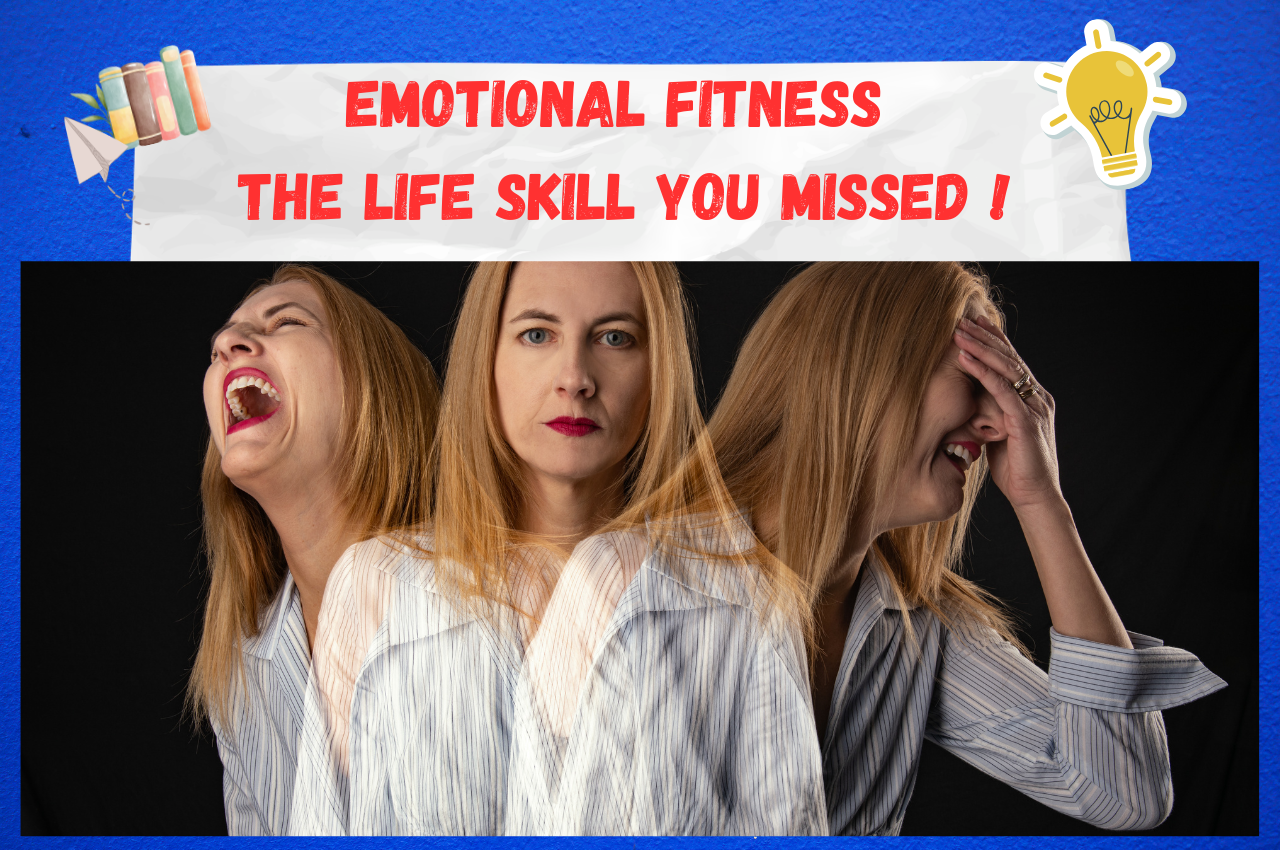
Emotional fitness is your ability to handle your feelings without being controlled by them.
What Emotional Fitness Really Means
Emotional fitness is the capacity to recognize what you feel, process it in a healthy way, and respond with intention instead of impulse.
It is the difference between reacting and responding.
Imagine you are stuck in traffic during heavy rain. You are already late for an important meeting. Your heart starts racing. Your thoughts become negative. An emotionally untrained mind spirals into anger and panic. An emotionally fit mind pauses, breathes, and uses the extra time to prepare mentally.
The situation is the same.
The reaction is different.
Emotional fitness does not mean suppressing emotions. It means feeling them fully without letting them hijack your day.
Psychologists describe this through research on positive emotions. Studies show that when we build positive emotional habits, our thinking becomes broader and more creative. We make better decisions. We recover faster from stress. Negative emotions narrow our focus for survival. Positive emotions expand our ability to grow.
Both are part of life.
Emotional fitness teaches you how to work with them.
Why Nobody Taught You This
Traditional education focused on external success. Grades. Degrees. Jobs.
Emotional skills were rarely discussed. Many people grew up hearing phrases like “be strong,” “don’t cry,” or “just deal with it.” Emotions were often ignored or judged instead of understood.
The result is visible today.
Burnout is common.
Anxiety is rising.
Relationships struggle under poor communication.
We were trained for performance.
We were not trained for emotional resilience.
Why Emotional Fitness Matters More Than Ever
We live in an always-on world.
Notifications never stop.
Social media fuels comparison.
Work pressure follows us home.
Uncertainty feels constant.
Without emotional fitness, this pressure builds quietly. It shows up as irritability, exhaustion, overthinking, and chronic stress. Sleep suffers. Focus drops. Relationships weaken.
Research shows that practicing emotional regulation and mindfulness can significantly reduce anxiety and improve recovery from stress. Leaders who develop emotional awareness perform better. Teams function better under calm leadership. Personal relationships improve when reactions are replaced with thoughtful responses.
Emotional fitness is no longer optional.
It is survival in a fast world.
Protecting Teen Mental Health in the Digital Age
Emotional Fitness vs Mental Health
These two are related but not the same.
Mental health refers to your overall psychological condition. It includes disorders like depression or anxiety and often requires professional care.
Emotional fitness is proactive. It is daily training. It focuses on building strength before crisis happens.
You do not wait until you are physically ill to start exercising.
The same principle applies here.
| Aspect | Emotional Fitness | Mental Health |
| Focus | Building emotional skills | Managing or treating conditions |
| Approach | Daily habits like awareness and breathing | Therapy, medication, structured treatment |
| Goal | Resilience, better decisions, adaptability | Stability and symptom management |
| Timeline | Ongoing practice | Often reactive or maintenance-based |
Emotional fitness supports mental health. It does not replace professional help when needed.
Core Traits of Emotionally Fit People
Emotionally fit people share common patterns.
They notice their emotions early. Instead of saying “I feel bad,” they identify whether they feel frustrated, embarrassed, jealous, or overwhelmed. Naming the emotion reduces its power.
They accept feelings without judging themselves. They understand emotions are signals, not weaknesses.
They take responsibility for their reactions. They may feel anger, but they choose how to express it.
They adapt when circumstances change. If a plan fails, they adjust instead of collapsing.
They build resilience. Failures become information, not identity.
They maintain empathy. They understand others without losing their own boundaries.
These qualities are not personality traits.
They are trainable skills.
Practical Ways to Build Emotional Fitness
You do not need hours of free time.
You need consistency.
Start with small daily check-ins. Ask yourself what you are feeling and where you feel it in your body. This strengthens awareness.
Practice controlled breathing when stressed. Slow breathing calms the nervous system and reduces impulsive reactions.
Reframe negative thoughts. When your mind says, “This will fail,” ask, “What is one possible positive outcome?”
Write down your emotions in the evening. Do not analyze them. Just name them. This builds tolerance and clarity.
Visualize handling difficult situations calmly before they happen. This mental rehearsal builds confidence.
If needed, seek therapy. Professional support is not weakness. It is structured training.
Emotional fitness grows through repetition, not intensity.
Real-Life Impact
Students who build emotional awareness handle exam stress better.
Professionals who practice reframing respond to setbacks with strategy instead of panic.
Leaders who develop empathy create stronger teams.
In business, emotionally steady decision-makers perform better during uncertainty. In personal life, emotionally fit individuals argue less and communicate more clearly.
Long-term research connects positive emotional habits with better physical health, stronger immune systems, and even longer lifespan.
This is not soft skill theory.
It has measurable outcomes.
Common Myths
Some believe emotional fitness means always being positive. It does not. It includes anger, sadness, and fear. The goal is not constant happiness. The goal is skillful handling.
Some believe emotions should be ignored to stay strong. Suppression often leads to long-term stress.
Some fear that feeling emotions deeply will overwhelm them. In reality, emotions become more manageable when acknowledged early.
The Long-Term Benefits
With emotional fitness, focus improves.
Relationships deepen.
Stress becomes manageable.
Confidence grows naturally.
You stop feeling like a victim of every mood or situation.
You gain control over your responses.
That control builds quiet strength.
Frequently Asked Questions
What is emotional fitness in simple terms?
It is training your mind to handle feelings in a healthy way so you can stay steady and resilient.
How long does it take to see results?
With consistent daily practice, many people notice changes within a few weeks. Deeper growth continues over months.
Can emotional fitness cure anxiety or depression?
It supports prevention and management, but it does not replace professional treatment when needed.
Is it the same as resilience?
Resilience is one part of emotional fitness. Emotional fitness includes awareness, regulation, adaptability, and relationship skills.
Can children learn emotional fitness?
Yes. Teaching emotional awareness early builds lifelong stability.
Final Thoughts
Emotional fitness is the skill nobody taught you.
But it may be the skill that changes everything.
It does not require perfection.
It requires practice.
You do not need to master it overnight.
Start with one pause.
One breath.
One honest check-in.
Over time, those small moments build emotional strength.
And that strength shapes how you experience your entire life.