If you have ever seen a Sphynx cat, you’re unlikely to forget it. As you pick them up, they feel warm and their big ears and inquisitive eyes are noticeable. A Sphynx is no ordinary hairless cat — it has a unique personality and history too.
This guide covers everything about the Sphynx cat — its history, personality, care needs, health issues and food. It will help you decide if this special breed is for you. If you don’t know a thing about the Sphynx cats, or own one and want to learn more, this article will be simple, useful, and easy to read.
What Is a Sphynx Cat ?
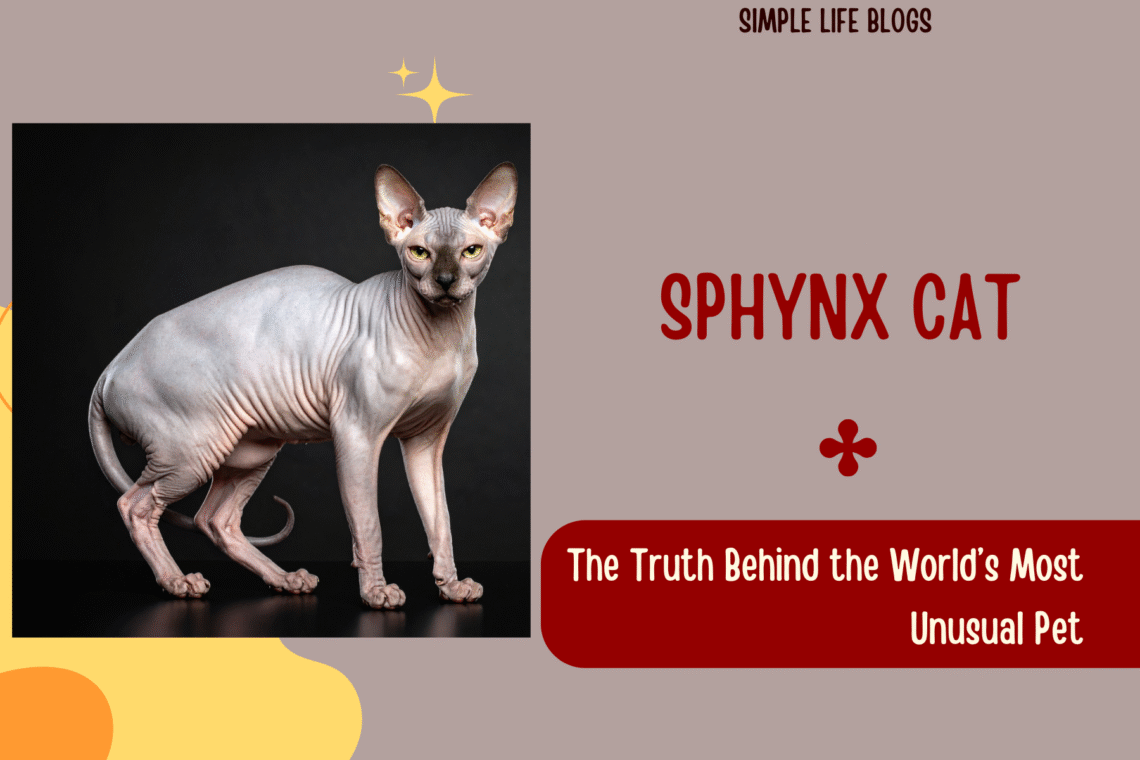
The Sphynx is a hairless cat of medium-size. Most are not fully bald. They have a light soft coat of hair that feels like warm peach skin.
What really sets the Sphynx apart is its affectionate nature. Friendly cats, they are social and very attached to their owners. They crave attention and are determined to be involved whenever you do anything.
The History of the Sphynx Cat
The modern Sphynx traces its roots to Canada in the 1960s, when a domestic cat gave birth to a naturally hairless kitten due to a genetic mutation. Rather than being a health defect, the mutation proved stable and breeders carefully developed the line using selective breeding with healthy domestic cats.
Later breeding programs in both North America and Europe helped strengthen the gene pool, resulting in the Sphynx we recognize today. Today’s Sphynx cats are not fragile novelties — they are a well‑established, carefully maintained breed recognized by major cat associations.
Physical Characteristics
At first glance, the Sphynx looks delicate, but in reality, it’s surprisingly muscular and solid.
Key physical traits include:
- Medium body with a strong, muscular build
- Long legs and a whip‑like tail
- Prominent cheekbones and large, lemon‑shaped eyes
- Extra‑large ears that sit high on the head
- Wrinkled skin, especially around the shoulders, neck, and face
Sphynx cats come in every color and pattern imaginable. Since they don’t have fur, these colors appear directly on their skin, creating striking and unique appearances.
Personality and Temperament
If you want an independent, aloof cat, the Sphynx may not be your best match. This breed thrives on attention.
Sphynx cats are:
- Extremely affectionate and people‑oriented
- Curious and intelligent
- Playful well into adulthood
- Known to follow their humans from room to room
They’re often referred to by their owners as “dog like” because they greet visitors, learn routines rapidly and long for company. They don’t like to be alone for long periods and do best in a home where somebody is around most of the time or they have another pet with whom to keep company.
Living With a Sphynx: What Daily Life Is Like
Living with a Sphynx feels more like living with a tiny, warm shadow. They enjoy laps, blankets, sunny windows and sleeping under the covers. They’re furless, dude. They’re very often cold and snug themselves up to their humans for warmth.
They are also talkative. Expect chirps, meows, and soft chatter when they want attention, food, or playtime.
Grooming and Skin Care
Though Sphynx cats aren’t furry, they’re not maintenance free. They have skin that secretes oils which would otherwise be absorbed by fur, so they require regular care.
Bathing
- Most Sphynx cats need a bath about once a week
- Use a gentle, cat‑safe shampoo
- Over‑bathing can dry the skin, so consistency matters
Ear and Nail Care
- Large ears collect wax quickly and need frequent cleaning
- Nails should be trimmed regularly, as oil buildup can occur around the nail beds
Sun and Temperature Protection
- Sphynx cats can sunburn easily
- They should live indoors and be protected from extreme heat or cold
Siberian Cat Secrets: The Ultimate Breed Guide
Health Considerations
Sphynx cats are generally healthy but, like all purebred cats, they have some breed‑specific health concerns.
Common issues include:
- Hypertrophic cardiomyopathy (HCM): a heart condition that should be screened by a veterinarian
- Skin irritations or infections if grooming is neglected
- Dental disease without proper oral care
Responsible breeders screen breeding cats for genetic conditions, and regular veterinary checkups play a huge role in keeping a Sphynx healthy.
Average lifespan: 8–14 years, with many living longer when well cared for.
Diet and Nutrition
Sphynx cats have a fast metabolism, partly because they burn more calories to stay warm. As a result, they may eat more than other cats of similar size.
Diet tips:
- Feed a high‑quality, AAFCO‑balanced cat food
- Measure portions to prevent obesity
- Multiple small meals often work better than one large feeding
Fresh water should always be available, and food puzzles can help satisfy their intelligent, curious minds.
Exercise and Mental Stimulation
Don’t be fooled by their cuddly nature — Sphynx cats are active and playful.
They enjoy:
- Interactive toys
- Puzzle feeders
- Cat trees and climbing shelves
- Games like fetch or hide‑and‑seek
Mental stimulation is just as important as physical exercise for this smart breed.
Are Sphynx Cats Hypoallergenic?
There is no such thing as a totally hypoallergenic cat, so the Sphynx can’t be an exception. Though they do lose less hair, allergens come from skin oils and saliva, not hair. People with more mild allergies might be able to tolerate Sphynx cats, but reactions differ.
Is a Sphynx Right for You?
A Sphynx cat may be a great fit if you:
- Want an affectionate, social companion
- Are home often or have other pets
- Don’t mind regular grooming
- Enjoy an interactive, attention‑loving cat
They may not be ideal if you travel frequently or prefer a low‑interaction pet.
Cost of Owning a Sphynx
In the U.S., a Sphynx kitten from a reputable breeder often costs $1,800 to $3,000 or more. Ongoing costs include:
- Quality food
- Grooming supplies
- Routine veterinary care
- Possible pet insurance
Adoption through breed rescues is also an option and can be very rewarding.
Frequently Asked Questions (FAQ)
Are Sphynx cats good for families?
Yes. They are affectionate and social, making them great for families with respectful children.
Do Sphynx cats smell?
They might smell bad unless bathed regularly, but grooming will keep them clean.
Can Sphynx cats go outside?
They will need to be indoor cats because they can get sunburned and are sensitive to temperature extremes.
Do they get cold easily?
Yes. Many owners offer sweaters, blankets or even heated beds.
Are Sphynx cats friendly with other pets?
Very. They are generally good with cats and dogs.
Catnip: What It Is, Why Cats Love It & How to Use It Safely
Final Thoughts
The Sphynx cat is evidence that beauty is skin deep. But under that hairless exterior lives a sweet, loyal companion who depends on his human family for love and care. Having a Sphynx isn’t about having something unusual — it is about commitment, care and sharing your life with one of the most affectionate cat breeds around.
If you’re looking for a cat that likes to be involved in every aspect of your life, the Sphynx could very well be your feline soul mate.