
Who wouldn’t dream of clear blue water, black lava cliffs, waterfalls, and the warm “aloha” feeling Hawaii provides feeling sound like a dream, things can feel different. Rental cars may be sold out. Popular beaches can be crowded. And many newcomers soon discover that not every island is alike.
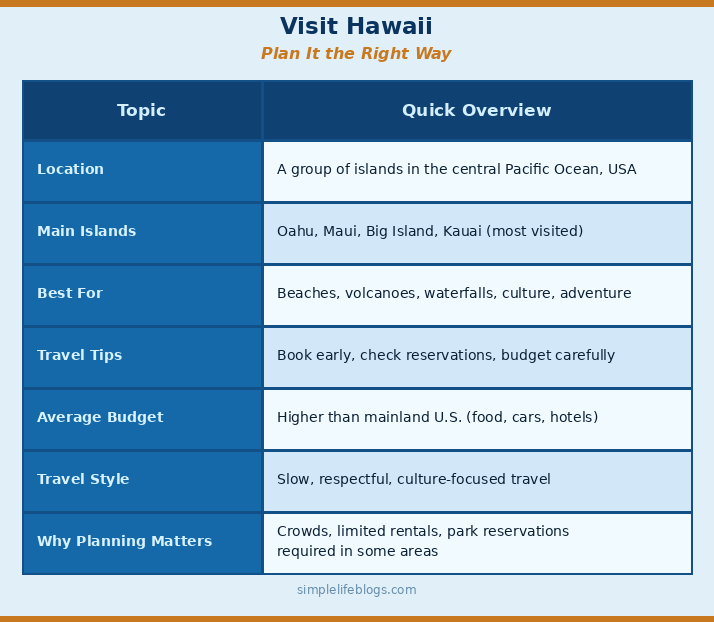
Hawaii is not just one place. It is a group of islands in the middle of the Pacific Ocean. Each island has its own personality, weather, pace of life, and special charm.
A little planning goes a long way to make your journey smooth and fairytale-like. Or else those minor mistakes can consume your time and money.
A guide that includes not only practical travel information but also local knowledge, budgeting advice, safety information, and cultural information —written in a simple, and straightforward way that allows you to plan with confidence.
Hawaii Trip Cost Overview (Quick Budget Table)
Before diving into details, here’s a realistic daily budget breakdown for 2026 (per person, excluding flights):
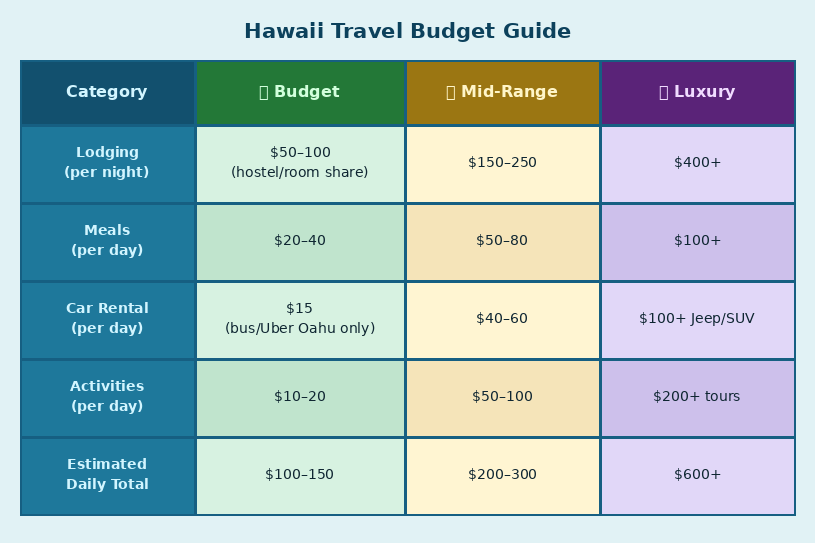
A mid-range traveler typically spends $2,000–4,000 per week, not counting flights.
Oahu is usually the most affordable. Maui is typically the most expensive.
First Big Decision: Which Island Fits You?
Few island dwellers understand that picking the right island is more important than the location itself.
Oahu
For the famous landmarks, nightlife, surfing culture, and ease of transportation that make traveling easy, Oahu stands. Honolulu and Waikiki provide the most convenience, restaurants, shopping, and historic sites including Pearl Harbor. More vibrant and buzzing — but also the most overcrowded.
Maui
Maui balances beauty and comfort. The Road to Hana, snorkeling at Molokini and sunrise at Haleakalā are just the basics. It is less urban than Oahu but does have great restaurants and resorts. Perfect for couples and families looking for relaxation and adventure.
The Big Island (Hawaii Island)
There is a rawness and power to the Big Island. Hawaii Volcanoes National Park with its active volcanoes Landscapes, its black sand beaches, manta ray night dives and Kona coffee farms. But distances are large. Its going to be normal driving to the places that are two hours away.
Kauai
Kauai is an island known for being beautiful, dramatic and green. You can’t forget the Na Pali Coast and Waimea Canyon! It’s quieter and slower. Great for hikers and nature lovers.
Lanai and Molokai
These are peaceful and less developed. Great if you want authenticity and quiet, but with limited accommodations and fewer organized tours.
If your trip is less than a week, focus on a single island. While island hopping is exciting, it can take an entire day with flights, packing and airport (or ferry) time.
Best Time to Visit Hawaii in 2026
Hawaii has two main seasons: summer (May–September) and winter (October–April).
The most smartest time to go is in shoulder seasons — April to May & September to October.
During these months:
Weather stays warm (70s–80s°F)
Crowds are smaller
Hotels and flights can drop 20–40% in price
Summer works well for families but is busier and more expensive.
Winter brings whale watching, especially around Maui from January to March. However, north shore beaches can have very large waves and more rain.
Mid-September 2026 is expected to be one of the best value windows — post-Labor Day, fewer crowds, lower hotel rates.
Hurricane season runs June to November, but major storms are rare.
Getting Around the Islands
Outside of Waikiki, and we highly recommend a rental car.
Public transportation is limited on Maui, Kauai, and the Big Island. Ride-sharing services can be inconsistent in rural areas.
Book rental cars early. When supply decreases, prices rise rapidly.
Approximate time it takes to fly from one island to another with Hawaiian Airlines or Southwest: 30–50 minutes.
Avoid scheduling tight connections — airport time adds up.
Gas prices are higher than the mainland, usually $4–5 per gallon.
Where to Stay: Real Expectations
Waikiki is convenient but busy. It feels like a beach city, not remote paradise.
On Maui, South Maui (Wailea, Kihei) offers sunny beaches and resorts. West Maui is still recovering from the 2023 Lahaina wildfires — check current updates before booking.
On the Big Island:
Kona = sunny, dry, resort-friendly
Hilo = greener, closer to waterfalls and volcanoes
On Kauai:
North Shore = stunning but rainier
South Shore (Poipu) = drier and more resort-focused
Vacation rentals can save money, especially for families. Always confirm the rental is legally registered, as regulations have tightened.
Packing Smart for Hawaii
Pack light. You’ll wear the same few items most days.
Bring:
Lightweight clothing
Swimsuits
Sandals
A rash guard for snorkeling
Polarized sunglasses
Sun hat
Reusable water bottle
Reef-safe mineral sunscreen is required by law. Products with oxybenzone and octinoxate are banned.
If visiting high elevations like Haleakalā or Mauna Kea, bring a jacket. It can drop near freezing at the summit, even if it’s hot at the beach.
Skip heavy jeans and bulky jackets.
Ocean Safety: This Is Serious
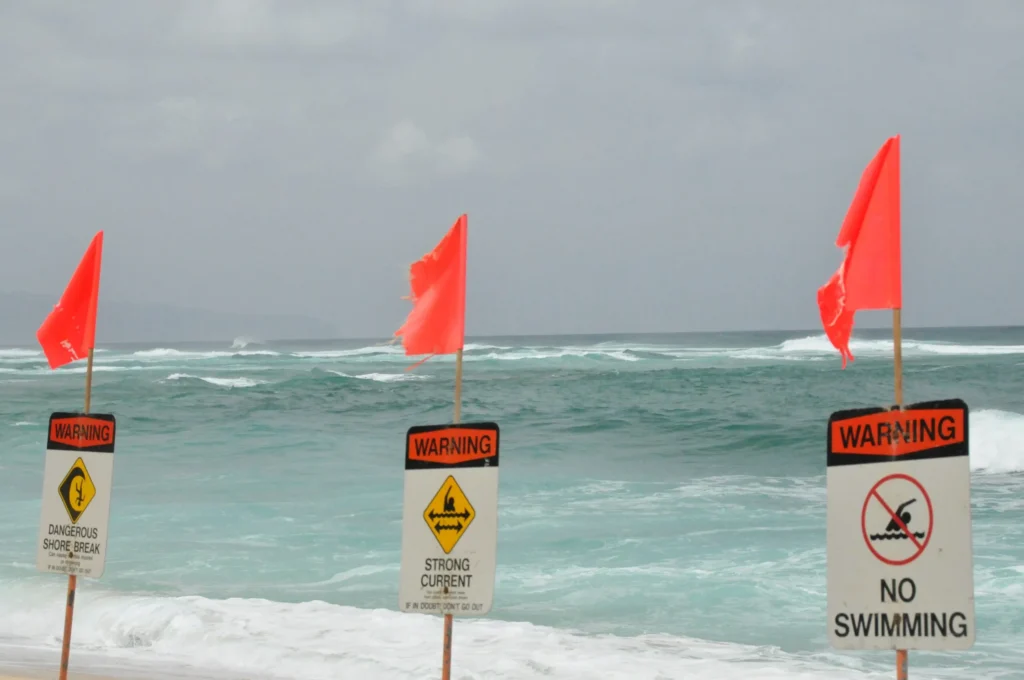
Hawaii’s ocean is powerful.
Rip currents are far more dangerous than sharks. Swim near lifeguards when possible. Observe posted flags:
Yellow = caution
Red = high hazard
If caught in a rip current, swim parallel to shore until free.
Watch for rocky entries when snorkeling. Time your steps carefully between waves.
Never approach Hawaiian monk seals or sea turtles. Federal law requires keeping at least 50 feet away.
Food: Eat Like You’re Really in Hawaii
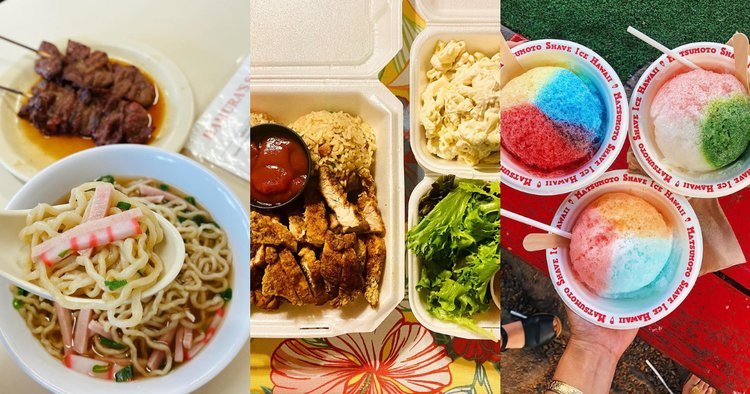
One of the best parts of a trip to Hawaii is the food! Food is not only something you eat; it is a huge part of the culture and lifestyle.
Plate lunch (a popular and inexpensive meal) Served with your usual side such as rice and macaroni salad, and a meat like kalua pork or chicken katsu. It will be simple, filling, and loved by locals.
Poke is not just a trendy food from social media. It is eaten regularly in Hawaii. Local grocery stores and fish markets sell fresh poke. And typically far superior, and less expensive, than the stuff you get from fancy restaurants.
Shave ice is another favorite. It’s very soft and light — not hard and crunchy like a regular snow cone.
For example on Maui Mama’s Fish House is a well known but expensive destination. For budget-friendly meals, investigate food trucks in the area.
Many of them serve delicious, authentic food at better prices.
Get groceries at Costco, Safeway, or Foodland to save money. Prepare at least few meals on your own to keep the budget on track.
Stockholm Bucket List: 10 Incredible Experiences You Must Try
10 Things to Know Before visiting a New Country
Respect the Local Culture
Hawaii is not just a vacation spot. It is home to Native Hawaiians and a living culture. It’s important to act with respect.
Learn a few simple words. So “Aloha” translates hello and goodbye. “Mahalo” means thank you. Being polite with these words is a great simply thank you note.
If you see signs that say an area is sacred or restricted, do not enter. These places are important to local traditions.
Do not take sand, rocks, or coral home with you. Leave nature as you found it.
When possible, support local businesses. Tourism helps many families, especially as living costs rise and communities recover from natural disasters.
Travel Responsibly in 2026
Some popular places now require reservations. This includes certain areas along the Road to Hana and the Na Pali Coast.
Some parks may charge small environmental or climate fees to help protect the land.
If you go snorkeling, do not touch the coral. Coral reefs are living and very fragile.
Always throw away your trash properly, or carry it with you until you find a bin.
Small actions may not seem like much, but they make a big difference in protecting Hawaii’s natural beauty for the future.
Frequently Asked Questions
Do I need a passport?
No, Hawaii is a U.S. state. U.S. citizens just require ID.
Is Hawaii safe for solo female travelers?
Yes. Violent crime rates are low. Exercise normal travel precaution, particularly during the night.
Do I really need a car?
Yes, unless staying entirely in Waikiki.
What is the cheapest time to visit?
It’s the best time for a combination of good prices and good weather – September and first part of October.
How many days should I plan?
7–10 days for one island. 10–14 days for two islands.
Final Thoughts
Plan ahead and Hawaii will reward you. So go to the island that meets your needs. The ocean is one of the most powerful forces, because it can be powerful and unpredictable. Prepare your budget wisely as expenses can pile up more than anticipated. Try local food. Slow down your schedule.
Stay open to learning new things.
Those visitors who are the happiest realize that there is more to Hawaii than just the beaches. It is culture, history, scenic landscapes and real neighborhoods where residents live and work.
With smart planning and a respectful trip, the islands will reward you with fond memories that you carry for a lifetime.