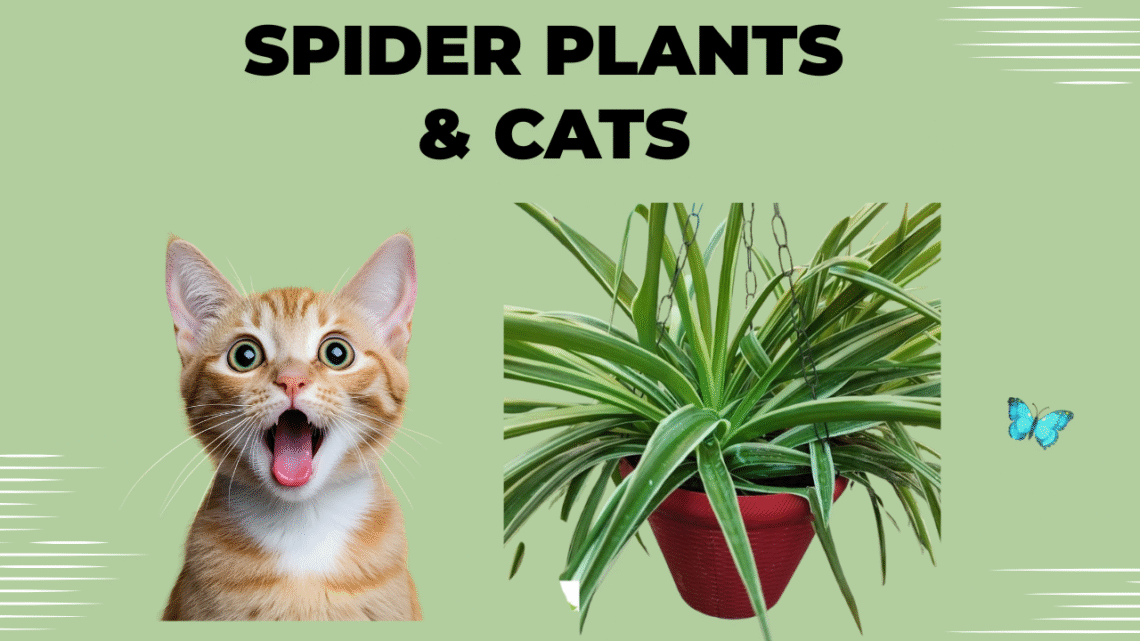
Spider plants are one of the safest houseplants for homes with cats. The ASPCA lists them as non-toxic, so even if your curious cat takes a nibble, no serious harm will follow. These pretty, arching plants come from South Africa and bring life to any room without risking your pet’s health.
Meet the Spider Plant: A Cat-Friendly Houseplant
The spider plant (Chlorophytum comosum) has long, thin leaves that can be solid green or striped. It also grows small baby plants, called “spiderettes,” that hang from long stems like little spiders. They handle low light well, grow with very little care, and even help clean indoor air by trapping toxins like formaldehyde.
They adapt easily to indoor spaces. Hang them up high and cats will enjoy watching the baby plants sway—without danger. Fun varieties include ‘Bonnie’ with curly leaves and ‘Zebra’ with bold white stripes.
Why Cats Love Spider Plants
Many cats get excited around spider plants. They may chew, roll, or bat at the leaves. This is likely because the plant contains mild compounds that act a bit like catnip. Nothing harmful, but enough to spark playful behavior. The long, dangling leaves also trigger your cat’s hunting instincts.
Are Spider Plants Toxic to Cats?
No. Spider plants are completely non-toxic to cats, dogs, and people. They do not contain dangerous chemicals like calcium oxalate, which is found in some other houseplants. Even though they contain mild compounds similar to opium, it’s safe in tiny amounts. Experts agree that nibbling is low-risk.
If Your Cat Eats Spider Plant Leaves
Eating too many leaves may cause mild stomach issues like vomiting or diarrhea because cats cannot digest large amounts of plant fiber. These symptoms usually pass quickly. Only watch for unusual signs like extreme tiredness, which rarely happens.
How to Keep Spider Plants Healthy Around Cats
- Give them bright, indirect light
- Water only when the top soil dries out
- Use well-draining soil
- Hang them in baskets to prevent your cat from knocking them over
- Wipe the leaves to remove dust and keep them shiny
Humidity helps them grow, and neem oil works well against pests like spider mites.
The Joy of Owning a Cat: Why Life Feels Better With a Feline
How to Stop Cats From Over-Chewing
- Place spider plants on high shelves or hanging pots
- Wrap the base with aluminum foil (cats dislike the texture)
- Use citrus or peppermint sprays
- Offer cat grass as an alternative
- Redirect with toys or training
- Put pinecones around the pot
- Use motion-activated air puff devices
- Try vertical plant setups
Bonus: Great for Indoor Air Quality
Spider plants can remove harmful toxins and improve indoor air—especially helpful in homes with litter boxes. Having more than one plant increases the air-purifying benefit.
Spider Plants Compared to Other Pet-Safe Plants
| Plant | Cat Safety | Care Level | Special Perk |
| Spider Plant | Non-toxic | Easy | Makes new baby plants |
| Boston Fern | Non-toxic | Medium | Loves humidity |
| Cast Iron Plant | Non-toxic | Very easy | Great in low light |
| ZZ Plant | Toxic | Easy | Drought-tolerant but unsafe |
| English Ivy | Toxic | Medium | Beautiful but harmful |
Spider plants are one of the easiest and safest choices for cat households.
Real Stories from Cat Owners
Cat owners often share stories about spider plants surviving unexpected chew attacks. Many laugh about their cat’s excitement, and vets commonly advise monitoring but not worrying.
FAQs
Are spider plants safe for cats?
Yes, they are non-toxic.
Why does my cat act strange around them?
Mild plant compounds can trigger a playful, catnip-like reaction.
What if my cat vomits after chewing?
It’s usually mild stomach upset. Provide water and watch for 24 hours.
Are spider plants safe for kittens?
Yes, but supervise since kittens chew more.
Are they safe for dogs too?
Yes, dogs can be around them safely.
How do I stop my cat from destroying the plant?
Use hanging pots, deterrents, and offer cat toys or cat grass.