
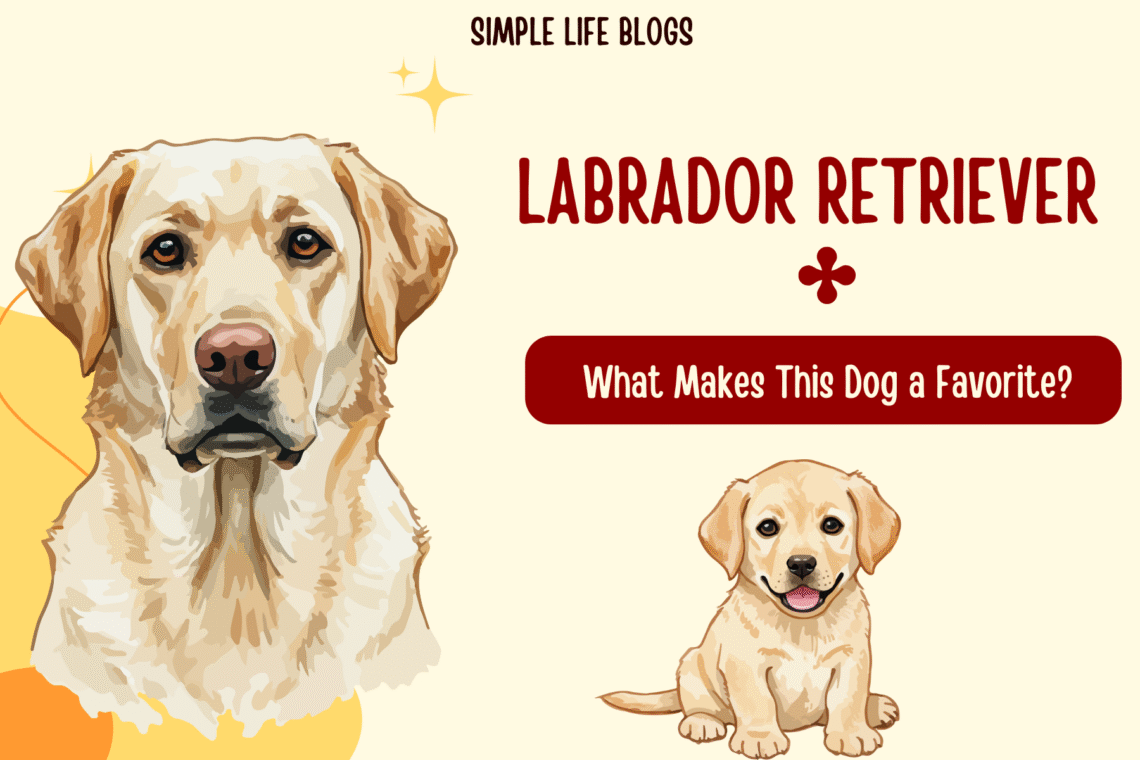
If you’ve ever met a Labrador Retriever, you never forget that encounter.
Perhaps it was the wagging “otter tail” thumping against your leg. Perhaps it was the silly smile, tongue hanging out, eyes bright with anticipation for a tennis ball — or a treat. Or maybe it was that soft, reassuring presence, the kind that convinces you everything’s going to be all right.
The Labrador Retriever has been one of the most popular dog breeds in the United States for decades, and it’s easy to see why. Actually, there are many reasons. Labs are friendly without being pushy, energetic without being overwhelming (most of the time), and loyal in a way that feels deeply personal.
In this guide, we’ll go deep into everything you need to know about the Labrador Retriever: how they originated their personalities to health, grooming/ care, training, and what it’s like living with one day after day.
Where the Labrador Retriever Really Comes From (Hint: Not Labrador)
Contrary to their name, Labrador Retrievers did not come from Labrador. Their tale begins in Newfoundland, Canada, where their ancestors — typically referred to as St. John’s water dogs — worked alongside fishermen in the cold North Atlantic.
These early dogs were bred to retrieve fishing nets, haul ropes, and fetch escaped fish from icy waters. That heritage still shows today. English Labs adore water, have webbed feet and carry a dense water-resistant coat that makes them natural swimmers.
In the 1800s, British sportsmen discovered these hardworking dogs and took them to England, where they became the Labrador Retriever known today. Labs made their way to America, where they were formally recognized by the American Kennel Club in 1917.
Labrador retrievers have come a long way, from fishing docks to the family living room — but they’ve never shed their great love of working and people.
Labrador Retriever Appearance: Built for Work, Born to Be Loved
At first glance, a Labrador Retriever looks sturdy, athletic, and well-balanced. There’s nothing flashy or fragile about them. They look like dogs that are ready to do something—and happy to do it with you.
Size and Build
- Height: About 21.5 to 24.5 inches at the shoulder
- Weight: Typically 55 to 80 pounds
Labs are considered medium-to-large dogs, with strong legs, a broad chest, and a muscular body designed for endurance rather than speed.
Coat and Colors
Their short, dense double coat is one of their defining features. It sheds year-round (yes, really), but it’s easy to maintain and built to repel water.
The three officially recognized colors are:
- Black
- Yellow (from pale cream to fox-red)
- Chocolate
That thick, tapering tail—often described as an “otter tail”—acts like a rudder when swimming and is a classic Labrador hallmark.
Labrador Retriever Temperament: Friendly Isn’t Just a Trait—It’s a Lifestyle
If Labradors had a personal motto, it might be: “Everyone is my friend. I just haven’t met you yet.”
What They’re Like to Live With
Labs are:
- Friendly and outgoing
- Affectionate with family members
- Generally excellent with children
- Social with other dogs and pets
They thrive on human connection and do best in homes where they’re included in daily life—not left alone for long stretches.
Labs are also famously eager to please, which makes them one of the easiest breeds to train. They want to do the right thing. Sometimes they just need help figuring out what that is.
First-Time Dog Owner? Here’s Everything You Should Know
The Puppy Phase (Yes, It’s a Lot)
One thing new owners often underestimate is how long Labs stay puppy-like. Many Labradors don’t fully mature mentally until age two or even three.
That means:
- Lots of energy
- A strong desire to chew
- Boundless enthusiasm
It’s not bad—it’s just part of the deal. With training, structure, and patience, that wild puppy energy turns into the steady, dependable adult Labs are famous for.
Exercise Needs: A Tired Lab Is a Happy Lab
Labrador Retrievers are not couch potatoes—at least not until they’ve earned it.
Daily Activity Requirements
Most adult Labs need at least 60–120 minutes of exercise per day, which can include:
- Long walks or hikes
- Playing fetch (their absolute favorite)
- Swimming
- Running or jogging with their owner
- Mental games like scent work or puzzle toys
Without enough exercise, Labs can become bored, overweight, or destructive—not because they’re “bad,” but because they have energy with nowhere to go.
Training a Labrador Retriever: Smart, Willing, and Food-Motivated
Labs consistently rank among the most trainable dog breeds in the U.S., and it’s easy to see why.
They’re intelligent, attentive, and deeply motivated by praise—and food. (Sometimes especially food.)
Training Tips That Actually Work
- Start early with basic obedience
- Use positive reinforcement methods
- Keep sessions short and engaging
- Be consistent with rules and routines
Because Labs are so food-driven, portion control during training is important. Treats add up quickly on a dog that never says no to a snack.
Grooming and Shedding: The Hair Is Real
If you are thinking about welcoming a Labrador Retriever into your home, the hair struggle is real. Labs have a year-round shedding with heaviest shedding twice per year in spring and fall. Weekly brushing definitely contributes, and more frequent brushing in shedding seasons may manage hair best.
Grooming Basics
- Brush 1–3 times per week
- Bathe occasionally (they don’t need frequent baths)
- Clean ears regularly, especially if they swim
- Trim nails every few weeks
Their coat is low-maintenance—but not low-shedding.
Health and Lifespan: What to Watch For
The average Labrador Retriever lifespan is about 10–14 years, based on genetics, diet, exercise and overall care.
Common Health Concerns
Like many large breeds, Labs can be prone to:
- Hip and elbow dysplasia
- Obesity
- Ear infections
- Progressive retinal atrophy (PRA)
- Exercise-induced collapse
Maintaining a healthy weight is one of the most important things you can do for a Lab’s long-term health. Those soulful eyes can be convincing, but overfeeding is one of the breed’s biggest risks.
Feeding a Labrador Retriever: Appetite Meets Responsibility
Labradors are famous for their love of food—and their ability to act like they haven’t eaten in weeks, even five minutes after dinner.
Most adult Labs do best on:
- A high-quality large-breed dog food
- Measured portions
- Two meals per day
Slow-feeder bowls can help dogs who eat too fast, and regular body-condition checks help prevent silent weight gain.
Is a Labrador Retriever the Right Dog for You?
A Lab might be a great fit if you:
- Want a family-friendly, social dog
- Enjoy being active outdoors
- Have time for daily exercise and training
- Want a dog that thrives on companionship
A Lab may not be ideal if you:
- Prefer a low-energy dog
- Are away from home most of the day
- Don’t want shedding
Frequently Asked Questions About Labrador Retrievers
Are Labrador Retrievers good family dogs?
Yes. Labs make great family dogs, with their gentle nature and patience with children and love of human interaction.
Do Labrador Retrievers shed a lot?
Yes. They have year-round shedding and seasonal heavy shedding. Regular brushing helps manage it.
How much exercise does a Labrador Retriever need?
The general rule is that Labs need at least 1 or 2 hours of exercise a day to remain fit and happy.
Are Labradors easy to train?
Very. Their intelligence and eagerness to please make them one of the most trainable breeds.
Do Labrador Retrievers get along with other pets?
Generally speaking, yes, but it depends on whether or not the dog has been socialized properly from a young age.
Final Thoughts: Why Labradors Win Hearts Everywhere
If you live with a Labrador Retriever means muddy paws, fur on your clothes and a dog who thinks every day is the best day he’s ever had.
But it also means loyalty, laughter, companionship and the kind of love that seems sturdy, unshakable.
Labs don’t simply settle in with families — they become one of the family. And once you’ve lived with one, it’s easy to grasp why so many folks say, “Nothing is like a Labrador.”