Written for regular families who want real food security — no expensive kits, no complicated equipment
What this guide covers: Everything you need to know about building a serious long-term food supply from scratch. What foods to store, how to preserve them, how long they last, how much to spend, and the biggest mistakes that ruin food stockpiles. This is the only guide you need to bookmark.
Why Long-Term Food Storage Matters More Than Ever in 2026 (why-it-matters)
Let me ask you something honest.
If the power went out tonight and stayed out for three weeks, what would you eat after day four?
Most people have no answer to that question. And that is not something to be embarrassed about — it just means nobody ever sat you down and explained how to think about food security. A hundred years ago, every household understood food preservation. It was not a hobby or a political statement. It was simply how families survived winters, droughts, and hard times.
Today we have forgotten almost all of that knowledge. We depend completely on grocery stores, refrigerators, and supply chains that — as we have seen multiple times in recent years — can break down very quickly.
In 2026, that fragility feels more real than ever. Food prices have risen sharply. Extreme weather events have disrupted supply chains in multiple countries. Economic uncertainty has made many families think more carefully about what happens if normal life gets disrupted for a few weeks or a few months.
Building a long-term food supply is not about being paranoid. It is about being sensible. It is the same logic as keeping a spare tyre in your car or having a first aid kit at home. You hope you never need it. But if you do need it, you are very glad it is there.
This guide is going to walk you through everything you need to know — from the basics all the way to advanced historical preservation methods that fed armies, explorers, and entire civilisations before refrigerators existed.
The Three Golden Rules of Survival Food Storage {#three-golden-rules}
Before we get into the details, there are three rules that everything else in this guide is built on. If you remember nothing else, remember these.
Rule 1 — Store What You Actually Eat
This is the most common mistake beginners make. They buy fifty cans of food they have never tried, put it all in a cupboard, and never touch it again. When an emergency happens, they are stuck eating things they hate — or they discover the food has gone bad because they never rotated it.
The best food stockpile is built around foods your family already eats and enjoys. If your family loves pasta, store pasta. If you eat rice every week, store rice. Build your emergency supply around familiar foods first, then expand from there.
Rule 2 — Store Water Too
People focus so much on food that they forget about water. You cannot cook rice, pasta, oats, or most stored grains without water. You cannot stay hydrated without water. And in many emergencies — especially ones involving flooding, contamination, or infrastructure damage — tap water becomes unsafe to drink.
The general recommendation is one gallon of water per person per day. For a family of four preparing for one month, that means 120 gallons. That sounds like a lot, but large food-grade water containers are cheap and stackable.
Rule 3 — Build Slowly and Consistently
You do not need to spend $1,000 this week to build a solid food supply. In fact, trying to do it all at once often leads to poor decisions — buying things that do not store well, overspending on expensive prepper products, or ending up with an unbalanced stockpile.
The smarter approach is to add a little extra to your regular grocery shopping every week. Spend an extra $5 or $10 on shelf-stable items each time you shop. Over three to six months, this adds up to a meaningful food reserve without putting pressure on your budget.
The Four Enemies of Stored Food — And How to Beat Them {#four-enemies}
Food does not just go bad randomly. There are four specific things that destroy stored food, and once you understand them, protecting your stockpile becomes much easier.
Enemy 1 — Oxygen
Oxygen is the main reason food goes stale, rancid, and eventually inedible. Most bacteria and mould that ruin food need oxygen to survive. When you remove oxygen from a storage container, you dramatically extend the shelf life of almost any food.
The solution is oxygen absorbers — small packets that you place inside sealed containers. They are inexpensive, widely available online, and they can extend the shelf life of dried foods from a few months to many years. Combined with sealed Mylar bags or airtight containers, they are one of the most powerful tools in long-term food storage.
Enemy 2 — Moisture
Moisture causes mould, clumping, and bacterial growth. It can ruin an entire container of grain or beans in a matter of weeks. This is why the location where you store your food matters enormously.
Basements are often too damp. Kitchens have humidity from cooking. The ideal storage location is cool, dry, and away from direct light. A spare bedroom, an interior closet, or a dedicated pantry shelf are all good options.
Silica gel packets absorb excess moisture and are very cheap. Adding a few to each storage container is an easy extra layer of protection.
Enemy 3 — Heat
Heat is the second-fastest way to destroy stored food after moisture. Every 10 degrees Fahrenheit increase in temperature roughly cuts the shelf life of stored food in half. Food stored in a hot garage at 90°F in summer will go bad several times faster than food stored in a cool room at 65°F.
Ideal storage temperature is between 50°F and 70°F. The cooler the better, as long as it stays above freezing. This does not mean you need a special room — just avoid storing food in places that get very hot, like garages, attics, or against exterior walls that get direct sun.
Enemy 4 — Light
Light — particularly direct sunlight — breaks down nutrients in food and degrades packaging over time. This is why most long-lasting traditional preserved foods were stored in dark cellars, caves, or opaque containers.
The fix is simple: store food in dark containers, opaque Mylar bags, or in locations where light cannot reach directly. Cardboard boxes placed over clear containers work fine. Shelving in a windowless room is ideal.
The Best Foods for Long-Term Storage (By Category) {#best-foods}
Not all shelf-stable foods are equal. Some last a few months. Others, stored correctly, last decades. Here is a full breakdown by food category.
Grains — The Foundation of Any Stockpile
Grains are the cornerstone of long-term food storage for a simple reason: when stored correctly in airtight containers with oxygen absorbers, they last an extraordinarily long time and provide the bulk of your daily calories.
White rice is the single best grain to stockpile. It is cheap, calorie-dense, easy to cook, and extremely versatile. When sealed in Mylar bags with oxygen absorbers and stored in a cool location, white rice can last 25 to 30 years. Note that brown rice does not store nearly as long — the natural oils in the bran turn rancid within about six months to a year.
Hard wheat berries are another excellent option. Stored in the same conditions, they last 25 years or more. You can grind them into flour as needed, which is more versatile than storing pre-ground flour (which lasts only one to two years before going rancid).
Oats last about 30 years when sealed properly. They are nutritious, filling, and require only hot water to prepare — a significant advantage when cooking fuel is limited.
Pasta lasts five to ten years in sealed containers. It is cheap, familiar, and easy to prepare.
Cornmeal lasts about five years sealed and is incredibly versatile — bread, porridge, and many other dishes.
Legumes — Your Best Source of Protein
Dried beans, lentils, and peas are the most underrated food storage items available. They are extremely cheap, packed with protein and fibre, and store exceptionally well.
Dried white beans, kidney beans, and black beans all last 25 to 30 years when stored in airtight containers. They need to be soaked and cooked, but the cooking process is simple.
Lentils are even more practical because they do not need soaking and cook in 20 to 30 minutes. They are packed with protein, iron, and B vitamins.
Chickpeas are nutritionally dense and store for 25 years or more. They can also be ground into flour for flatbreads.
One important note: older dried beans — those stored for many years without proper conditions — can become so hard that they never fully soften even after long cooking. This is why proper storage from the beginning matters.
Salt, Sugar, and Honey — The Preservation Trio
These three items are not just for flavour. They are ancient preservation agents that have been used for thousands of years.
Salt has an indefinite shelf life. It does not expire. It is also essential for preserving meat, fish, and vegetables. You cannot have too much salt in a long-term stockpile. Buy it in large quantities.
Sugar also lasts indefinitely if kept dry. It prevents the growth of bacteria and mould in preserved foods, and it provides quick energy.
Honey is arguably the ultimate survival food. Real, properly stored honey does not expire. Archaeologists have found 3,000-year-old honey in Egyptian tombs that was still edible. Honey also has antimicrobial properties — it actually kills certain bacteria, which is why it was used historically to treat wounds. Store as much as you can afford.
Fats and Oils — Critical and Often Overlooked
Most people stockpile carbohydrates and proteins but forget about fats. This is a serious mistake. Your body needs fat to absorb fat-soluble vitamins (A, D, E, and K), to maintain brain function, and to stay warm. In a survival situation where you are burning more calories than usual, fat becomes even more important.
The challenge with fats is that most of them go rancid relatively quickly. Vegetable oils typically last one to two years. There are better options.
Coconut oil lasts two years or more and has natural antimicrobial properties.
Ghee (clarified butter) can last one year at room temperature and much longer when properly sealed. It is one of the most calorie-dense foods you can store and has been used as a survival food for centuries across South Asia and the Middle East.
Lard — rendered animal fat — has been a staple survival food for generations. Made and stored correctly, it can last a very long time without refrigeration. It was famously used during the Great Depression to preserve meat submerged in it — a method that kept meat edible for up to two years.
Canned Foods — Convenient and Reliable
Commercial canned foods are the easiest entry point for beginners because they require no special preparation or equipment. The food is already cooked and sealed.
Most canned foods remain safe and nutritious well beyond their printed best-by dates. Studies have found canned foods that were still edible 40 or 50 years after their packaging date, though nutritional value does decline over time.
The best canned foods to stockpile are: canned meats (tuna, salmon, chicken, sardines), canned beans, canned tomatoes, canned vegetables, and canned coconut milk.
Avoid cans that are bulging, dented along the seams, or show any sign of rust or damage. These can harbour dangerous bacteria including botulism.
How to Preserve Meat Without Refrigeration {#preserve-meat}
This is one of the most important skills in long-term food storage and one of the most forgotten. For thousands of years, people preserved meat without any refrigeration at all. The methods they used are well-documented, effective, and completely reproducible at home.
There are seven main historical methods that have been used across cultures worldwide. We cover all seven in complete detail in our dedicated guide:
👉 How to Preserve Meat Without Refrigeration: 7 Historical Methods
Here is a quick overview of the most important ones:
Salt Curing
Salt curing is the oldest and most widespread meat preservation method in human history. Salt draws moisture out of meat through a process called osmosis, creating an environment where bacteria cannot survive. The result is meat that lasts for months without refrigeration.
The process is simple: coat the meat heavily in salt (and optionally sugar and spices), pack it tightly into a container or hang it to dry, and allow it to cure for several days to several weeks depending on the thickness of the meat. The result is a dense, dry, intensely flavoured product that has fed armies and sailors for centuries.
Corned beef is one example of salt curing. Prosciutto, salt cod, and salt pork are others. All of these can be made at home with basic ingredients.
Smoking
Smoking does two things simultaneously: it dries the outer surface of the meat, creating a barrier against bacteria, and it deposits antimicrobial compounds from the wood smoke into the meat. Together these effects dramatically extend shelf life.
Cold smoking (done at temperatures below 90°F) adds flavour and preserves without fully cooking the meat. Hot smoking (above 160°F) both cooks and preserves. For long-term storage, combining smoking with salt curing gives the best results.
A basic backyard smoker can be built for very little money. Instructions for building a smokehouse are included in some survival food books — more on that in the resources section below.
Drying and Jerky
Drying removes the moisture from meat that bacteria need to survive. When done correctly — removing enough moisture and storing the dried meat in airtight conditions — jerky can last six months to two years.
Traditional jerky was made by Native American tribes, Arctic peoples, and settlers across the world. The Cree people of Canada made a particularly durable version called pemmican, which combined dried meat with fat and sometimes berries. We cover this in much more detail in our guide:
👉 Pemmican Recipe: The Native American Superfood That Lasts Years
Confit (Preserving Meat in Fat)
The French word “confit” describes the practice of cooking meat slowly in its own fat and then storing it submerged in that fat. The fat acts as a seal, preventing air and bacteria from reaching the meat.
Duck confit is the most famous example, but this technique works with pork, chicken, rabbit, and many other meats. Stored properly in a cool location, meat preserved this way can last for many months.
How to Preserve Eggs, Dairy, and Fats Long-Term {#eggs-dairy-fats}
Eggs — Far Longer Than You Think
Most people believe eggs only last a few weeks. This is true of refrigerated, commercially washed eggs — because the washing process removes the egg’s natural protective coating (called the bloom or cuticle).
Unwashed eggs with their natural bloom intact can last significantly longer at room temperature. But there are even better preservation methods for longer-term storage.
The method used by the British during World War II — when bombing raids regularly knocked out power across entire cities — allows eggs to be preserved for up to two years without refrigeration. The technique uses a substance called waterglass (sodium silicate) that seals the shell and prevents bacteria from entering.
We explain this method fully, step by step, in our dedicated guide:
👉 How to Preserve Eggs for 10 Years: The WW2 British Method
Powdered eggs are another option. Commercially produced powdered eggs have a shelf life of five to ten years when sealed properly. They work well for baking and scrambled eggs but lack the texture and flavour of fresh eggs.
Cheese
Cheese that has been properly waxed or coated can last for years at room temperature in a cool, dark location. The Dutch developed this technique in the 14th century and it is still used today. We cover the full Dutch waxing method here:
👉 How to Store Cheese Without Refrigeration: The Dutch Method
Powdered Milk
Whole powdered milk stored in sealed, oxygen-free containers lasts five to ten years. Skimmed powdered milk lasts even longer — up to 25 years in some cases — because the fat content of whole milk is what goes rancid fastest.
The Historical Superfoods That Lasted for Years {#historical-superfoods}
One of the most fascinating and practical things about studying survival food history is discovering how many incredible preservation solutions already exist — tested over hundreds or thousands of years by people whose lives depended on them working.
Here are some of the most remarkable ones.
The US Army Doomsday Ration
During the Cold War, the US military invested heavily in developing the perfect emergency ration — one that was calorie-dense, lightweight, and could survive extreme conditions almost indefinitely.
The formula they developed can be replicated at home for about $0.37 per person per day. It does not win any cooking contests, but it works. It has been tested and validated over decades.
We cover the full recipe and history in our review of the book that first brought this to wide public attention:
👉 The Lost SuperFoods Review: Is Claude Davis’s Book Worth $37?
And we go even deeper on the ration itself here:
👉 Doomsday Ration: The US Army’s Forgotten Cold War Survival Food
Pemmican
Pemmican is probably the most calorie-dense natural food ever developed. It was created by Native American tribes of the Great Plains — particularly the Cree — and was later adopted by Arctic explorers, fur traders, and military expeditions.
It is made from three ingredients: dried meat, rendered fat, and optionally dried berries. When prepared and stored correctly, pemmican has been documented to last for years — some sources report samples remaining edible after more than 50 years.
It is also extremely nutritious. It contains complete protein, healthy fats, and if berries are included, significant amounts of vitamins and antioxidants.
👉 Pemmican Recipe: The Native American Superfood That Lasts Years
Tarhana
Tarhana is a fermented Turkish grain and vegetable mixture that, once dried, lasts for several years without refrigeration. It is packed with B vitamins and beneficial bacteria from the fermentation process.
Turkish farmers relied on it during multi-year crop failures. The fermentation process eliminates harmful bacteria, giving it a safety profile that goes far beyond regular dried foods.
Hardtack
Hardtack is a simple, rock-hard cracker made from flour, water, and salt — and nothing else. It is famous from the American Civil War, World War I, and many naval voyages, but versions of it have been made in almost every culture in the world.
When kept dry, hardtack effectively never expires. Examples from Civil War-era hardtack have been found and documented by historians well over a century after they were made.
Making hardtack at home is simple and cheap. It requires no special equipment and the basic recipe has not changed in centuries.
How to Build a 3-Month Emergency Food Supply on a Budget {#3-month-supply}
A three-month food supply sounds expensive and complicated. It is neither, if you approach it correctly.
We have a full step-by-step guide here:
👉 How to Build a 3-Month Emergency Food Supply for $300
Here is the core framework:
Step 1 — Calculate Your Calories
An average adult needs about 2,000 calories per day to maintain basic function. Children need less. People doing heavy physical work need more. For a rough three-month calculation for one adult:
2,000 calories × 90 days = 180,000 calories
That sounds like a lot. But when you realise that a 50-pound bag of white rice contains roughly 80,000 calories, or that a 25-pound bag of dried beans contains about 40,000 calories, the numbers start to feel manageable.
Step 2 — Build the Calorie Base First
Before worrying about variety or nutrition balance, secure your calorie base. This means buying bulk quantities of your highest-calorie, longest-lasting staple foods:
- White rice (primary calorie source)
- Dried beans and lentils (calories + protein)
- Oats (calories + fibre)
- Pasta (calories + familiarity)
- Cooking oil or fat (concentrated calories)
These five categories alone can cover most of your daily calorie needs for months at a very low cost.
Step 3 — Add Nutrition
Calories alone are not enough. You also need vitamins, minerals, and protein variety to stay healthy over weeks and months.
Add to your base:
- Canned fish (tuna, salmon, sardines) — protein + omega-3 fatty acids
- Multivitamins — nutritional insurance
- Salt, sugar, spices — both flavour and nutrition
- Canned tomatoes — vitamin C and variety
- Honey — calories, antimicrobial properties, morale
Step 4 — Add the $5-a-Week Layer
After your initial base is in place, build the habit of spending an extra $5 to $10 on stockpile items every time you grocery shop. Over a year, this adds up to $260 to $520 in additional food security with zero financial stress.
Ideas for your weekly additions:
- One extra bag of rice or dried beans
- An extra jar of peanut butter or coconut oil
- A few extra cans of whatever protein is on sale
- An extra container of oats or cornmeal
What $300 Can Realistically Buy
Spent strategically on the right items at a regular supermarket or warehouse store, $300 can buy approximately:
- 100 pounds of white rice (~$60)
- 40 pounds of mixed dried beans (~$50)
- 20 pounds of rolled oats (~$25)
- 10 pounds of pasta (~$15)
- 5 pounds of salt (~$5)
- 5 pounds of sugar (~$5)
- 2 large jars of honey (~$30)
- 2 large jars of peanut butter (~$20)
- 20 cans of tuna or sardines (~$25)
- 12 cans of canned tomatoes (~$15)
- Cooking oil (~$20)
- Spices and miscellaneous (~$30)
That is a meaningful food supply for one to two people for approximately three months, built with entirely ordinary supermarket ingredients.
The Right Containers and Storage Conditions {#containers-storage}
Buying the right food is only half the job. How you store it determines how long it actually lasts.
Mylar Bags — The Best Option for Dry Goods
Mylar bags are thick, metallic-looking bags originally developed for the aerospace industry. They block oxygen, moisture, and light — the three main enemies of stored food. When sealed with a hot iron or hair straightener and combined with oxygen absorbers, Mylar bags extend the shelf life of dry goods dramatically.
A 25-pound batch of white rice sealed in a Mylar bag with oxygen absorbers and stored in a cool, dark room can realistically last 25 to 30 years. The same rice stored in its original paper bag in a warm kitchen might last one to two years before insect infestation or moisture damage.
Mylar bags are inexpensive — a pack of 50 large bags costs around $15 to $25. They are one of the highest-value purchases you can make for food storage.
Food-Grade Plastic Buckets
Mylar bags are typically placed inside food-grade plastic buckets (usually 5-gallon size) for an extra layer of protection against rodents, crushing, and water damage.
These buckets are cheap and reusable. Many bakeries and restaurants will give away used food-grade buckets for free if you ask.
Glass Jars
Glass mason jars are excellent for storing smaller quantities of dry goods, herbs, spices, salt, sugar, and dried foods that you access regularly. They are airtight (with proper lids), completely moisture-proof, and allow you to see exactly what is inside.
The limitation is fragility and weight. For large quantities of bulk storage, Mylar bags in buckets are more practical.
Oxygen Absorbers — Non-Negotiable
Oxygen absorbers are small packets containing iron powder that reacts with and removes oxygen from sealed containers. They are absolutely essential for long-term dry food storage.
Without them, insects can hatch from eggs present in grains and beans. With them, the lack of oxygen prevents hatching.
Buy them in packs of 100 or more. Use one or two per gallon of storage space. Once opened, a pack of oxygen absorbers must be used within 15 minutes — they begin absorbing oxygen immediately on exposure to air.
Where to Store
The ideal storage location has these characteristics:
- Temperature between 50°F and 70°F consistently
- Low humidity (below 15% relative humidity is ideal)
- No direct light
- Away from the floor to protect against flooding and pests
- Accessible — if you cannot reach it easily, you will not rotate it
Good options: interior bedroom closets, dedicated pantry rooms, climate-controlled basements, under beds (in buckets or bins).
Avoid: garages (temperature extremes), attics (heat), exterior walls (temperature and moisture), damp basements without climate control.
Canning, Dehydrating, and Fermenting — What You Need to Know {#preservation-methods}
Beyond simply storing commercially packaged foods, learning active preservation methods dramatically expands what you can store long-term.
Home Canning
Home canning uses heat to kill bacteria and create a vacuum seal inside jars. When done correctly, home-canned foods last two to five years or more. When done incorrectly, they can cause serious illness — including botulism, a potentially fatal bacterial toxin.
There are two types of home canning:
Water bath canning works for high-acid foods: fruits, tomatoes, jams, jellies, and pickles. The acid in these foods prevents botulism even at lower temperatures.
Pressure canning is required for low-acid foods: vegetables, meats, beans, and soups. These foods must reach a higher temperature than boiling water can achieve, which is why a pressure canner is necessary.
Never use water bath canning for low-acid foods. This is one of the most dangerous mistakes in home food preservation and has caused multiple deaths.
The seven most common canning mistakes to avoid:
- Using water bath canning for low-acid foods
- Skipping the headspace requirement
- Not processing long enough
- Using damaged or reused commercial lids
- Not checking jar seals after processing
- Adding extra starch, flour, or thickeners to canning recipes
- Using old or untested recipes
Always use tested, approved canning recipes from trusted sources like the USDA Complete Guide to Home Canning or the Ball Blue Book.
Dehydrating
Dehydrating removes moisture from food using low heat over an extended period. A home food dehydrator (available for $50 to $150) can process fruits, vegetables, meat (jerky), herbs, and mushrooms into shelf-stable products that last one to two years in sealed containers.
The 50 best foods to dehydrate for your stockpile include: apples, bananas, berries, tomatoes, mushrooms, zucchini, peppers, onions, garlic, spinach, kale, herbs, beef jerky, and chicken jerky.
Dehydrated foods retain most of their nutrients and flavour when rehydrated. They are also much lighter and take up far less space than whole or canned equivalents.
Fermenting
Fermentation is one of the oldest food preservation methods in the world and it has one significant advantage over all other methods: the fermentation process itself makes food safer, not just longer-lasting.
The lactic acid produced during fermentation kills harmful bacteria and creates an environment where most pathogens cannot survive. Properly fermented foods are naturally resistant to spoilage.
Sauerkraut (fermented cabbage) lasts for months in a cool location. Kimchi, fermented pickles, and fermented vegetable mixes all last significantly longer than their fresh counterparts.
The Turkish Tarhana covered earlier in this guide is a fermented grain-based mixture that, once dried, can last for years. It represents one of the most sophisticated traditional preservation methods ever developed.
How to Rotate Your Food Supply So Nothing Goes to Waste {#rotation}
A food stockpile that is never rotated is a food stockpile that gradually turns into a collection of expired items. Rotation is what keeps your stockpile alive and usable.
The system to use is called FIFO — First In, First Out.
When you buy new items for your stockpile, place them at the back of the shelf. Move older items to the front. When you use something from your stockpile in everyday cooking, replace it with a new item that goes to the back.
This way, your stockpile is constantly refreshing itself. Nothing sits untouched long enough to expire. The food you eat is always from the front of the rotation — the oldest stuff — while fresh purchases build up behind it.
Practical tips for rotation:
- Label every item with its purchase date using a permanent marker
- Create a simple spreadsheet or notebook listing what you have and when it expires
- Review your stockpile every six months and eat or donate anything approaching its best-by date
- Cook from your stockpile at least once a week in normal times — this keeps you familiar with the foods and keeps rotation happening naturally
Wild Foods and Foraging as a Backup Plan {#wild-foods}
A food stockpile is your primary safety net. But knowing how to identify and use wild foods growing around you is a valuable backup layer.
This is not about becoming a full-time forager. It is about knowing a handful of wild foods that grow abundantly in your area and understanding how to prepare them safely.
Some of the most widely available and nutritious wild foods in North America include:
Dandelions — Every part of the dandelion plant is edible. Leaves can be eaten raw or cooked. Roots can be roasted as a coffee substitute. Flowers can be used in salads. They are rich in vitamins A, C, and K, and grow practically everywhere.
Cattails — Found near any body of fresh water, cattails are sometimes called the “supermarket of the swamp.” The pollen can be used as flour. The young shoots can be eaten like asparagus. The root starch can be dried into a usable flour substitute.
Pine needles — Not a significant calorie source, but fresh pine needles are extraordinarily high in vitamin C. A tea made from pine needles was historically used to prevent scurvy on long voyages.
Acorns — Acorns from oak trees contain significant amounts of starch and fat. They are bitter raw due to tannins, but leaching them in water for a few days removes most bitterness. They can then be dried and ground into a flour that stores well.
There is also a tree that grows on almost every street in America whose bark can be processed into edible flour — a remarkable backup food source that most people walk past every day without realising it. This and many other wild foods are covered in detail in The Lost SuperFoods by Claude Davis.
Emergency Situations — What to Do Right Now {#emergency-now}
Sometimes an emergency does not give you weeks to prepare. Sometimes the power goes out tonight. Here is what to do immediately.
If the Power Goes Out
Your refrigerator will keep food safe for about four hours if the door stays closed. Your freezer will keep food safe for 24 to 48 hours if full and undisturbed. Do not open either unnecessarily.
After four hours with no power, eat refrigerated items first — beginning with meat, fish, dairy, and leftovers. Move to fresh vegetables and fruits next. Leave your shelf-stable stockpile items for later.
Frozen food that still has ice crystals in it is safe to refreeze when power returns. Frozen food that has fully thawed and reached room temperature should be cooked immediately or discarded.
Most people throw away hundreds of dollars of food unnecessarily during power outages because they do not know these rules. We cover this fully in our dedicated guide:
👉 What to Do With Frozen Food During a Power Outage
If You Have No Stockpile and an Emergency Is Coming
If you have 24 to 48 hours warning of an incoming emergency (hurricane, severe storm, major storm) and no stockpile, here is your priority shopping list:
- Water — as much as you can carry
- Peanut butter — high calorie, no refrigeration needed, long shelf life
- Canned fish and meats
- Rice and dried beans
- Oats and instant grains
- Salt, sugar, and cooking oil
- Multivitamins
- Any fruits and vegetables that will last a few days unrefrigerated
This is an emergency shortcut, not a long-term strategy. Use it to get through the immediate crisis, then start building a proper stockpile when things are calm.
26 Foods That Last 10 or More Years Without a Fridge {#26-foods}
For a complete, categorised list of the best long-lasting foods available to buy right now — with their expected shelf lives and storage requirements — see our dedicated guide:
👉 26 Foods That Last 10+ Years Without a Fridge
Here is a preview of the list:
| Food | Shelf Life (Stored Correctly) |
| Honey | Indefinite |
| Salt | Indefinite |
| Pure white sugar | Indefinite |
| Hard white wheat berries | 25-30 years |
| White rice | 25-30 years |
| Dried lentils | 25+ years |
| Dried white beans | 25+ years |
| Instant dry milk (skimmed) | 20-25 years |
| Rolled oats | 30 years |
| Baking soda | Indefinite |
| White vinegar | Indefinite |
| Vanilla extract (pure) | Indefinite |
| Soy sauce (sealed) | Indefinite |
| Ghee (sealed) | 1+ year at room temp |
| Dried pasta | 8-10 years |
| Cornmeal | 5+ years |
| Freeze-dried vegetables | 25-30 years |
| Coconut oil | 2+ years |
| Hardtack (homemade) | Indefinite when dry |
| Apple cider vinegar | Indefinite |
| Canned meats | 5+ years |
| Powdered eggs | 5-10 years |
| Maple syrup (sealed) | Indefinite |
| Black pepper (whole) | 4+ years |
| Coffee (green beans) | 20+ years |
| Wine/spirits | Indefinite |
The Best Books and Resources for Going Deeper {#books-resources}
This guide gives you a strong foundation. But if you want to go further — into detailed recipes, advanced historical preservation methods, and complete food security planning — these are the resources worth your time.
The Lost SuperFoods by Claude Davis
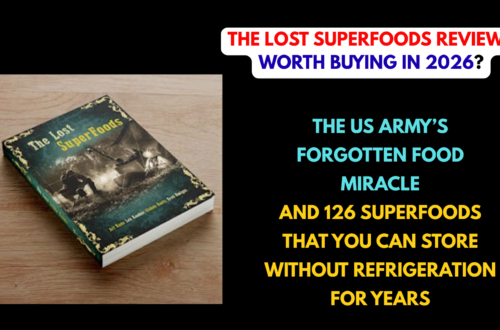
This is the single book we recommend most often to people who are serious about long-term food storage. It covers 126 specific forgotten foods and preservation methods drawn from military archives, Indigenous knowledge, and pioneer traditions.
It is not a theoretical guide. It gives you actual recipes, actual step-by-step instructions, and colour photographs of each process. We reviewed it in full detail here:
👉 The Lost SuperFoods Review: Is Claude Davis’s Book Worth $37?
Other Recommended Books
We have reviewed and ranked the best prepper and survival food books available in 2026 in our comprehensive guide:
👉 Best Prepper Books in 2026: Ranked and Reviewed
The USDA Complete Guide to Home Canning is free to download from the USDA website and is the gold standard reference for safe home canning.
The Ball Blue Book of Preserving is the most trusted consumer reference for home canning and preserving and has been updated regularly for decades.
Frequently Asked Questions {#faq}
Q: How much food should I store for a family of four?
A good starting target is a three-month supply for each family member. That means approximately 540,000 calories total for a family of four for three months (2,000 calories × 4 people × 90 days). In practical terms — roughly 200 pounds of rice and grains, 100 pounds of dried beans and legumes, plus cooking fats, salt, canned proteins, and supplementary items. Start with one month and build from there.
Q: What is the cheapest way to build a food stockpile?
Focus on bulk rice, dried beans, rolled oats, salt, and sugar first. These give you the highest calorie-to-dollar ratio of any available foods and all store for 25 years or more when sealed properly. Add cooking oil and peanut butter next. Expand from there as your budget allows. The $5-a-week approach — adding extra items to your regular grocery shopping — is the most sustainable long-term strategy.
Q: Do I really need oxygen absorbers?
Yes, for any dry goods you plan to store for longer than one to two years. Without oxygen absorbers, insect eggs present in grains and beans will hatch over time. The hatched insects consume your food from the inside and cannot be removed once infestation begins. Oxygen absorbers eliminate this risk and also prevent oxidative rancidity.
Q: Is it safe to eat food past its best-by date?
Best-by dates on commercially packaged foods are quality indicators, not safety deadlines. They indicate when the manufacturer believes the food is at its best quality — not when it becomes dangerous. Most shelf-stable foods remain safe and nutritious well beyond their best-by dates when stored correctly. Use your senses: if food smells off, has unusual colour or texture, or a can is bulging or damaged, discard it.
Q: What is the single most important thing to do first?
Store water. Before any food purchase, make sure you have a minimum of two weeks of clean water stored for your household. Without water, the food is useless.
Q: How do I keep pests out of my food storage?
Use hard-sided containers (buckets, glass jars, metal tins) that rodents cannot chew through. Seal Mylar bags completely. Keep storage areas clean and free of crumbs or spills that attract pests. Add bay leaves to open grain containers — the scent repels many common pantry insects. Inspect your storage area regularly.
Q: Where can I learn the most forgotten historical preservation methods?
The most comprehensive source we have found is The Lost SuperFoods by Claude Davis, which draws on military archives, Indigenous food traditions, and pioneer practices to recover methods that have been largely forgotten in the modern era. Read our full review here: The Lost SuperFoods Review.
Final Thoughts
Building a long-term food supply is one of the most practical things you can do for your family. It does not require a huge budget. It does not require a special property or a basement full of expensive equipment. It requires a little knowledge, a consistent habit, and the right priorities.
Start with water. Add your calorie base. Build storage containers. Rotate regularly. Learn one or two preservation methods. Keep expanding slowly.
A year from now, looking at a well-organised pantry stocked with food that can carry your family through months of disruption, you will not remember it as a burden. You will remember it as one of the smartest things you ever did.
This article contains affiliate links. If you purchase through these links, a small commission may be earned at no additional cost to you. All opinions are our own.