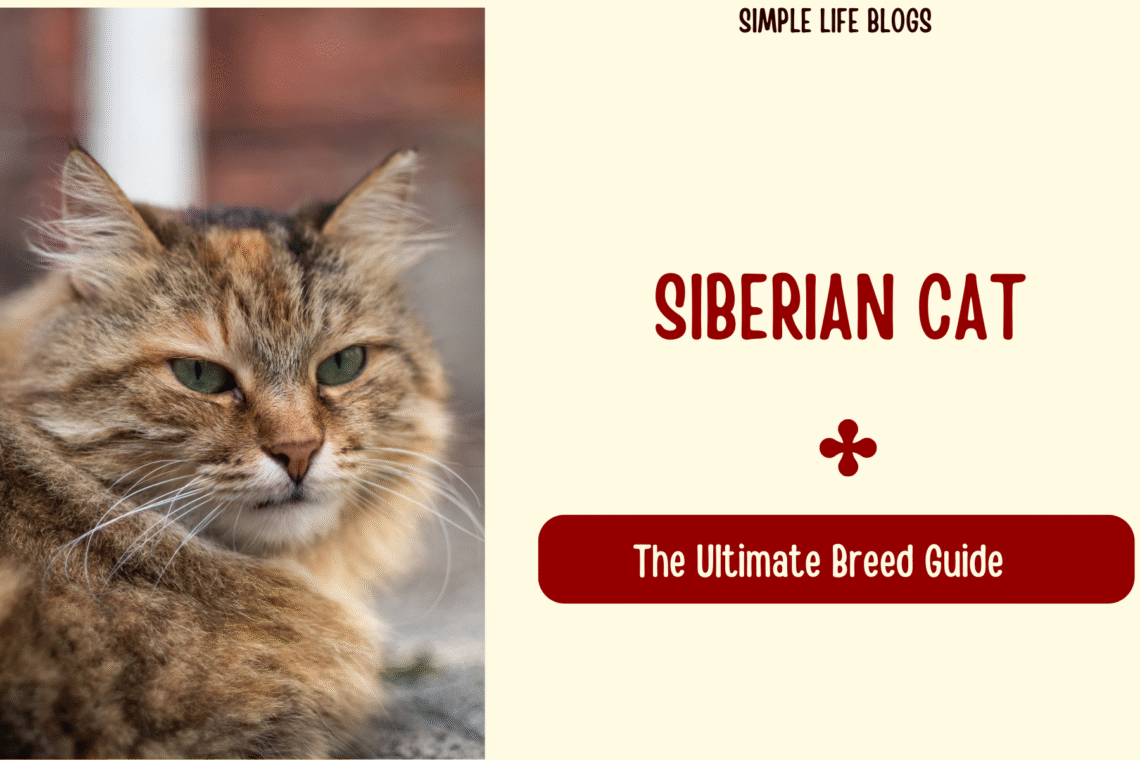
The size of a Siberian cat isn’t the first thing you’ll notice although they are quite large as far as cats go, nor is it their lush thick coat. It’s how they carry themselves. It’s the presence. A Siberian doesn’t just walk into the room; they walk in with a quiet confidence, wide, curious eyes and an energy of calmness that reminds you everything will be okay.
If you’ve fantasized about a cat that is majestic and affectionate, playful but down to earth, the Siberian cat might be the breed you never knew you were looking for.
Let’s dive into what makes the Siberian cat so spectacular — from its ancient beginnings to daily life with one curled up next to you on the couch.
The Siberian Cat at a Glance
The Siberian cat is a natural breed, meaning it wasn’t created by humans through selective breeding. Rather, these cats evolved naturally over hundreds of years in the icy woods of Siberia, Russia. Being in such a harsh environment, only the strongest, shrewdest and most adaptable cats survived. Today, Siberian cats still have those same traits — they’ve just been tucked inside a deliciously loving bundle of fluff.
A Breed Forged by Nature, Not Fashion
Long before Siberians became beloved pets in American homes, they were forest cats navigating snow, ice, and freezing temperatures. Their environment shaped everything about them.
That’s why Siberians have:
- Powerful, muscular bodies
- Thick, water-resistant triple coats
- Strong hind legs for leaping and climbing
- A calm, self-assured temperament
These cats weren’t bred to look pretty—they were built to survive.
Siberians have appeared in Russian folklore and art for hundreds of years, but they didn’t arrive in the U.S. until the early 1990s. Once American cat lovers met them, the admiration was immediate. Today, they’re recognized by major registries like CFA and TICA, and demand for the breed continues to grow.
What Does a Siberian Cat Look Like?
Size and Build
Siberians are medium to large cats, often described as “solid” rather than overweight.
- Adult weight typically ranges from 8 to 17 pounds, though some males grow larger
- They have broad chests, strong bones, and well-developed muscles
- Slightly longer back legs give them impressive jumping ability
When a Siberian leaps onto a bookshelf in one effortless motion, it’s impossible not to be impressed.
That Famous Triple Coat
The Siberian’s coat is one of its most defining features—and for good reason.
It consists of three layers:
- A soft undercoat for insulation
- A middle layer of awn hair for warmth
- Long guard hairs that repel water
Run your fingers through a Siberian’s fur and you’ll feel density, not silkiness. It’s plush, resilient, and surprisingly practical.
Despite all that fur, Siberians don’t mat as easily as some long-haired breeds. They do shed—especially in spring and fall—but regular brushing keeps it manageable.
Colors, Patterns, and Eyes
Siberian cats come in nearly every color and pattern imaginable. Solid, tabby, colorpoint, bi-color—you name it.
Their eyes are typically round and expressive, appearing in shades of:
- Green
- Gold
- Copper
- Blue (especially in white or colorpoint Siberians)
Some even have odd eyes, which adds to their mystique.
The Joy of Owning a Cat: Why Life Feels Better With a Feline
Siberian Cat Personality: Big Heart, Soft Soul
If looks alone sold cats, Siberians would already be popular. But it’s their personality that truly wins people over.
Affectionate Without Being Clingy
Siberians love their humans—but they respect boundaries.
They’re the kind of cat who:
- Greets you at the door
- Follows you from room to room
- Sleeps near you, not necessarily on you
They want to be part of your life, not the center of it.
Intelligent and Curious
These cats are extremely smart. Many Siberian owners report their cats:
- Learning routines quickly
- Figuring out door handles
- Playing fetch
- Responding to their names
They enjoy puzzle toys and interactive play, and boredom doesn’t suit them well.
Playful Well Into Adulthood
Unlike some cats that mellow early, Siberians stay playful for years. They climb, jump, chase, and explore with kitten-like enthusiasm—sometimes well into middle age.
Watching a full-grown Siberian leap effortlessly across a room is like seeing a small wildcat in action.
Surprisingly Fond of Water
This surprises many first-time owners: some Siberians actually like water.
They may:
- Bat at dripping faucets
- Sit near sinks or tubs
- Tolerate baths better than most cats
It’s a quirky trait, but one that makes them endlessly entertaining.
Are Siberian Cats Hypoallergenic?
This is one of the most common—and misunderstood—questions.
No cat is truly hypoallergenic. All cats produce the allergenic protein Fel d 1. However, some studies and owner experiences suggest that some Siberian cats produce lower levels of this protein.
What does that mean in real life?
- Some allergy sufferers tolerate Siberians better
- Others still react
- Reactions vary by individual cat and person
If allergies are a concern, the smartest approach is to spend time with a specific Siberian before committing.
Grooming a Siberian Cat: Easier Than You’d Expect
Despite their thick coats, Siberians are moderate maintenance.
Grooming Routine
- Brush 2–3 times per week
- Daily brushing during heavy shedding seasons
- Occasional baths if needed (many tolerate them well)
Their coat naturally resists dirt and tangles, which helps.
Shedding Seasons
Siberians “blow” their coat twice a year—usually spring and fall. During these times, brushing becomes essential unless you want fur everywhere.
The good news? Outside of those periods, shedding is surprisingly reasonable.
Health and Lifespan
Siberian cats are generally robust and healthy, thanks to their natural development.
Common Health Concerns
- Hypertrophic cardiomyopathy (HCM) – a genetic heart condition
- PK deficiency – a rare blood disorder
- General age-related issues like dental disease
Reputable breeders screen for genetic conditions, which makes a huge difference.
Lifespan
Most Siberians live 11 to 18 years, especially with proper nutrition and regular veterinary care.
Is a Siberian Cat Right for You?
A Siberian may be a great fit if you want:
- A social, family-friendly cat
- A breed that gets along with kids and pets
- An intelligent, interactive companion
- A cat with a calm yet playful personality
They may not be ideal if:
- You’re gone most of the day and want a very independent cat
- You dislike grooming entirely
- You want a quiet, low-interaction pet
Siberians thrive on companionship.
Living With a Siberian: A Real-Life Picture
Sharing your home with a Siberian is generally less about “owning a cat” and more about rooming with an intelligent, sensitive, loving friend.
They’ll watch you cook, oversee your workday, nap close while you read and sometimes surprise you with a sudden burst of zoomies across the living room.
They’re present—but never overwhelming.
Frequently Asked Questions (FAQ)
Are Siberian cats good for families?
Yes. They’re gentle, patient, and tend to do very well with children and other pets.
Do Siberian cats shed a lot?
They shed seasonally. Regular brushing keeps shedding under control most of the year.
Are Siberian cats indoor or outdoor cats?
They’re best kept indoors in the U.S. for safety, but they love vertical spaces and window views.
How expensive are Siberian cats?
Kittens from reputable breeders can be expensive due to rarity and health screening. Adoption options are limited but possible.
Do Siberian cats like being held?
Many tolerate or enjoy it, but they’re more likely to sit beside you than be carried constantly.
Final Thoughts: Why the Siberian Cat Leaves a Lasting Impression
The Siberian cat is a rare blend of wild beauty and emotional warmth. They look like they belong in a snowy forest—but choose to curl up on your couch instead.
They are not attention seekers but they see everything. They don’t shout for love, but they give it so willingly. And once you share your home with one, well, it’s hard not to feel like life got just the tiniest bit calmer, cozier and more meaningful.
If you want a cat that behaves like your companion — not just your pet — the Siberian is probably just what your home needs. 🐱❄️