
Just because you live in an apartment doesn’t mean you can’t have a dog. When their temperament, energy level and habits are aligned with apartment living, many dogs live very happily in small spaces. The key is not size alone. Of those, calm behavior when alone, low barking and easy daily exercise are what count most.
The right dog, even a small one in an apartment, can make you feel cozy and happy and that your place is full of pulsating life.
Why Some Dogs Are Perfect for Apartment Living
Apartment-friendly dogs are usually calm indoors and do not need a big yard to feel happy. These dogs can handle city noise, shared walls, elevators and hectic schedules.
Most good apartment dogs share these qualities:
- They stay relaxed inside the home
- They do not bark often
- They are fine with short daily walks
- They enjoy human company more than constant running
Some dogs weighing less than 25 pounds actually do quite well in cramped spaces, but even a few heavier ones are fine as long as they’re willing to spend the majority of the day sleeping or resting.
Small Dog Breeds That Do Very Well in Apartments
French Bulldogs
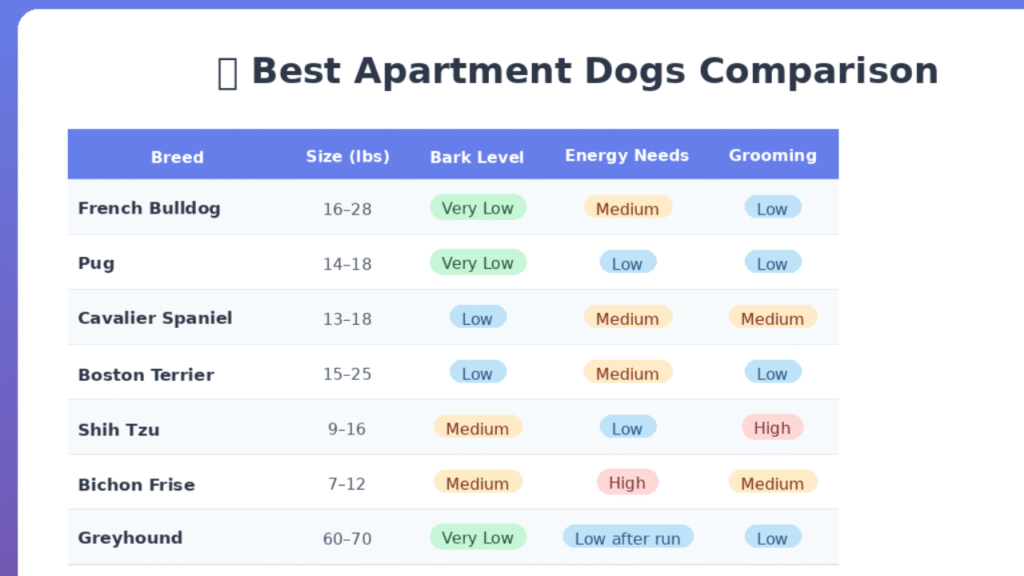
The French Bulldog is one of the best dogs for apartment living. They’re small, sturdy and super chill. The majority of Frenchies would rather sit on the sofa than run around.
They’re not prone to barking and typically only make sounds when there is something truly deserving of attention. They have short fur that’s easy to maintain, so they do leave less dander around apartments. Because of their flat face, they do not handle heat well, so air flow and cool rooms are important.
Pugs
Pugs are affectionate, funny, and mild tempered dogs. They like short walks, and lots of cuddle time. Pugs are not noisy and like to live next to their humans.
They love food, so portion control is crucial to keep them healthy. Like French Bulldogs, they also need protection from hot weather.
Cavalier King Charles Spaniels
Cavaliers are sweet, calm, and very people-focused. They enjoy playing indoors but are just as happy sitting quietly beside you.
They have a soft bark and adapt well to apartment living. Their coat requires weekly grooming and they feel best when they are not left alone for very long periods.
Medium Dogs That Surprise Apartment Owners
Boston Terriers
Boston Terriers are playful but not wild. They enjoy short walks and indoor games, which makes them great for apartment life.
They are smart, easy to train, and usually quiet. Their short coat sheds very little, making cleaning easier in small spaces.
Shih Tzus
Shih Tzus were actually bred to be indoor pets, so apartments are a natural fit for them. They are mellow, affectionate and happiest with short walks.
They are not barkers and are more interested on being comfortable than to be active. Their long hair requires a fair amount of grooming, but otherwise they have low energy and are relatively easy to take care of.
Bichon Frises
Bichons are happy dogs who love to play without being overly active. They are a good choice for people with allergies because they don’t shed much.
They can bark at strangers, though training gets that under control quickly. Their cheerful disposition makes them excellent pets in small living quarters.
Bigger Dogs That Still Fit Apartment Life
Greyhounds
Greyhounds are much calmer than most people expect. After a short daily run, they relax for hours.
I had a customer that trained this breed I met, and she says they are silent, kind and exceptionally polite at home. Despite their size, many do not require too much space as they love to nap for most of the day.
Basenjis
Basenjis are known as barkless dogs. Instead of barking, they make soft sounds that rarely bother neighbors.
They are clean, smart, and enjoy indoor games. Regular outdoor exercise keeps them calm inside apartments.
Key Things to Look for in an Apartment Dog
Instead of focusing only on breed, pay attention to behavior and needs.
Low barking is very important in shared buildings. Moderate energy levels work best, usually needing about 30 to 45 minutes of daily activity. Dogs that respond well to training adjust faster to apartment rules.
Some dogs are sensitive to heat, especially flat-faced breeds, so cool indoor spaces are important for their health.
Apartment Dog Breed Comparison Table
Daily Routine for Happy Apartment Dogs
A simple routine keeps apartment dogs calm and healthy. Morning walks of about 15 minutes help them relax for the day. Indoor games like treat-finding or toy play keep their minds active.
Mental activity is just as important as physical exercise. Puzzle toys and short training sessions prevent boredom and unwanted behavior.
Quiet evening time with brushing or gentle play helps dogs settle and feel secure.
Health and Care Tips for Apartment Dogs
Dogs living indoors can gain weight easily, so measured meals are important. Regular vet checkups help catch breed-related issues early.
Dental care matters for small dogs, and grooming needs vary by breed. Clean teeth, trimmed nails, and healthy skin help dogs live longer, happier lives.
Training Tips for Apartment Living
Positive training works best in apartments. Reward calm behavior and teach simple commands like “quiet” early.
Socializing dogs with neighbors, elevators, and building sounds helps prevent fear-based barking. Keeping routines consistent makes learning faster and easier.
Real-Life Match: Choosing the Right Dog for You
Some dogs love constant company, while others enjoy independence. Remote workers often prefer dogs like Cavaliers, while active people may enjoy Boston Terriers.
Mixed-breed dogs are also excellent apartment companions and often combine the best traits of many breeds. Adult dogs from shelters usually adjust faster because their personality is already known.
Making Your Apartment Dog-Friendly
Simple changes help a lot. Soft rugs reduce noise, and clear spaces make movement easier. Keeping toys organized prevents clutter.
Quiet corners with a bed help dogs feel safe, while regular schedules create comfort and trust.
FAQs
What makes a dog good for apartment living?
Calm attitude, minimal barking, and moderate exercise requirements.
Can large dogs live in apartments?
Yes. Dogs like Greyhounds do very well because they are calm indoors.
How much exercise do apartment dogs need?
Most need 30–60 minutes daily, split between walks and play.
Are hypoallergenic dogs better for apartments?
They help reduce hair and cleaning in small spaces.
How can I reduce barking in apartments?
Training, daily exercise, and mental stimulation work best.
Final Thoughts
The best apartment dog is not about trends or size. It’s about your lifestyle matching a pet with a dog’s personality.
When it’s the right match, though, there is nothing quite like living in an apartment with a dog; it becomes a peaceful, joyous and deeply rewarding experience.
Your perfect furry roommate is out there— you just need to find the one that suits your lifestyle best.